Germany’s mushroom season draws thousands of people into the forests every autumn. But some of the country’s most dangerous mushrooms closely resemble edible varieties – and a single mistake can potentially be fatal.
Foraging for wild mushrooms is one of Germany’s favourite autumn pastimes. As soon as the weather turns cooler and wetter, experienced mushroom collectors (Pilzsammler) head into forests in search of chanterelles, porcini and other edible species.
Joining in can be a wonderful way to explore the countryside and connect with local traditions.
But mushroom experts repeatedly issue the same warning: only eat mushrooms that you can identify with complete certainty.
In Germany, dozens of poisonous species grow alongside edible ones, and some of the most dangerous look surprisingly ordinary. Neither smartphone apps nor old folk remedies can guarantee that a mushroom is safe to eat.
The seven mushrooms below are among the most important poisonous species for foragers to know. But they’re far from the only dangerous fungi found in Germany.
Mushrooms can look very different depending on their age, location and growing conditions, and many species resemble one another. This guide should be treated as an introduction, not a substitute for expert identification.
Death Cap (Amanita phalloides)
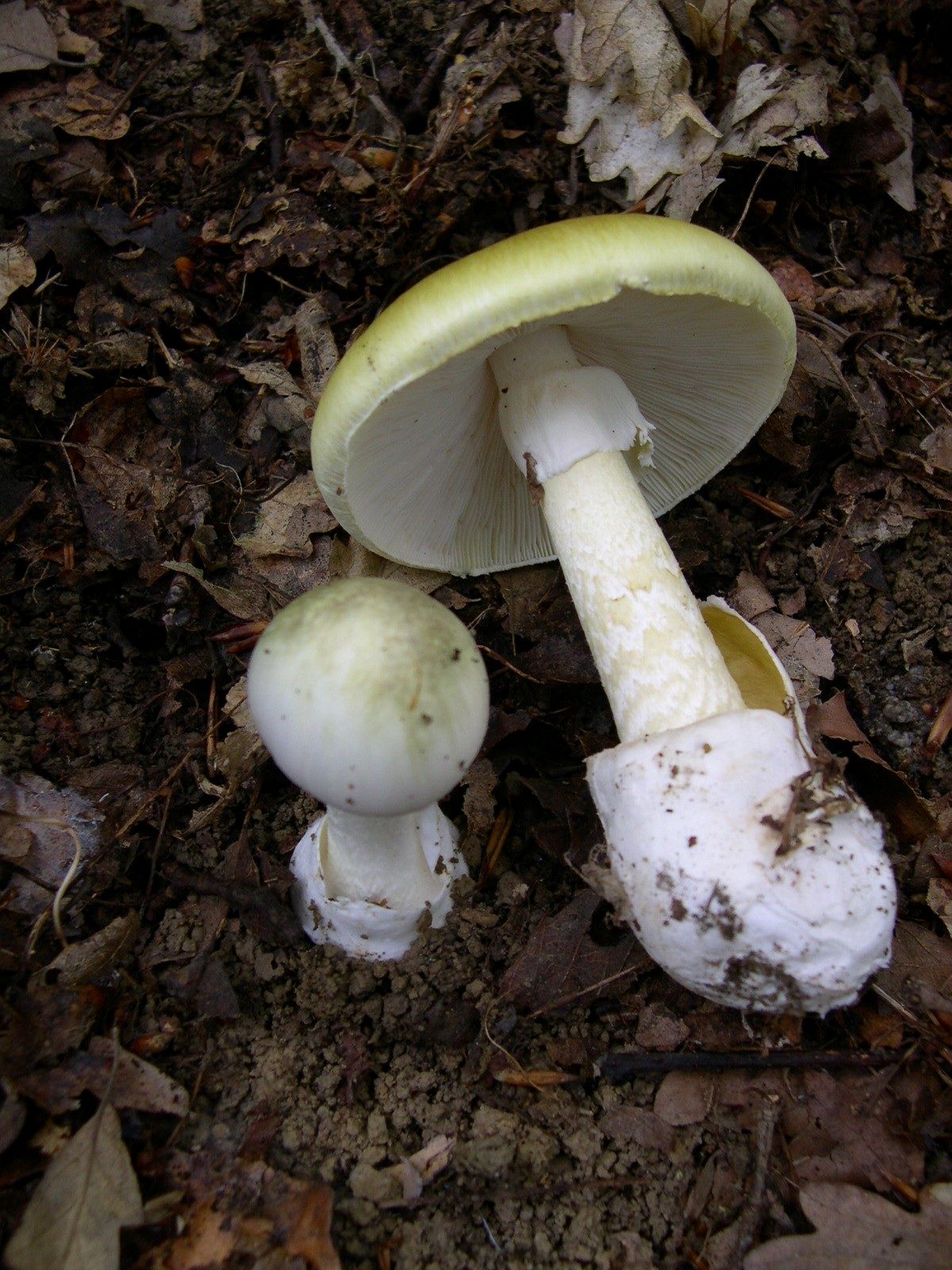
The death cap mushroom – known as Grüner Knollenblätterpilz in German, which literally means “green bulb-gill mushroom” – is widely regarded as the most dangerous mushroom in Germany.
It typically has a greenish to olive-coloured cap, white gills and a bulbous swelling at the base of the stem. The trouble is that inexperienced foragers can mistake it for edible mushrooms, particularly young specimens.
It’s worth noting that they don’t appear obviously green, and may look more yellow-ish or even cream-coloured or white depending on their environment.
The Death Cap deserves its name. Photo: Archenzo/Wikimedia Commons
READ ALSO: How to stay safe foraging for wild mushrooms in Germany
The toxins primarily attack the liver and can lead to fatal organ failure. One of the reasons it’s so dangerous is that symptoms are often delayed.
A person may feel perfectly fine for many hours before severe stomach pain, vomiting and diarrhoea begin. By then, the toxins may already have caused significant damage.
Destroying Angel (Amanita virosa)
Known in German as the Weißer Knollenblätterpilz, or “white bulb-leaf mushroom”, this species is another member of the deadly death cap family.
Unlike its green relative, it is almost entirely white, with white gills and a slender white stem. Young specimens can resemble edible mushrooms, including some cultivated varieties familiar to people from abroad.
Like the death cap, it contains toxins that can destroy the liver. Early symptoms may include nausea, vomiting and diarrhoea, but the most severe effects can take hours or even longer to develop.
Its clean, elegant appearance has earned it the English nickname “Destroying Angel”, which gives a good indication of why experts urge people to leave it alone.
Deadly Webcap (Cortinarius rubellus)
The Spitzgebuckelter Raukopf, which roughly translates as “pointed-humped roughhead”, is one of Germany’s most feared poisonous mushrooms.
This reddish-brown mushroom can resemble edible woodland species, particularly to inexperienced collectors. It’s most often found in conifer forests, especially around spruce and fir trees.

Deadly Webcap (Cortinarius rubellus). Photo by Andreas Kunze (Own work, CC BY-SA 3.0, https://commons.wikimedia.org/w/index.php?curid=31162837)
The danger comes from a toxin called orellanine, which attacks the kidneys. What makes this mushroom especially treacherous is the long delay before symptoms appear. In some cases, people may not become ill for several days.
Because the connection between the meal and the illness is not always obvious, diagnosis can be delayed. By the time symptoms develop, serious kidney damage may already have occurred.
Fool’s Webcap (Cortinarius orellanus)
Closely related to the deadly webcap is the Orangefuchsiger Raukopf, literally the “orange-fox-coloured roughhead”.
It has a rusty orange to brown appearance and is often found in deciduous woodland. Older specimens can resemble edible mushrooms, including some that are popular among foragers.
READ ALSO: REVEALED – The best places to go mushroom foraging in Germany
Like its cousin, it contains toxins that can cause severe kidney damage. Again, the delay before symptoms appear can range from several days to more than a week.
For amateur foragers, the safest approach is simple: avoid collecting any brown woodland mushroom unless you are absolutely certain of its identity.
Funeral Bell (Galerina marginata)
The Gifthäubling, or “poison cap”, may not look particularly threatening. It is usually small, brown and easy to overlook.
Often found growing on rotting wood, tree stumps and fallen branches, it can appear near edible species and may even grow on the same wood. It contains the same group of deadly toxins found in the death cap.

Funeral Bell (Galerina marginata). Photo by Elizabeth Axley (www.inaturalist.org/photos/241466897, CC) BY 4.0, https://commons.wikimedia.org/w/index.php?curid=126035686)
Initial symptoms usually include vomiting, diarrhoea and abdominal pain before more serious liver damage develops. Despite its modest appearance, this mushroom is capable of causing fatal poisoning.
Panther Cap (Amanita pantherina)
The Pantherpilz, or “panther mushroom”, is sometimes overshadowed by its more famous relative, the fly agaric. Yet many experts consider it one of the more dangerous poisonous mushrooms found in Germany.
It typically has a grey-brown cap covered in pale patches and a white stem, and grows in forests throughout much of the country.
Rather than attacking the liver or kidneys, the toxins affect the nervous system. Symptoms can include dizziness, confusion, impaired coordination, delirium and hallucinations. In severe cases, hospital treatment may be required.
READ ALSO: What’s behind the German fascination with foraging for wild mushrooms?
Fly Agaric (Amanita muscaria)
The Fliegenpilz, or “fly mushroom”, is probably Germany’s most recognisable fungus. With its bright red cap covered in white spots, it appears on everything from Christmas decorations to children’s storybooks.
The fly agaric contains compounds that affect the brain and nervous system. Symptoms can include nausea, confusion, drowsiness, loss of coordination and hallucinations. Serious poisonings are less common than with death caps, but eating one is still a very bad idea.
Fortunately, its distinctive appearance usually makes it easier to recognise than many other poisonous mushrooms.
If in doubt, leave it in the forest
The golden rule of mushroom foraging in Germany is simple: if you aren’t completely certain what a mushroom is, don’t eat it.
If you suspect mushroom poisoning, seek medical help immediately or contact a poison information centre. Do not wait for symptoms to appear, as stated above, in some of the most dangerous cases toxins take hours or even days to cause noticeable symptoms.
In cases where poisoning is feared, its good to keep any mushroom leftovers or food remnants to help experts identify what was eaten.
Disclaimer : This story is auto aggregated by a computer programme and has not been created or edited by DOWNTHENEWS. Publisher: thelocal.de