SRINAGAR: The fierce clash inside the Jammu and Kashmir Assembly over Chief Minister Omar Abdullah’s resolution demanding the immediate restoration of full statehood has laid bare a deeper political struggle between the ruling National Conference (NC) and opposition Bharatiya Janata Party (BJP). What unfolded on the floor was not merely legislative chaos but a preview of the strategic positioning both sides are adopting as the debate over J&K’s constitutional future intensifies.
The flashpoint was the resolution’s reference to the Assembly’s 2000 autonomy resolution. BJP legislators erupted instantly, storming into the Well and accusing the government of trying to revive a matter they insist is “long settled.” NC and Congress members countered with slogans demanding restoration of special status, triggering scuffles, torn copies of the resolution, and repeated adjournments. The resolution itself was straightforward- “This House calls upon the Government of India for the immediate and urgent restoration of full statehood to Jammu and Kashmir…” Yet the autonomy reference turned it into a political battleground.
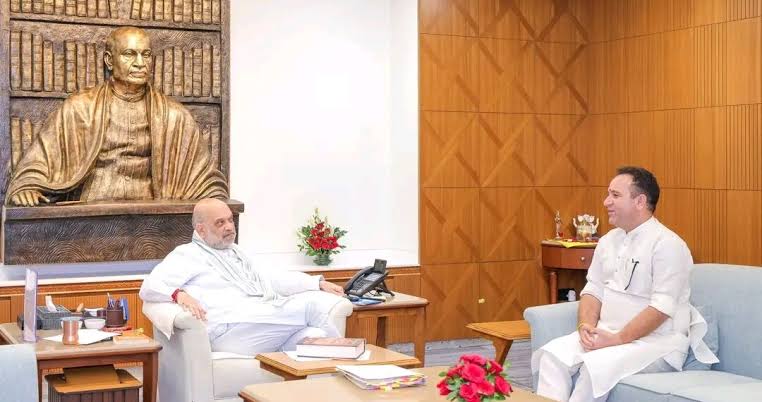
Behind the scenes, the BJP’s strategy has been shaped in New Delhi. Leader of Opposition Sunil Sharma was summoned to meet Union Home Minister Amit Shah soon after the resolution was introduced. His subsequent statements made the BJP’s line clear: the party is willing to debate statehood but will not permit any discussion on autonomy or Article 370. Sharma called the resolution “controversial,” questioning why the autonomy resolution was invoked at all. For the BJP, statehood must be delinked from any constitutional rollback and for the NC, autonomy remains a core political commitment that cannot be abandoned.
Abdullah defended the resolution as a constitutional demand, arguing that all conditions cited by the Centre—delimitation, elections, administrative readiness—had already been fulfilled. “What is the delay then?” he asked, accusing the BJP of staging a drama to avoid a substantive debate. He insisted the resolution contained nothing “anti‑national,” challenging the BJP to identify even a single objectionable word. The Chief Minister maintained that the demand for full statehood was widely shared across J&K and essential for restoring democratic accountability.
The BJP used the uproar to pressure the Congress, demanding clarity on its stance regarding autonomy and Article 370. Congress leaders maintained that the resolution was constitutional and separate from earlier ones, but avoided deeper engagement with the autonomy question—revealing their own political tightrope.
The day’s events underscored the emerging fault lines. The NC wants full statehood restored immediately and refuses to dilute its autonomy position. The BJP is prepared to discuss statehood but only on its own terms, resisting any reopening of pre‑1953 constitutional debates. The Congress is caught between supporting statehood and avoiding polarising questions.
As the Assembly prepares for Monday’s discussion, the Modi government’s eventual stand will likely mirror the BJP’s behaviour in the House- controlled engagement on statehood, firm resistance on autonomy, and strategic ambiguity on timelines.
The position the BJP ultimately adopts, especially in light of Sharma’s meeting with the Union Home Minister, will indicate whether the Centre is inclined to restore statehood to J&K — and, crucially, how soon and in what form. While moving the resolution, the Chief Minister made it unequivocally clear that he and his party seek full statehood, with all powers vested in the elected government. He stressed that they would not accept any diluted arrangement or a downgraded model that excludes key responsibilities such as law and order or control over the police.
Disclaimer : This story is auto aggregated by a computer programme and has not been created or edited by DOWNTHENEWS. Publisher: deccanchronicle.com