- Shaili Singh’s long jump recorded 6.42m, despite appearing longer.
- Officials explained her hair’s mark determined the official distance.
- China’s Tan edged Singh by 4cm for bronze.
Shaili Singh’s Asian Games medal bid ended in heartbreaking fashion after her long jump was officially recorded at 6.42m, despite the Indian athlete appearing to have landed beyond the 6.50m mark.
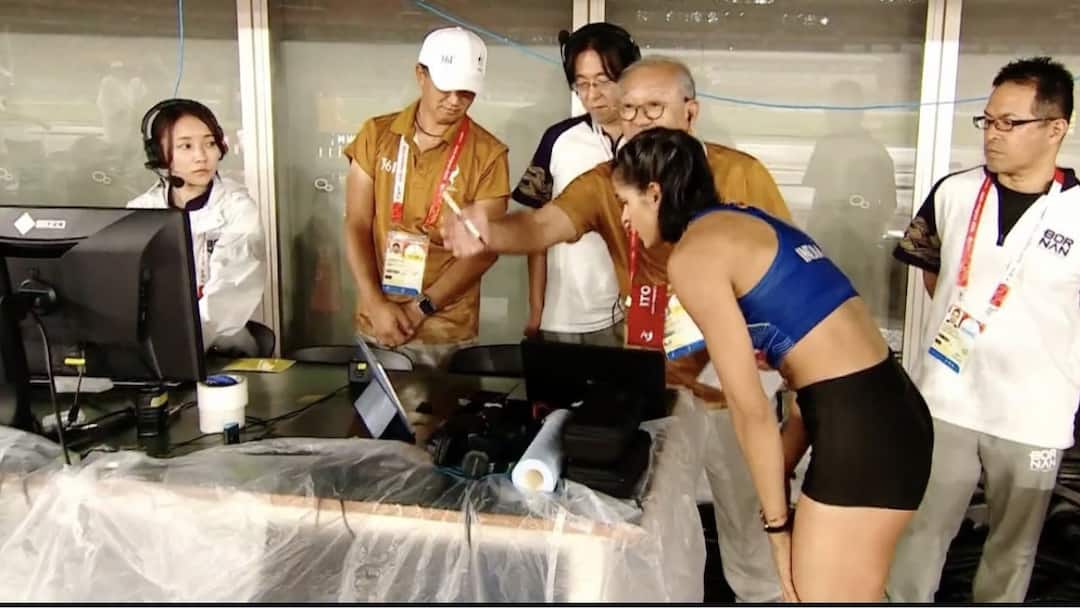
The unusual measurement left Singh visibly frustrated as she questioned the decision and reviewed footage with officials during the competition.
Officials explained that the measurement was determined by the closest mark made in the sand, which in Singh’s case was attributed to her hair reaching the landing area.
The 6.42m effort initially left Singh in the bronze-medal position. However, China’s Mengyi Tan produced a 6.46m jump with her final attempt to move into third place and deny the Indian athlete a podium finish.
Why Was Shaili Singh’s Jump Measured At 6.42m?
The difference between what appeared to be the landing distance and the official measurement immediately caught attention.
Singh was unhappy with the 6.42m result and protested the measurement. She subsequently went through the footage with officials, who explained why the mark closer to the take-off board had been used.
The explanation centred on the mark left by Singh’s hair in the sand.
In long jump, the distance is not simply measured from the take-off board to where an athlete’s feet land. Instead, officials measure to the nearest break in the landing area made by the athlete.
That means a part of the body that reaches the sand before the main landing point can determine the official distance.
What Do Long Jump Rules Say About Hair?
Under the rules governing the event, the measurement is taken from the take-off line to the nearest break in the sand made by the athlete.
The relevant mark can be created by any part of the athlete’s body. It can also be made by something attached to the athlete’s body.
Therefore, if an athlete’s hair reaches the sand and creates the closest indentation, that mark can determine the measured distance.
In Singh’s case, officials maintained that the mark left by her hair was the one that had to be used for the official measurement, resulting in a distance of 6.42m.
Singh’s protest did not change the recorded distance.
Shaili Singh Misses Bronze By Just 4cm
The 6.42m mark kept Singh in third place as the competition entered its decisive stage.
However, Tan still had her final attempt remaining. The Chinese athlete then delivered a 6.46m jump, going four centimetres farther than Singh.
That effort was enough to move Tan into the bronze-medal position and push Singh out of the podium places.
The final outcome made the earlier measurement even more painful for the Indian long jumper. Singh finished just four centimetres behind the mark that secured Tan the bronze medal.
While the unusual role of her hair in the measurement sparked debate, the officials’ explanation was based on the long-jump measurement rule rather than a decision to measure the athlete’s feet differently.
For Singh, the sequence was particularly cruel: a jump that appeared to have gone beyond 6.50m was recorded at 6.42m, and she eventually lost the bronze medal by the same four-centimetre margin.
Disclaimer : This story is auto aggregated by a computer programme and has not been created or edited by DOWNTHENEWS. Publisher: abplive.com