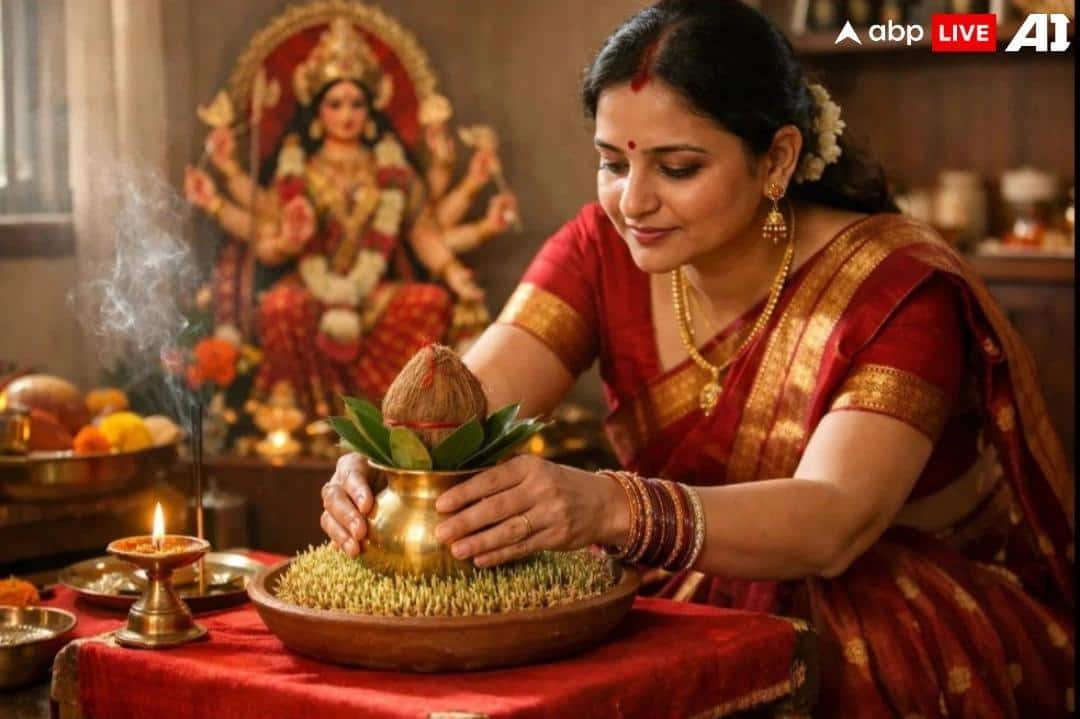
- Shardiya Navratri begins October 11; devotees sow sacred barley.
- Sow barley seeds carefully, ensuring proper soil and water.
- Healthy shoots traditionally signify prosperity; poor growth indicates challenges.
- Growth depends on practical factors, not just religious beliefs.
Shardiya Navratri begins on October 11, 2026. On the first day of Navratri, devotees traditionally perform Kalash Sthapana and sow barley, commonly known as jau or jaware. According to religious beliefs, the growth of these barley shoots during the nine-day festival is considered significant. According to Acharya Madan Mohan, paying attention to the soil, amount of water and placement of the barley seeds can help them grow properly during Navratri.
Soak Jau Seeds Before Navratri
According to Acharya Madan Mohan, devotees can soak some barley seeds in water one night before Navratri begins. This can help prepare the seeds for sowing on the first day of the festival. On the day of Navratri, clean the area where the puja will be performed and take a clean earthen pot. Fill it with suitable soil and spread the barley seeds evenly over it.
What Is The Right Way To Sow Jau?
Once the barley seeds have been spread across the soil, cover them with a thin layer of soil. After this, sprinkle a small amount of clean water over them. It is important not to overwater the seeds. Excess moisture can affect the seeds and prevent them from growing properly. During the remaining days of Navratri, water the soil lightly whenever required.
Why Is Jau Considered Important During Navratri?
Sowing barley along with Kalash Sthapana is a traditional practice followed during Navratri. The growing shoots are also known as jaware and are associated with religious significance. According to traditional beliefs, healthy and well-grown barley shoots are considered an auspicious sign during Navratri.
READ MORE | Chaitra Navratri 2026: Important Dos And Don’ts To Observe On This Auspicious Festival
What Does The Colour And Growth Of Jau Signify?
Religious beliefs associate the colour and growth of the barley shoots with different signs. If the shoots grow green and healthy, it is traditionally considered auspicious and may be associated with happiness, prosperity and financial gains in the household. On the other hand, yellow or blackened shoots are traditionally not considered favourable. Similarly, if the barley grows very little, remains short or develops unevenly, it is sometimes associated with obstacles in one’s work.
READ MORE | Indira Ekadashi 2026: Completed Shraddha Rituals? Know If You Still Need To Keep The Vrat
Long And Straight Jau Are Considered Auspicious
According to traditional beliefs, long, straight and properly grown barley shoots are considered a positive sign. They are associated with good health, success in work and peace in the household. However, the growth of barley is also affected by practical factors such as the quality of the seeds, soil, water and weather conditions. Therefore, changes in the appearance or growth of the shoots should not necessarily be interpreted only through religious beliefs.
[Disclaimer: The information provided here is based solely on beliefs and information. It’s important to note that ABPLive.com does not endorse any beliefs or information. Consult a relevant expert before acting on any information or information.]
Disclaimer : This story is auto aggregated by a computer programme and has not been created or edited by DOWNTHENEWS. Publisher: abplive.com