
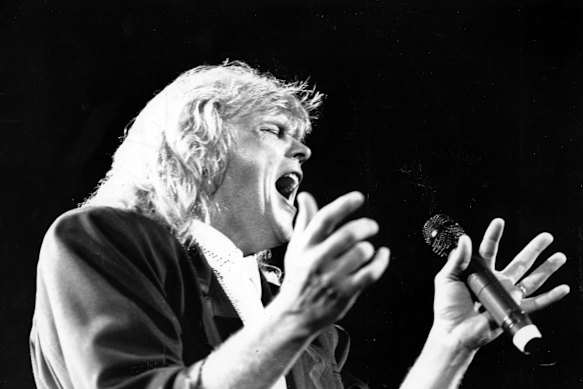
When her music-promoter husband Glenn unexpectedly died, Gaynor Wheatley took on the role of John Farnham’s manager – and co-producer of an upcoming Farnham musical.
James Brickwood
Glenn Wheatley was excited when Michael Cassel floated the idea of collaborating on a musical using John Farnham songs. But he had a proviso. “The one thing we can’t do is make it biographical,” Wheatley told Cassel. “John is very private, he wouldn’t want to see his life on stage. So let’s take the music and come up with an original idea for it.” Cassel was happy enough with this. The musical Mamma Mia! had set Abba’s songs to a fictional story, after all, and that had worked out reasonably well. It could be done.
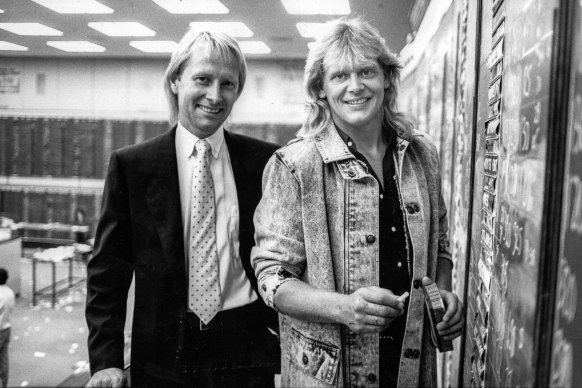
This was back in 2013, when the then-30-something Cassel was a baby theatre producer. He’d only recently set up his own company and his first show, Cameron Mackintosh’s Les Misérables, had not even opened yet – that would happen in mid-2014. Wheatley was nearly twice Cassel’s age and had lived a full life already, having moved from playing bass guitar for The Masters Apprentices to managing talent. He’d taken Little River Band to the US, discovered the 14-year-old piano-playing sensation that was Delta Goodrem and, famously, mortgaged his house to reignite Farnham’s career with the 1986 album, Whispering Jack. He was Farnham’s manager; he was also his best friend.
Wheatley might have recognised a kindred spirit in Cassel, who has a similarly high-energy vibe, for he was in from the get-go. “My team and I always joke that I’m like, ‘OK, let’s send out the opening-night invitations’ when we’ve just started talking about something,” recalls Cassel. “I think Glenn beat me to that punchline at the meeting.”
Both men had multiple other projects on the go, however, and it took years for the Farnham musical to even get to the starting line. “Glenn kept saying, ‘Hurry up, how long does it take?’ ” says Cassel, with a laugh. “I’m like, ‘Wait, we’ve got to get the show right first, because in the musicals world you only get one chance.’ ”
It was not until 2019 that they did a callout to writers to pitch storylines that might work with the Farnham oeuvre. They settled on one about the 1854 Eureka Stockade, and in the next few years, while juggling COVID-19 lockdowns, did a couple of readings and a workshop. Keen to keep Wheatley enthused, Cassel asked music supervisor Carmel Dean to orchestrate a few Farnham hits for the show. Age of Reason. Two Strong Hearts. Touch of Paradise. And, of course, You’re the Voice. He bought a pair of giant speakers for the boardroom to maximise the impact when Wheatley came in to hear them. “I had the vision of where we were going but I always wanted to make sure Glenn was absolutely invested, too,” says Cassel. “Because, if he wasn’t, it wouldn’t happen.”
It worked. Wheatley loved what he heard blasting out of those speakers, henceforth referred to in the Cassel offices as the Glenn Wheatley Speakers. “That was the last time Glenn and I got together on the Farnham musical,” says Cassel quietly.
A few months later, Glenn Wheatley died, following complications arising from COVID. It was February 2022; he was 74. Beneath the sadness of his fellow producer hung a question: would the Farnham musical die with him?
The answer was no, it would not. It morphed, however, such that the very thing Wheatley had said would never fly – a musical about John Farnham – is exactly what will open at the Sydney Theatre Company’s Roslyn Packer Theatre on November 15. The STC is staging Whispering Jack: The John Farnham Musical in association with Cassel and Wheatley’s widow, Gaynor, who are hopeful it proves popular enough to then tour nationally, with Farnham’s home town of Melbourne a significant, and significantly emotional, pitstop.
With a new storyline, this one by screenwriter Jack Yabsley, Whispering Jack: The John Farnham Musical dramatises the six-year period leading up to the launch of the album that changed the course of both Farnham’s and Wheatley’s lives.
It’s easy to see why this timeframe was chosen. Its dramatic arc begins in 1981 with a down-and-out Farnham singing in sticky-carpet RSLs more than a decade after Sadie (the Cleaning Lady) made him a teen star and King of Pop, and moves into his stint fronting the Little River Band, an unlikely pairing that took him to the US for giant stadium tours but was not to last. It ends in 1986 with Farnham and a bunch of muso friends, backed by Wheatley, working on Whispering Jack in Farnham’s suburban garage, a last-roll-of-the-dice album that would go on to become the biggest-selling record by a solo Australian performer.
It’s a story of mateship, of hauling yourself out of the box you’ve been put in, and of triumph over adversity. “It’s this idea of a second chance,” says Yabsley, a 44-year-old Farnham tragic who pitched the concept of focusing on this particular timeframe. “This idea that you get to a point in your life where you think, ‘Is this it for me? I feel like I have more to give.’ A lot of us can relate to that.”
STC artistic director Mitchell Butel says the highs and lows of that period are tailor-made for the stage. Butel signed on to direct the musical before becoming artistic director, and brought it with him to the STC. “I’m interested in theatre where people are at crisis points,” he says. “John was in his mid-30s, he had a new family, things were not going well. Yet he and Glenn, and the musos involved, put it all on the line to make this album.”
The change in the musical’s direction flowed in part from more bad news in 2022, which turned out to be, in the Queen’s parlance, an annus horribilis for Farnham. Following the loss of Wheatley in February came the death of another treasured friend, Olivia Newton-John, in August. A few weeks later, Farnham had a dire update of his own: he’d been diagnosed with mouth cancer, necessitating intensive surgery that would alter his jawline.
“I’ve never been a pessimist but I thought, oh well, you know, he’s gonna die, too. I’m going to lose both of them, and I just don’t think I can do that,” reflects Gaynor. “But John pulled through, because he’s a champion.” He might have pulled through but Farnham has not sung for his fans since; indeed, he’s barely been seen by the public.
Prior to 2022, it’s arguable whether Farnham fans would have paid to see someone else singing his hits when they could see the Voice himself belting them out at a venue down the road. Post-2022, the only way to hear those songs live would be through the mouths of others. Suddenly, a musical centred around the singer made much more sense.
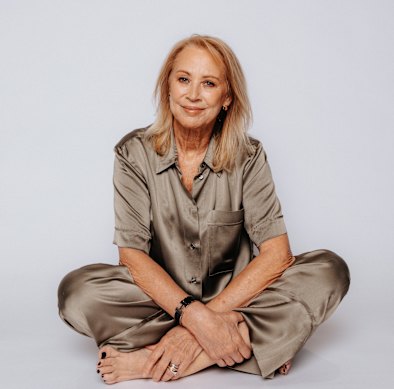
Key to convincing Farnham of all this was Gaynor Wheatley, the one-time star of 1980s TV soaps Skyways and Sons & Daughters who, following her husband’s death, found herself taking over as both Farnham’s manager and the musical’s co-producer. At a time of life when she thought she’d be slowing down and enjoying her six grandchildren, the 69-year-old has instead become a crucial conduit between Farnham and the team working to create the musical, none of whom have met – or even spoken to – the singer. Wigs for Farnham’s mullet? Slightly too long, cut ’em. The touring bus vibe? More rock ‘n’ roll than you’re suggesting. Tensions backstage? They played out like this, not like that. Casting? Gaynor would have a role in that, too.
It’s rare for a musical to be written about living people, even rarer for someone who is co-producing it to have lived it, to be represented on stage and to manage the career of the main character. For Gaynor, all that means Farnham and his wife Jill are her north stars. “It’s John’s story and I want it to be John’s truth there on the stage,” she tells Good Weekend. “If I deliver for John and Jill, then I know the audience will love it. So they’re my two key people.”
Mitchell Butel calls Gaynor the Farnham whisperer. “She’s very frank with her opinions but there’s a kindness beneath it all, too,” he says. “None of it is born from ‘I’ve got to be the boss of it.’ It’s more like, ‘How do we tell the best story? How do we make sure we care for the people who are still involved in this world and having their stories represented on stage?’ ”
It’s a fine line, making a show that’s authentic but not hagiographic, true to the facts but not boringly accurate. As Cassel notes, there’s only one chance to get a musical right and that’s before opening night. And he of all people knows: in the theatre, much more so than in the rock stadium, the line between celebratory and cringe can be wafer-thin.
Interest in John Farnham is certainly intense right now. It’s almost as if his ill-health has sharpened our collective understanding of the power of his voice and output, turbocharging nostalgia for his unmistakably Aussie rock anthems of the 1980s and ’90s.
The renewed interest shows up in the stats. Poppy Stockell’s documentary John Farnham: Finding the Voice became Australia’s highest-grossing documentary after its 2023 release, and the 2024 memoir she co-wrote with Farnham sold more than 120,000 copies, with 24,000 more listening to the audiobook, which the singer narrates himself. At the Australian Book Industry Awards the following year, the memoir was voted Book of the Year, Biography Book of the Year and Audiobook of the Year.

Then, just this September, came three more reminders of Farnham rising. American pop band Jonas Brothers sang You’re the Voice at a historic NFL match at the Melbourne Cricket Ground, a Farnham tribute concert was staged at the nearby Rod Laver Arena, and Michael Paynter, who will play Farnham in the upcoming musical, was selected to sing the national anthem at the AFL grand final. The tribute concert, “The Songs of John Farnham: A Living Legend”, was a sellout, its 13,000 tickets snapped up within a day of going on sale. A further 23,000 watched it via livestream at 232 Hoyts screens nationwide, and the initiative proved so successful that Hoyts announced it would screen an edited version at a later date.
Adding poignancy to the night was a statement from Farnham’s wife Jill and sons Rob and James that, contrary to expectations, Farnham would not be making a surprise appearance at the concert. The 77-year-old, they disclosed, now needed 24-hour nursing care, oxygen support and a wheelchair. How wonderful, though, many opined, that the kind of celebration usually staged after someone dies was held when Farnham was very much alive and able to feel the collective love, albeit from the comfort of his own lounge chair.
Next stop: Whispering Jack: The John Farnham Musical. Gaynor knows it will be a big ask to get Farnham to opening night – not only due to his health but also his humility. “What I took a while to realise was how difficult it would be for him to sit and watch others sing his catalogue of songs when he cannot.”
Gaynor Wheatley did not expect her husband to die. They’d both contracted COVID over the Christmas break of 2021, when the new strain of Omicron was swirling. But while she got over it, he didn’t, a situation likely related to a blood condition he’d had some treatment for that had lowered his immunity. Wheatley ended up in hospital, first the COVID ward then eventually the ICU. Even then, no one seemed unduly worried. “He was looking terrific,” Gaynor says. “He said to me, ‘I need my phone, my computer, I need long leads, I need this and that.’ He was going to work from his hospital bed.”
Within days, however, his lungs had collapsed, and the doctors were suggesting intubating him to protect his heart. He asked what she thought. “Well, I don’t want you to have a heart attack,” she told him. She wonders if he had a sixth sense of where it might all end up, given what he said next. “He looked at me and said, ‘You got this?’ I said, ‘I got this.’ ”
A day or two later, they said he needed heart surgery. Then came another call. “They said, ‘You’d better bring all the family in, he’s fallen off a cliff.’ ” Wheatley’s vital organs were shutting down. “One day he was having heart surgery and I was at Bunnings buying extension cords,” Gaynor says. The next, her husband of nearly four decades was gone. “They said to me afterwards, it would have been such a long recuperation, and he would’ve been so impaired. They were showing me his lungs and they were just riddled with COVID. I like to think it was his decision to just go, ‘Nup, too hard, no one’s pushing me around.’ ”
We’re speaking at Michael Cassel’s offices in Potts Point, in a meeting room with windows onto Macleay Street. Gaynor can see her new home from here, an apartment where she’s lived since moving up to Sydney earlier this year to help daughter Samantha with her three young kids. Her other daughter, Kara, is back in Melbourne with two children, while son Tim is in London with one.
At 69, in simple black pants and a white top, with small gold hoop earrings, she has a warm, unaffected manner and a loveliness about her. I remember thinking when she was on TV that Gaynor Martin, as she was then, was one of the most beautiful women I’d ever seen.
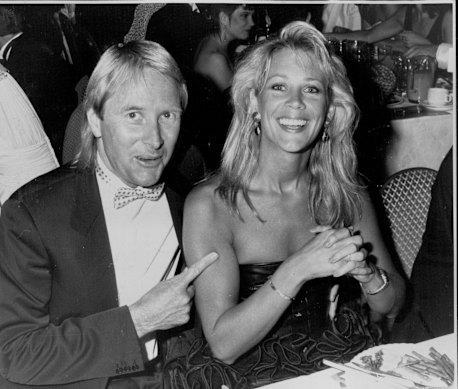
Glenn Wheatley obviously thought the same; they got together in 1980, at the height of her soapie fame, and when they married in 1982, TV Week’s cover referred to the “Sons & Daughters Real-Life Wedding”, not mentioning the music promoter at all. When I raise her time as an actor, she corrects me with a laugh. “I was a soapie star, there’s a difference.”
She gave that up to raise the children and support her entrepreneurial husband, life with whom involved great highs and epic lows, including the time they lost everything when Geelong’s Pyramid Building Society collapsed, and they had to move out of their stately Melbourne home and into her parents’ house, where the kids slept on blow-up mattresses.
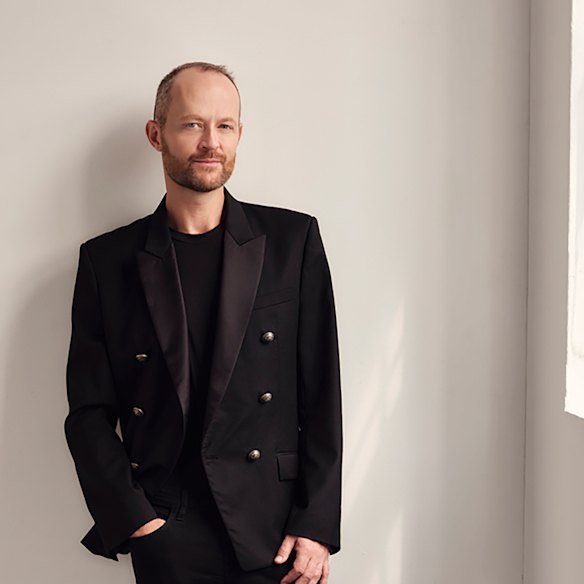
Then there was the time Wheatley went to jail for 10 months for tax fraud. “I always knew it would be an adventure,” she says of life as Gaynor Wheatley. “There were a few moments I could’ve done without – like the whole jail thing.” She laughs. “As soon as I get a letter from the Tax Office now I have post-traumatic stress, but most of it was good. The majority of it was great, and there was always a lot of love, and ‘Oh god, I stuffed up, let’s go.’ ”
When Wheatley’s organs were failing, Gaynor managed to get Farnham on the phone to him one last time, to say goodbye. In the days after, the families were together. “I was a blithering mess,” Gaynor says. “John just turned around, held my hand and said, ‘You’re my manager now.’ And I was like, ‘Of course I am, I’ll do the best I can.’ ” Inside, she was terrified. Then she reminded herself that she’d been there every step of the way. She knew stuff.
At about the same time, Gaynor thought she’d better take a look at Wheatley’s desk. On the top of it was a yellow legal notepad, of the kind he liked to use, with a to-do list scrawled on the first page. On that list were two words: Farnham musical. “I thought, ‘Oh gosh, I’d better get my head around this,’ ” she says. ” ‘Can I be the G. Wheatley to keep this going?’ ”
Cassel was wondering the same thing, so when they finally met, his primary feeling was one of relief. “I was slightly nervous because Glenn and I had built up a relationship over a long period of time, whereas Gaynor and I hadn’t interacted,” he says. “Then when we connected I was like, ‘Why did Glenn keep us apart? You’re amazing.’ ”
As they began working together, it became clear that a musical about the Eureka Stockade, as promising as it was shaping up to be, was not the right way to treat the Farnham songbook, particularly in these post-COVID times when everyone was looking for something positive.
For Cassel, the realisation hit at a 2023 promotional event, where he flagged to journalists that he was working on a Farnham musical. “The room was buzzing as soon as I said it, you could feel the energy,” Cassel says. “So many people came up to me after the formalities and mentioned it. I realised they were all expecting a musical about Farnham, which was not the musical we were planning. We were more Les Mis than Mamma Mia!. What they wanted was the feeling they got when they saw Farnham perform live.” He called Gaynor with a blunt assessment. “I think we’re developing the wrong musical.”
She understood. If anyone was looking for a bit of sunshine after the horrors of the pandemic, it was Glenn Wheatley’s widow. “It was beautifully written, it was beautifully sung, but it wasn’t joyous,” she says. “Michael and I went: ‘We need joy.’ ” They went back to the drawing board, asking writers to pitch new ideas for a musical about Farnham using Farnham’s songs.
Jack Yabsley grew up in Coonabarabran, central NSW, and his parents were big Farnham fans. He remembers family road trips when he was a toddler on which the Whispering Jack cassette was on high rotation. It must’ve imprinted on his psyche because, decades later, he was always first on the dance floor at Michael Cassel Group parties when You’re the Voice came on. As an out-and-out fan, he’d pitched various storylines for the Farnham songbook first time around – “a romantic comedy, a sports comedy, a bush community trapped in a tiny community hall trying to cheer each other up” – but at the end of every email he had put a rider: “As a fan, I want to see a biopic. That’s what I would want to see.”
When asked to pitch again, this time with a story based on Farnham, he knew the slice of life he wanted to focus on. “Part of the theme of this show is that you can’t do it alone,” he says. He points me to a YouTube video of Farnham singing You’re the Voice at an outdoor concert in Munich in 1987, blond locks flowing, clad in leather pants, 100,000 adoring fans chanting along. “It’s peak rock-star John Farnham – but the only way we get to that John Farnham, where he’s a music god, is with these people who helped rebuild the John of 1981.”
Those people included not just Wheatley but the musicians who also gambled on the creation of Whispering Jack, like keyboardist David Hirschfelder, guitarist Brett Garsed and sound engineer Ross Fraser, and those who accompanied Farnham on his subsequent tours, like backing singer Venetta Fields. Gaynor put Yabsley in touch with many of these people, who he interviewed as part of his research. “They’re all alive and they have these incredible memories, specific little stories you can pepper through the musical, real insider information,” he says.
If the friendship between Farnham and Wheatley became iron-clad when Wheatley mortgaged his house to produce Whispering Jack, that strength doubled when Wheatley hit trouble, his friend helping him out financially and visiting him in jail. “Glenn would have thrown himself under a bus for John, and John, likewise,” Gaynor says. “They had an incredible love.” Not that it was always smooth sailing. “I often said they fought like sisters. They’d both huff and puff, decide not to speak to each other, which was always bemusing to Jill and I. We’d call each other and say, ‘storm incoming’. But then they’d see each other and hug it out.”
I wonder how it feels, to be so immersed in the 1980s again, as the musical comes together. It’s a double-edged sword, Gaynor concedes, keeping her late husband ever front of mind. “Great, sad. Great, sad.” She’s stopped asking herself, “What would Glenn do?” and is learning to trust her own instincts, and says she’s looking forward to being able to finally stop and grieve once the musical opens. Also, “be a grandma!” and do other things for herself that she hasn’t had time to do. Not travel, she says – she’s not much interested in that without Glenn and in any case, they went to plenty of places together.
What would he say if he could see her now? Would he be proud of her? “I think he’d just be, ‘Keep going, keep going, keep going,’ ” she says, laughing again. “He was like the Energiser bunny and that’s how I feel, there hasn’t been time to sit back and go, ‘Oh, let’s be proud.’ There’s still too much to do for John.”
I was a university student working part-time at Brashs record store in Camberwell, in Melbourne’s east, when Whispering Jack was released. It was September 1986 and nearly everyone walking into the store that summer wanted the album, most buying it on vinyl, some on cassette and, as 1987 progressed, some on CD, a strange, newfangled thing that occupied a small corner of the store. Whispering Jack spent 25 weeks as the top-selling album in the country, won a swag of ARIAs and became the biggest-selling album by a solo Australian artist. That record has not been surpassed and, given the globalisation and fracturing of the music market, is unlikely to be.
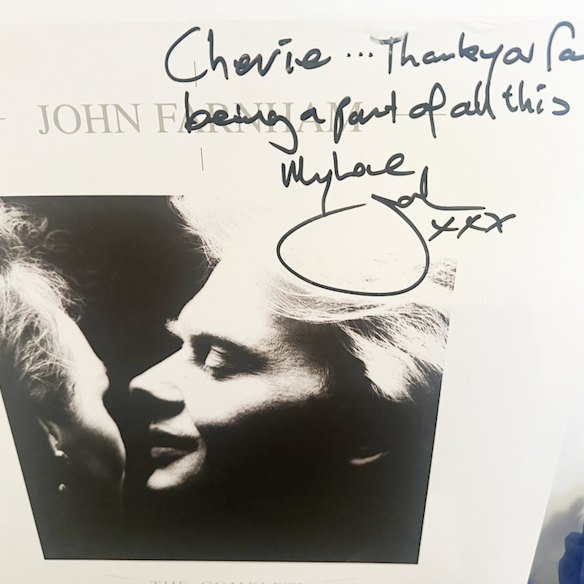
It’s worth remembering, though, that this success was far from guaranteed. It was the mid-1980s and commercial radio made or destroyed careers, and nobody in radio wanted to know about a new album by Johnny Farnham of 1967 Sadie fame. Nobody except Cherie Romaro.
A powerhouse radio director at a time when women weren’t, Romaro was the country’s first female commercial radio music director and the first female content director. She was running Sydney’s 2DAY FM when her old mate Glenn Wheatley called to tell her that he was flying up from Melbourne to play her a new album by Johnny Farnham – now to be known as John, please. “He turned up with the album in a paper bag,” Romaro recalls over the phone from her Sydney home. “I later learnt the reason for the paper bag was that he didn’t want anyone else to know it was John Farnham, because he was getting so many knockbacks.”
Wheatley owned Melbourne’s EON-FM at the time but even it wouldn’t play You’re the Voice more than once, and then only because Wheatley told them to. The knockbacks came not just from radio presenters but from record distributors too: nobody would touch it, so Wheatley Records had to release the album itself.
Romaro didn’t know any of this when Wheatley put the album on the turntable in her office, picked up the needle and placed it down on You’re the Voice. The hands clapping, the music building, the first lyrics, “We have the chance to turn the pages over” – it took her about 30 seconds to feel the power of the song.
She listened for a little bit longer, then picked up the album, walked down the corridor to the studio where a presenter was live to air, and gave it to him. “Put this on,” she said. He saw the name on the cover, and sighed. He didn’t want to. “Put it on, you’re going to play it,” she said, and left the studio. As she walked back down the corridor, she could hear You’re the Voice playing through the speakers.
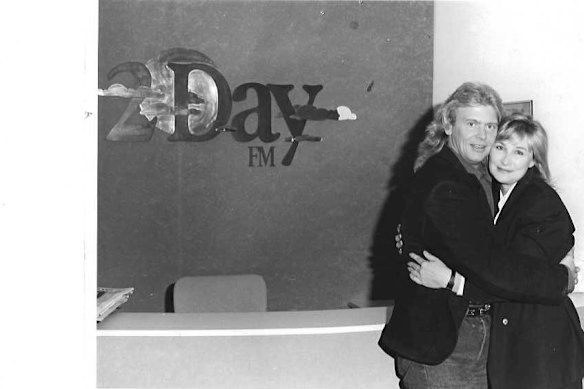
When she got back to her office, Wheatley was in tears. “I had no idea he’d put everything he owned behind this. I had no idea of the struggle. He’d made sure I heard it with clean ears. It was a great moment.” They hugged it out. The station’s phones started to light up with callers. Romaro directed her team to play You’re the Voice on the hour, every hour.
History rolled on from there. Wheatley subsequently gave her a framed CD of the album, which included a plaque bearing four words: “The whisper started here.”
Romaro has become closer with Gaynor since Wheatley’s death, and has admired how she’s stepped into his shoes, from making sure the Poppy Stockell documentary wasn’t derailed by the events of 2022 – interviewing Farnham for it while he was at his condo in Port Douglas, becoming a talking head in the doco herself – to working on the tribute concert and co-producing the musical. “She probably underestimates herself sometimes,” she says. “I can tell you from the bottom of my heart that nobody should do that with Gaynor. What she’s achieved while grieving Glenn has been nothing short of courageous and brilliant.”
Romaro will be at the musical’s opening night. She’ll also be a character on stage, something she’s looking forward to but is also slightly apprehensive about. “I’ve always loved being behind the scenes, but I can’t escape this one, so I’m just going to try to embrace it and enjoy that wonderful cast putting John centre stage.”
Read more from Good Weekend magazine:
Get the best of Good Weekend delivered to your inbox every Saturday morning. Sign up for our newsletter.
Disclaimer : This story is auto aggregated by a computer programme and has not been created or edited by DOWNTHENEWS. Publisher: www.smh.com.au



