This week’s fiction ranges across cosy drama, speculative fiction and a satire of aimless young men, while our non-fiction picks include a remarkable Indigenous military biography, tips for understanding cognitive change and evolutionary lessons from Richard Dawkins.
Fiction

Nine Yard Sarees by Prasanthi Ram (Pink Short Press, $32.99)
Though they can be read as self-contained units of their own, the 11 short stories in Nine Yard Sarees have overlapping characters and storylines, with a focus on the diasporic narratives of Indian women, from youth to old age. The book is a polyphonic wonder – a multi-generational exploration of sibling and parent-child relationships, traditional values butting against the desire for autonomy, new and long-term marriages, interracial couplings, patriarchal and caste systems, and more. Set mainly in Singapore, “the land of Chinese people and Western modernity”, the non-chronological collection follows the winding paths of an extended Tamil Brahmin family, whether living in close quarters or separated by land and seas. It also comes with a large supporting cast of characters, and feels epic in scale despite its length. Nine Yard Sarees won the 2024 Singapore Literature Prize for English Fiction and has all the colour and tumult you’d expect, but it’s also perceptive, nuanced and empathetic, giving voice to women of different socio-economic backgrounds. A standout tale is about a domestic worker sponsored by higher-class, affluent Indians in Singapore.
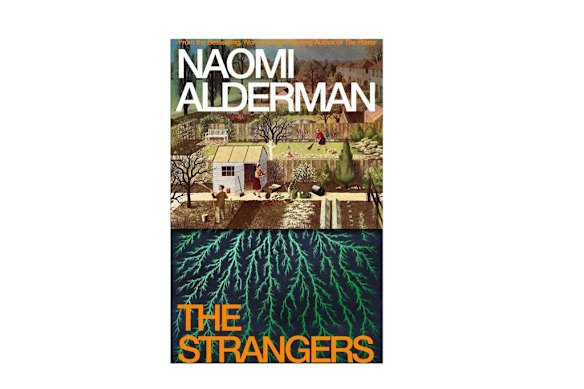
The Strangers by Naomi Alderman (Fig Tree, $34.99)
An odd book that tries to braid memoir and speculative fiction, The Strangers is an uneasy mix that doesn’t quite gel. Following the death of her mother, the narrator sets up a camera in her parents’ backyard and accidentally records what could possibly be a new species in the UK. They are the strangers of the title, badger-like creatures whose long proboscis resembles an elephant’s trunk. Promptly nicknamed “mimmoths”, they are soon discovered across the globe, prompting all manner of conspiracy theories on whether they are harbingers of hope or pests with malicious intent. The book leaves open-ended what these mammals represent, so the reader can insert whatever they deem fit (immigrants? Fear of the unknown?). Moreover, the narrator (also called Naomi) is possibly an unreliable one, still processing not only the loss of her mother, but also her inability to carry a pregnancy to term. Was her personal interaction with the mimmoths a manifestation of grief? With its play of fact and fiction, The Strangers reads like a meshing of disparate ideas that don’t work together as a whole.

The Long Cloud by Hector Mackenzie (Scribe, $29.99)
After a decade hustling in London, washed-out model Xander returns to New Zealand for a holiday and reconnects with his family, exes and old friends. Hector MacKenzie’s debut novel favours short chapters with long sentences in lower case, mostly without punctuation, so the effect is an unfiltered stream-of-consciousness narrative from a 30-year-old with an inferiority complex. Xander feels he’s a failure because he’s not a “doctor or a writer or a musician or an artist or a producer”, just someone who trades on his fading good looks. His successful actress girlfriend, who financially supports him, also presents a challenge to his masculinity. The Long Cloud immerses you in the mindset of an immature and anxious kidult, and a lot of the prose reads like rambling journal entries full of vaping, drinking and hangouts with small-town inhabitants. But when Xander meets someone whose radiance pierces his maudlin self-pity, there is a chance he may upend his life. The book is a study in arrested development; it both satirises and indulges in the depiction of rudderless young men.
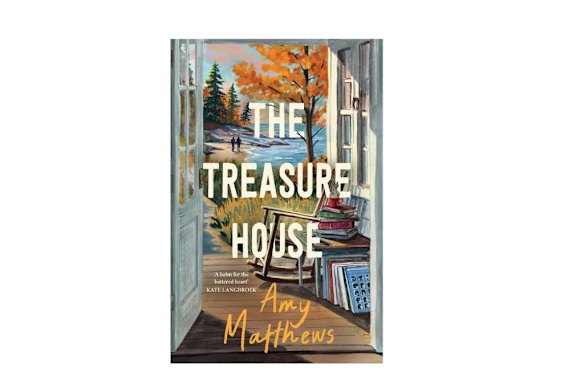
The Treasure House by Amy Matthews (Simon & Schuster, $34.99)
With a hardscrabble background and after a string of shabby rentals, all Zoe ever wanted for herself and her 11-year-old daughter, Florence, was stable accommodation. So despite barely knowing “a nail from a screw”, she decides to buy what’s euphemistically called a “treasure house” in a small seaside town in the US state of Maine, which is full of holidaymakers and retirees. The property is actually a hoarder’s paradise, full of a lifetime’s assortment of memorabilia and junk. Its low price reflects its decrepitude. The narrative is divided into two parts: the present, with full-scale cleaning and renovation of the “gnarled crone of a cottage” and its garden, undertaken by an enthusiastic team of helpers, and the 1950s, from the perspective of Marly, a previous occupant. Despite some traumatic content involving drug addiction and its effects, The Treasure House is a wholesome, cosy drama that prefers to focus on new beginnings, community goodwill and the balm of romance. The mother-daughter relationship between Zoe and her precocious preteen is sweetly drawn out, with Gilmore Girls vibes.

The Lady with the Dog by Carrie Tiffany (NewSouth, $29.99)
This tiny book (only 108 pages) shares its title with an Anton Chekhov short story, but where Chekhov’s tale deals with an affair between two married people, this one, as Carrie Tiffany points out in her afterword, is dedicated to her late mum, who suffered from Alzheimer’s disease. The unnamed woman in this novella has received a diagnosis not long before a new dog – also unnamed – arrives in the home she shares with her husband. It is apparently the sixth canine to have graced the household, but the woman’s memory is patchy and unreliable. Her past bleeds into the present, with recollections of family dogs from yesteryear mingled with the antics of the latest creature. It’s a sad story of mental disintegration. Not only is she unable to recognise a photo of her younger self, but she is constantly confused about timelines and despairs that “most things are her fault now”. Interspersed among the spare text are coloured line drawings by Noel McKenna that add poignancy to the story. Tiffany is adept at depicting the collapse of language and identity.
Non-fiction

Fighting for Country by James Saunders (Allen & Unwin, $34.99)
With its cover image of a man in uniform, Fighting for Country looks at first glance to be a standard military biography. But look again. The man is clearly Indigenous, and the title doesn’t just refer to doing service for the nation. Reg Saunders was Australia’s first Indigenous military officer. His remarkable feats on the battlefield are, however, only one dimension of his story. His nephew, James Saunders, sets the mood early with Reg as a boy walking the shores of Lake Condah in Victoria’s Western District, in the footsteps of his forebears on Gunditjmara Country. With a flair for evocative, immersive storytelling, James takes us into Reg’s world, revealing how the battles of the Gunditjmara for their Country echoed through his youth, his service in two wars and civilian life. There is a beguilingly filmic quality to this often dramatic narrative about a brave and dignified man, his family and his people. “They were the first defenders of Australia, and their work did not end with treaties of Europe or medals from allies.”
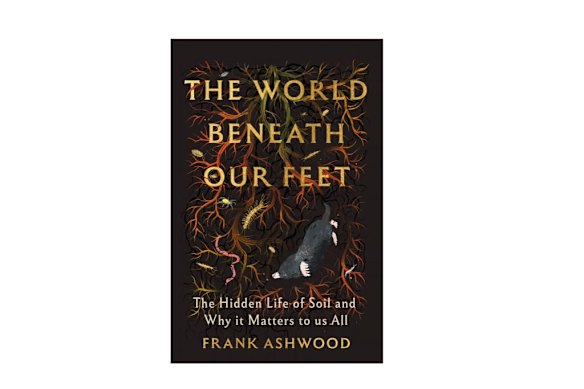
The World Beneath Our Feet by Frank Ashwood (Hodder Press, $34.99)
Topsoil, our planet’s thin sheath, gives us 95 per cent of our food. “And yet,” writes soil ecologist Frank Ashwood, “we treat it like dirt.” Ironies and marvels abound in equal measure in this urgent and eye-opening tour of Earth’s immediate underworld. A potent concoction of minerals, gases, liquids, dead organic matter and living organisms, soil makes our lives and Earth’s biodiversity possible. But much of it remains dark matter to scientists, and much of it is being depleted by agriculture and threatened by climate change. As Ashwood takes us from England’s broadleaf forests to the red dust of the Pilbara in Western Australia, he awakens us to the fact that we need only step into our gardens to begin to understand the layered story of soil: the humus, the topsoil and the subsoil and how each is formed. All of it teeming with life and connecting the tiniest critters to the greatest forests. Who knew there was magic in a springtail’s sperm package or that a humble woodlouse could be beautiful?
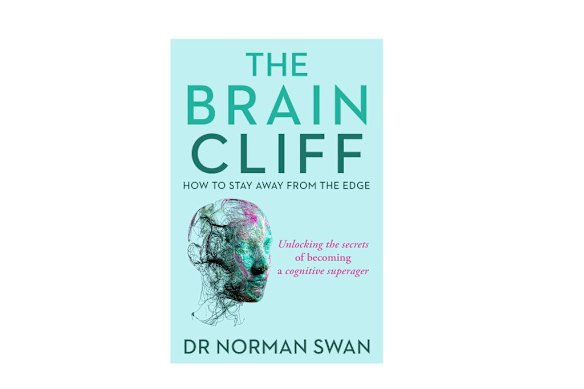
The Brain Cliff by Norman Swan (Hachette, $34.99)
Here’s a lovely term for learnt experience – “crystallised intelligence”. It’s what we might describe, says Norman Swan, as the wisdom of age. Rather than equating an ageing brain with decline, better to think of it as undergoing cognitive change. The good news is that our brain’s plasticity allows it to develop new networks of nerves to compensate for natural attrition. Throughout adulthood, we start to use more of our brain, and we can help fortify this scaffolding process or undermine it, depending on our behaviour, diet, healthcare, lifestyle, psychology and outlook. The role vaccinations play in staving off dementia is a particularly striking revelation, and others include the impact of how we deal with stress and the value of staying employed or embracing new challenges. The constructive bent of The Brain Cliff is underscored by case studies about “super-agers” in their 90s and 100s who have brain scans and cognitive capacity akin to people much younger. It’s heartening to see the tired script about pre-ordained decrepitude being rewritten.
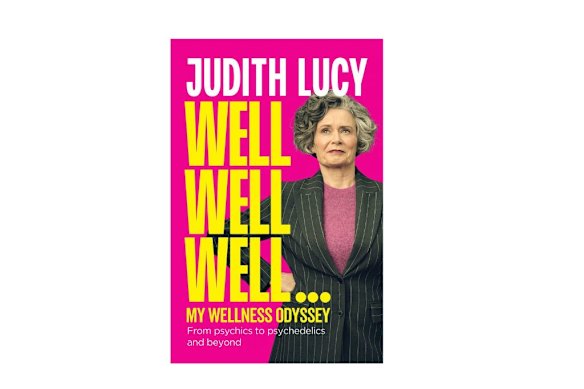
Well Well Well … My Wellness Odyssey by Judith Lucy (Scribner, $36.99)
No one does dark, self-deprecating humour quite like Judith Lucy. And yet, my favourite part of her quest to make peace with herself and her past isn’t funny; it’s hard-earned and wise. After trying almost everything on the often costly wellness buffet, she comes to the conclusion that “all the stuff that helps is generally free”. It’s been a long, tough road through burn-out, illness and moments of despair for her to get here, and there is plenty of wit along the way. When talking about a yoga nidra meditation on YouTube, she remarks that the woman leading it “is sometimes so breathy and slow that I don’t know if she’s trying to help me sleep or orgasm”. While a wryly entertaining taste of what’s on that wellness buffet menu and what worked for her, the poignant substance of her tale concerns the escalating pressures that forced Lucy to withdraw from stand-up comedy and how she has regained self-acceptance and joy. Essential to this recovery is the recognition that “sorting your shit out is an endless process”.
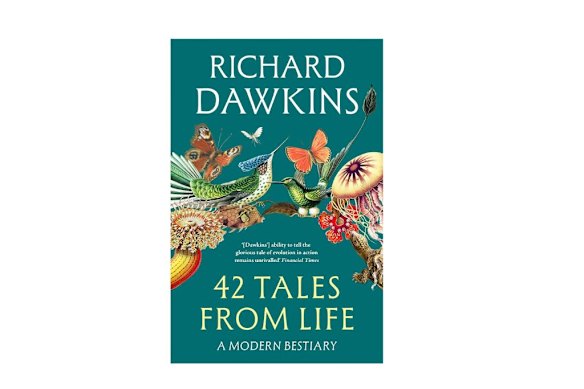
42 Tales From Life by Richard Dawkins (Apollo, $59.99)
This modern bestiary features some of nature’s more unusual creations as lessons in the unimaginable byways evolution has taken, often stressing the more “alien” qualities of these life forms. Dawkins opens with the cephalopods – octopus, squid, cuttlefish – which, since H.G. Wells’ sci-fi thriller War of the Worlds, have been the model for invaders from space. While the logic of a bestiary has driven this framing, I couldn’t help wondering – as someone who hangs out with cephalopods – whether Dawkins’ approach backfires by “othering” these creatures as freakishly not of our world and therefore somehow beyond our ken. That said, there’s much to relish in this scientific wunderkammer which tells of starfish who use hydraulics rather than muscles to move their arms and tubed feet; how tiny hummingbirds achieve long-haul flights and the amazing problem-solving abilities of slime mould, which Dawkins regards as the most “alien” organism of all.
Disclaimer : This story is auto aggregated by a computer programme and has not been created or edited by DOWNTHENEWS. Publisher: www.smh.com.au