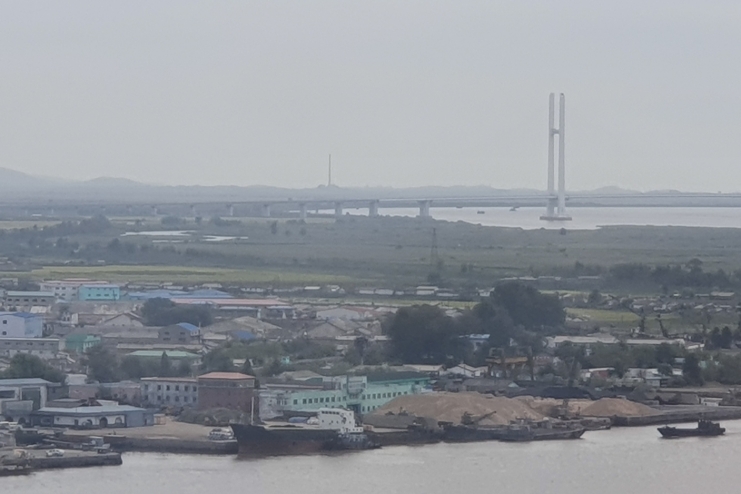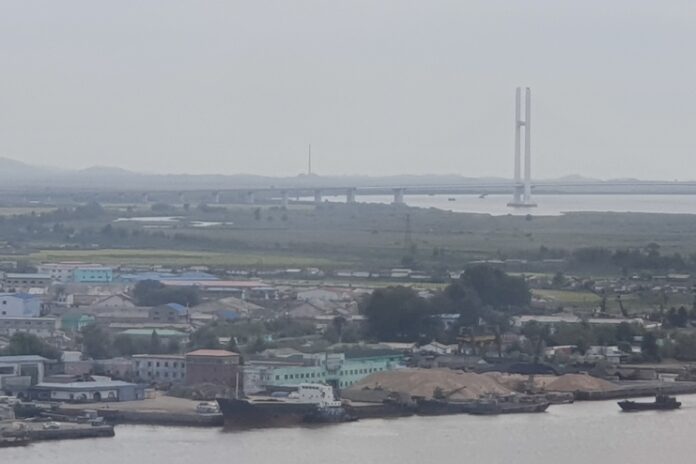
Sinuiju markets are overflowing with Chinese goods in November 2026, but a severe cash shortage means almost nobody is buying. Vendors in the North Korean border city describe a collapse in sales that many are now calling a “trading cliff.”
“Stalls across the markets of Sinuiju, the gateway city on the border, are piled high with goods thanks to official trade with China,” a source in North Pyongan province told Daily NK on Thursday. “But there is nobody to buy them, so trade has practically stopped and vendors are sighing more deeply every day.”
Sinuiju faces the Chinese city of Dandong across the Yalu River and handles most of North Korea’s trade with China. Cross-border cargo traffic has surged this year, and the New Yalu River Bridge opened to trucks in October.
According to the source, the city’s private markets, known as jangmadang, are packed with Chinese clothing, shoes and other manufactured goods, along with many kinds of food. The markets look lively at first glance, but most shoppers ask a price once or twice and walk away.
Vendors began filling their stalls in early autumn with winter clothing, shoes, cooking oil and seasonings imported from China. Supplies are now so plentiful that people in Sinuiju say there is nothing the markets do not have.
From opening until closing time, however, shoppers merely linger at the stalls and haggle over prices. A typical vendor sees only one or two customers a day take out cash and buy something.
Foot traffic remains steady, in other words, but almost none of it turns into completed sales. The source said the slump has grown noticeably worse since the start of November.
The trend echoes earlier reports of vendors going days without a single sale as North Korea’s economic crisis deepened. This time, though, the shelves are full and the problem lies entirely with empty wallets.
Fees and debts squeeze vendors at Sinuiju markets
Many vendors now go whole days without earning enough to buy rice for their families’ meals. They say they end up in the red after paying the market fees the market management office collects every day.
Market management offices are government bodies that assign stalls and collect daily fees from vendors at North Korea’s official markets. Vendors must pay those fees whether or not they sell anything that day.
Their despair is compounded by debt, because many of them took their stock on credit from wholesalers. Repayment dates are drawing closer while the unsold inventory sits untouched on their stalls.
The crisis reportedly surfaced in a report compiled Oct. 27 by the Sinuiju people’s committee and the market management office. It covered stall operations at the city’s general markets and fee collection in the second half of October.
People’s committees are the administrative bodies that run North Korean cities and counties under the ruling party’s direction. The Sinuiju people’s committee oversees the city’s markets through the market management office.
According to the source, the report plainly stated that goods keep arriving from China through customs and reaching the markets. It also acknowledged that trade has ground to a halt, cash is not circulating and vendors are on the brink.
“Vendors are all lamenting the slump in consumer spending,” the source said, relaying the words of a clothing vendor at one Sinuiju market.
“Back in the lockdown days, we couldn’t do business because there were no goods,” the vendor said, according to the source. “Now goods are piled up like a mountain in front of us, but people don’t have even 1,000 won in their pockets, and that hurts far more.”
North Korea sealed its border with China in January 2020 to keep out COVID-19, and imported goods all but vanished from markets for years. Trade has since recovered, and Chinese goods have returned to the stalls in large volumes.
Analysts have previously linked weak market demand to a collapse in purchasing power among ordinary North Koreans. Household incomes have failed to keep pace with record food prices and a falling North Korean won.
The frustration is shared by Sinuiju shoppers as well as the vendors who depend on them. Many families simply cannot afford the winter goods now stacked in front of them.
“The people doing the buying feel just as stifled as the vendors,” the source said. “They wander the market just looking, and every time they go home empty-handed they say they cannot face their children.”
About This Translation
This article was originally written in Korean and translated with the help of generative AI tools. It was then edited by a native English-speaking editor. All AI-assisted translations are reviewed and refined by our newsroom.
Reporting from Inside North Korea
Daily NK operates networks of sources inside North Korea who document events in real-time and transmit information through secure channels. Unlike reporting based on state media, satellite imagery, or defector accounts from years past, our journalism comes directly from people currently living under the regime. We verify reports through multiple independent sources and cross-reference details before publication.
Our sources remain anonymous because contact with foreign media is treated as a capital offense in North Korea — discovery means imprisonment or execution. This network-based approach allows Daily NK to report on developments other outlets cannot access: market trends, policy implementation, public sentiment, and daily realities that never appear in official narratives.
Maintaining these secure communication channels and protecting source identities requires specialized protocols and constant vigilance. Daily NK serves as a bridge between North Koreans and the outside world, documenting what’s happening inside one of the world’s most closed societies.
Disclaimer : This story is auto aggregated by a computer programme and has not been created or edited by DOWNTHENEWS. Publisher: dailynk.com