
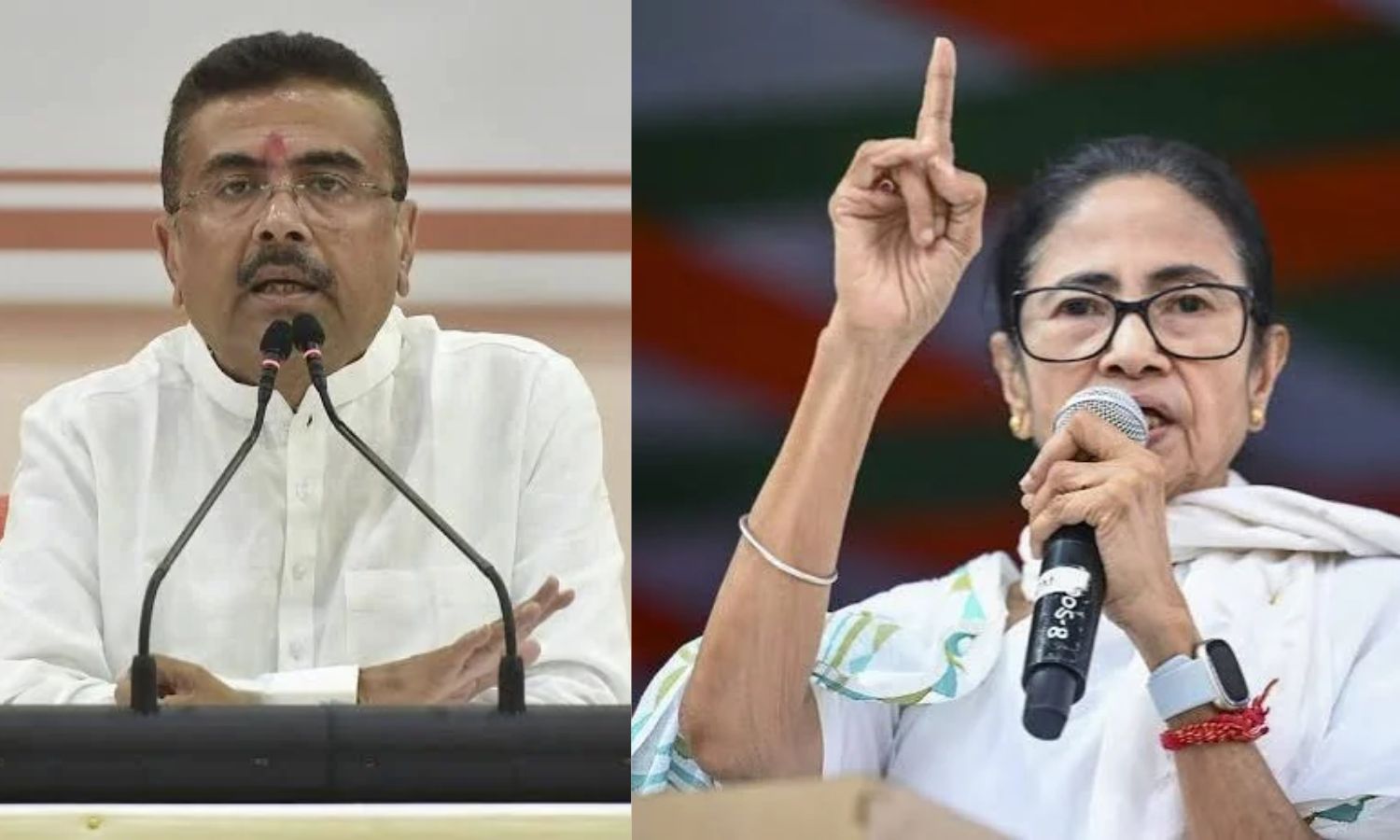
Like a new car that begins losing value the moment it leaves the showroom, because depreciation sets in, the truth is that as soon as the Bharatiya Janata Party swept the West Bengal elections, the meter began ticking. The political capital the Suvendu Adhikari administration inherited has eroded over the past six months.
As a brand new party that has never before been in power in West Bengal, there was an expectation BJP would be a real alternative to the homegrown parties, namely the Trinamul Congress and the Communist Party of India (Marxist)-led Left Front coalition. No one under 55 remembers the Congress as a ruling government.
The drama of politics, which is what voters consume, requires an antagonist. Lacking an Opposition, the BJP is floundering. Decimating the Trinamul Congress, it now appears was not a very good idea. Naming Mr Adhikari as the only alternative was also not a good plan; without a challenger in sight, the chief minister is like a car without brakes.
The problem is the BJP wanted to win in West Bengal and it needed a “face” to challenge Mamata Banerjee. Therefore, Mr Adhikari was nurtured to serve as a “face”. It did not matter then that he was probably not the best leader to head a government. It matters now, when the BJP has been in power for six months and Mr Adhikari is unlikely to be disoldged in a hurry.
The BJP administration has certainly proved exceptional, but in ways that have shocked voters, across all classes and even political loyalties.
Never before have Bengalis been required to defend their right to buy and read books. The violence on College Street, over temporary book stalls set up by Left students unions, by Akhil Bharatiya Vidyarthi Parishad cadres with bombs, fire crackers, assaults, even eggs, in full view of the public and the police, who continue to operate as bystanders rather than a preventive force, has reconfirmed that West Bengal is now set on a wholly new trajectory.
College Street with its makeshift-but-sort-of-permanent book stalls is a destination. It is a combination of a site of pilgrimage as well as a metaphor of a deep reverence for education, freedom, rights, protest and culture. Vandalism and violence are not new to College Street; it has a history that predates Independence as a location of nationalist mobilisations and a place where new generations of students engaged in political action. During the heyday of the Naxalite movement, College Street would regularly turn into a battleground for students. Books and bookstalls were never a part of the fight.
No one in living memory recalls episodic acts of violence against Christians in rural and urbanised areas across West Bengal. The state and its nerve centre, Kolkata, have experienced Hindu-Muslim clashes, curfews to bring such clashes under control, even route marches by the army, called in by ruling governments to signal that the toughest measures would be taken if the communal violence did not end.
Winning West Bengal was like sweeping the jackpot. It was the start of what the BJP was expected to deliver to West Bengal as a reward for the popular mandate it won. The list was short and bittersweet. The vote was a negative endorsement of the BJP; voters, overwhelmingly the middle class, wanted a change. The belief was, the BJP was the only alternative.
The goal of the new direction that the Suvendu Adhikari government has ushered in with the backup of “double engine” support from the Narendra Modi-led BJP coalition at the Centre is the transformation of the state. That was the promise by BJP to voters when it canvassed for support. In West Bengal that transformation has key elements, fixed by the history of the state’s economic decline from 1947 and the embedded notion that its decline is, among other things, a product of the Centre’s discrimination.
Economic change, jobs, employment opportunities, more money and greater sense of well-being is how voters measure the performance of governments. West Bengal is not an exception. Emotive as the “Bangladeshi” infiltrators can be and the need to detect and deport them and in doing so rid the Hindu majority West Bengal of a menace that through political patronage acquired documents that helped them to masqurade as citizens, the issue was always a pressure point, not the substance on which real expectations are founded.
From the BJP, voters wanted a change; an end to the increasingly avaricious Trinamul Congress and the corruption-intimidation culture it had fostered. Six months on, voters and the BJP are dealing with the nexus between cash and politics. The networks of party functionaries engaged in corruption has been acknowledged by the BJP’s state leadership. Show cause notices and expulsions have had no effect.
The BJP as the ruling party has failed to withstand the power of the networks that were six months ago operating in the name of the Trinamul Congress and have now switched loyalties, because wearing the ruling party colours matters. The old BJP versus the new BJP, meaning defectors from the Trinamul Congress, Congress and even the Communist Party of India (Marxist), friction is an old story. Winning the election has intensified the tensions and outbursts at one level; at another level, it has created a sense of entitlement to raking in the benefits that power automatically creates.
Instability inside the ruling party has made West Bengal jittery. The absence of a strong Opposition, as a counter-force, has intensified the volatility. The CPI(M) and the Congress did not do well in the elections, but protest politics has revealed the capacities of both parties in mass mobilisations that have been impressive in size and determination to engage in street fights.
The engineered splits within the Trinamul Congress has considerably weakened Mamata Banerjee. The two new parties are politically insignificant. By concentrating her efforts at wooing back the defectors, Mamata Banerjee is achieving very little; all of West Bengal and beyond knows full well that no defector will return to the fold unless there is an obvious advantage. For now, Mamata Banerjee has nothing to offer defectors, not even the prospect of a possible win as and when the municipal elections are called in Kolkata and Howrah.
On its own, the BJP, on the one hand, and Mr Adhikari, on the other, appear unfocused, uncertain and directionless. There is the official face of the BJP, which is reflected in the anticipated progress towards an economic revival, where jobs will be created, factories will come up, AI and data centres will come up, green energy will be produced and a new reign will erase the decay of decades, violence will end, order will prevail, infrastructure will function flawlessly. And then there is the BJP.
It is trapped between a rock and a hard place. The increasingly strident affirmations of his faith as a Sanatan by Mr Adhikari, over meat-fish free Navaratri, that is, Durga Puja have embarrassed the BJP. Even the chief minister’s industrial policy vision has not received the whole-hearted endorsement that is essential for rolling out a design that involves the very sensitive issue of finding the land on which investors can build.
Politically, there is no alternative to the BJP in West Bengal. And, there is no alternative to Mr Adhikari in the BJP. The party is saddled with the dilemma of no alternatives.
Disclaimer : This story is auto aggregated by a computer programme and has not been created or edited by DOWNTHENEWS. Publisher: deccanchronicle.com




