Skiers and snowboarders can already make some turns down the runs on Germany’s highest mountain, with more resorts set to open soon. Here’s how prices, and snow conditions, are developing at the start of winter.
The ski and snowboard season began on Friday in Germany as the slopes opened on the country’s highest mountain, the Zugspitze, south of Munich.
As if to mark the occasion, residents of Bavaria and the German Alps woke up to fresh snow on the ground. The German Weather Service predicted up to 15 centimetres of snow in mountain areas, smaller amounts also fell over the cities of Munich and Nuremberg.
Skiing also opened at the Wintersport Arena Sauerland near Winterberg in North Rhine-Westphalia.
With two of Germany’s popular ski mountains now open for business, from here the 2026/27 ski season kicks off in earnest. Lifts are expected to be running by the Christmas holidays at the latest at ski mountains across the country.
On Saturday, the first lifts are set to run in the Upper Bavarian Alpen-Plus region of Spitzingsee. Also in the Swabian region of Grasgehren, which moved its opening day forward by one week due to cold weather.
A week later – from December 4th – the Söllereck, Fellhorn, and Kanzelwand Cable Cars near Oberstdorf plan to start.
Other areas follow, including the Sudelfeld and the Brauneck.
Is there enough snow?
After an extremely hot summer, there is cause for concern about how temperatures will develop this winter.
Warmer average winter temperatures, increasingly pushed up by human caused climate change, have already put the future of recreational skiing in Europe in question. Recent years have seen barren slopes even during peak winter months on many mountains.
But going into December 2026, Germany has so far seen a relatively promising start to the season with cold temperatures in recent weeks, and some scattered snowfall – so far primarily in the southern mountainous regions like the Bavarian Alps and the Black Forest.
To see which resorts are open and check on current conditions, this German snow report is a decent place to start.
READ ALSO: Skiing in Germany – How to check if there’s snow on the slopes
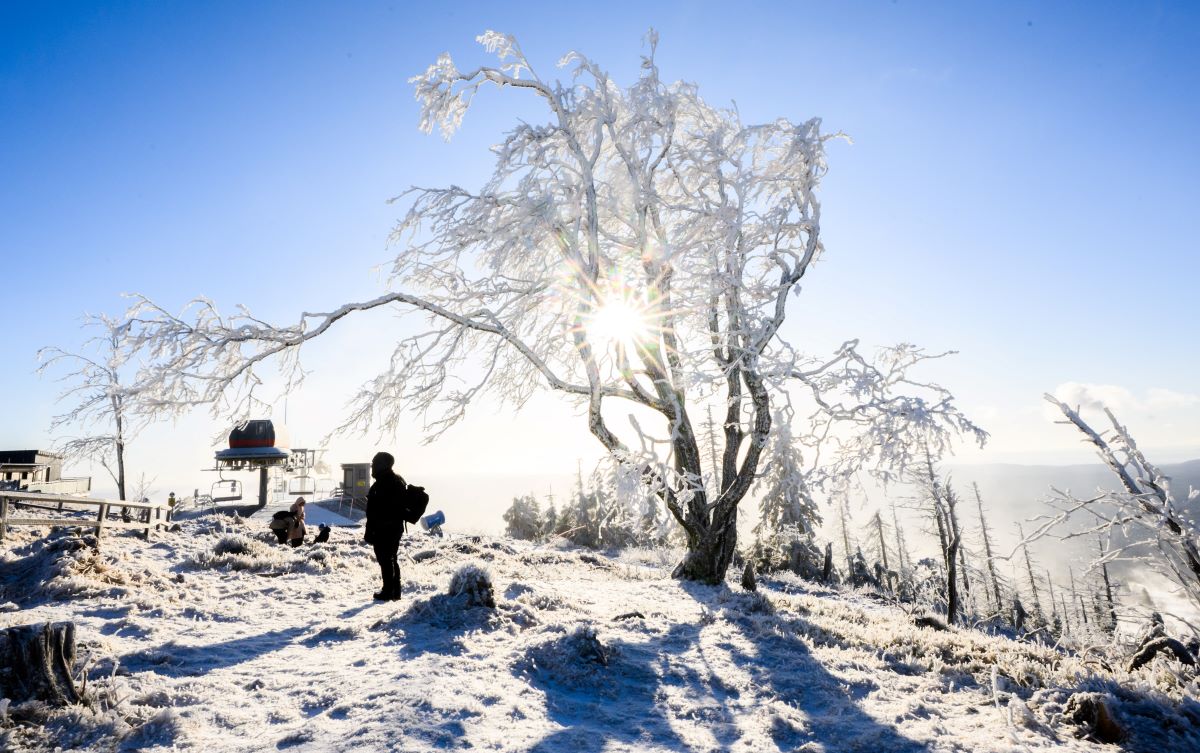
View from the top of a ski and toboggan lift in the Harz Mountains. Photo: picture alliance/dpa | Julian Stratenschulte
Most large ski resorts in Germany use snow cannons to add some artificial snow to their runs.
At Winterberg ski lift carousel, two slopes are covered by newer all-weather snow cannons, which allow for snowmaking even at temperatures above freezing. Standard snow cannons only work when temperatures are at least slightly below freezing.
On Germany’s highest slopes on the Zugspitze, there is only natural snow. At the start of the season here old snow that survived the summer in shady pockets is spread on the slopes.
Generally speaking, the high elevation resorts in the Alps along Germany’s southern border will have better snow conditions than slopes on smaller mountains elsewhere.
Last year, Nelbelhorn-Oberstdorf – in the Allgäu region south-west of Munich and just east of Lake Constance – was rated Germany’s most ‘snow secure’ resort in an analysis by VignetteSwitzerland. Notably the Nebelhorn ski area is high and also well-covered with snow cannons.
READ ALSO: The little known ski resort rated best in Germany for reliable snow cover
Rising prices
Skiing is not a cheap sport and the price for a lift ticket is only rising this year. According to the Association of German Cable Cars (VDS), the cost of a one-day lift ticket has gone up 4.2 percent – on average across Germany’s various resorts – compared to the previous season.
In South Tyrol, Italy, the price increase for lift tickets this year averages 3.4 percent, according to calculations by the consumer association Altroconsumo. Skiers in Austria can also expect price increases.
READ ALSO:
With the Bayerische Zugspitzbahn, skiiers and boarders can save significantly by buying tickets online in advance. A day ticket at Zugspitzplatt costs €78 at the ticket office, but just €70.50 if purchased online the day before.
Another reason to buy tickets in advance at the Zugspitze: daily tickets are limited. If 4,500 tickets are sold, no further guests can buy a pass that day.
Disclaimer : This story is auto aggregated by a computer programme and has not been created or edited by DOWNTHENEWS. Publisher: thelocal.de