
On Monday, Premier Chris Minns was clear when asked whether he believed accused war criminal Ben Roberts-Smith had been afforded special treatment as he left Silverwater Correctional Complex.
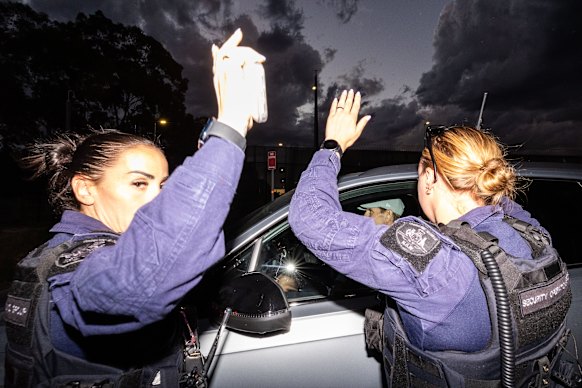
Minns said Corrective Services staff were simply taking measures to ensure Roberts-Smith’s safety when he was escorted late on Friday through a back exit of the facility, avoiding a throng of waiting media at Silverwater’s front gate.
“I don’t think they would be applying that in relation to every prisoner who walks out, but in fairness to them, every prisoner who walks out isn’t met with a hundred cameras and a hundred journalists,” Minns said when pressed on the actions of the Correctives Services staff.
The premier is correct that very few prisoners who leave a jail attract such attention. However, the fallen war hero, who is facing five charges of war crimes – murder, is certainly not the first high-profile public figure to leave a remand or prison complex.
Others, such as former NSW Labor minister Eddie Obeid or former TV game host Andrew O’Keefe, have had high-profile cases that generated much media interest. Neither received a Corrective Services escort, nor had staff assigned to block the window of a car to protect their privacy. That treatment was unique to Roberts-Smith.
It was not the decision to allow Roberts-Smith to leave the complex via a back exit that should be under scrutiny. That is not unprecedented. Rather, it was what came next.
With a taxpayer-funded convoy, the staff deliberately obstructed a public road in an attempt to stop the former Special Air Services soldier being photographed as he left Silverwater in a silver Audi SUV. The premier said on Monday that that measure was about ensuring safety.
However, his departure turned into a chaotic situation that did not appear to be safe for Corrective Services staff or the media.
Corrective Services staff also attempted to stand in front of Herald photographer Sam Mooy as he captured Roberts-Smith in the front seat of the Audi. Again, it is difficult to see how their actions were about safety.
As Herald crime roundsman Riley Walter reported on Saturday, a longstanding agreement allows media to wait at a designated point near the prison’s entrance. Corrective Services officers on Friday asked members of the media to remain on grassed areas either side of the entry and exit to the facility and clear of nearby footpaths.
Maintaining that position, the officers said, would ensure the safety of both the media and Roberts-Smith as he left the complex. They did as they were asked, having been led to believe he would leave via that entrance. Roberts-Smith was then brought out a different gate.
It should be noted that protest about the behaviour of the staff, which is under investigation by Corrective Services, is not sour grapes from the media. Indeed, the Herald was able to carry out its job despite the best efforts of prison staff.
Press freedom underpins a functioning democracy and any attempts to thwart that should be a concern. Equally concerning is why Roberts-Smith was seemingly given special protections not extended to others.
There are serious questions to be answered about how this was handled. Corrective Services NSW’s review must be thorough and its findings should be released.
Start the day with a summary of the day’s most important and interesting stories, analysis and insights. Sign up for our Morning Edition newsletter.
 The Herald’s View – Since the Herald was first published in 1831, the editorial team has believed it important to express a considered view on the issues of the day for readers, always putting the public interest first.
From our partners
Disclaimer : This story is auto aggregated by a computer programme and has not been created or edited by DOWNTHENEWS. Publisher: www.smh.com.au


