
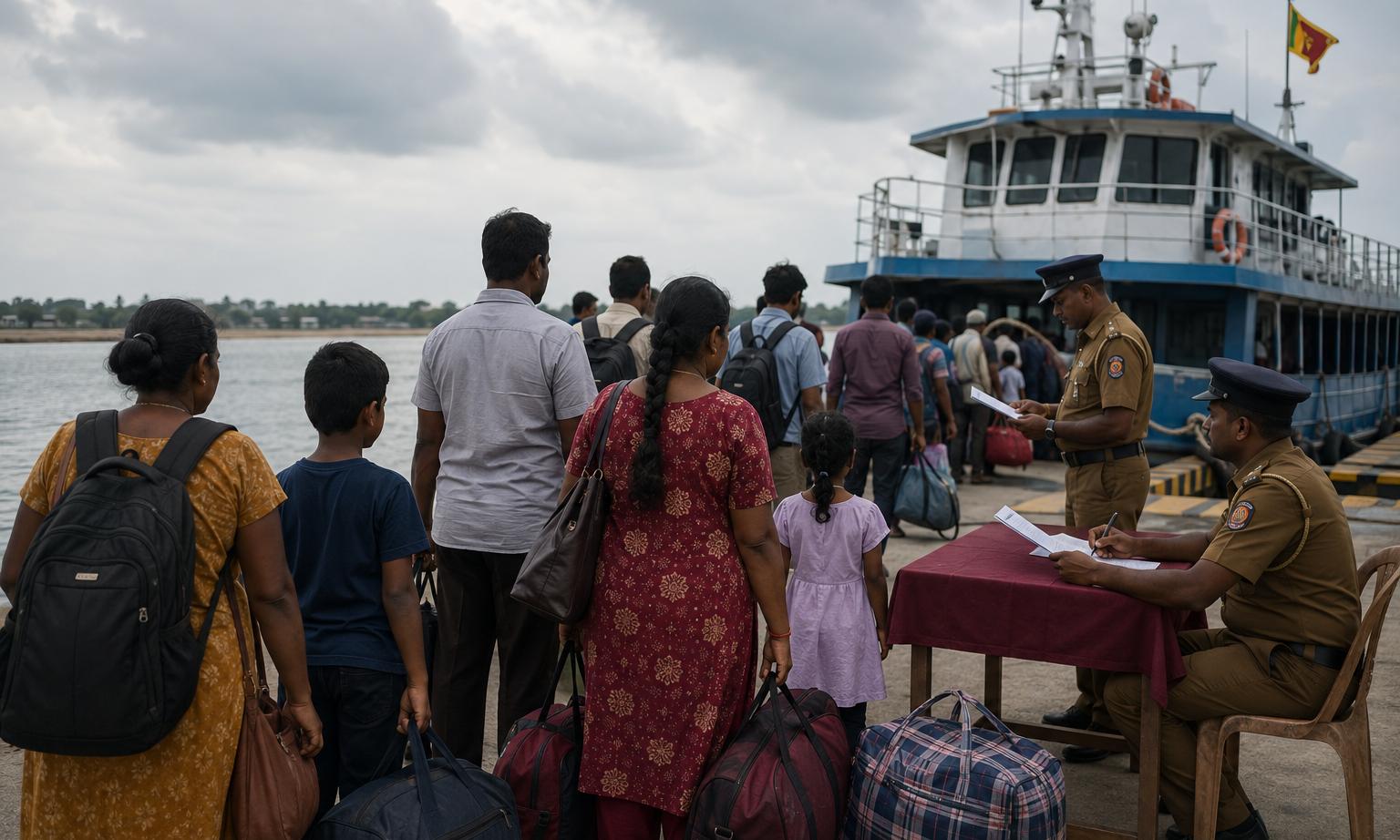
Colombo: Sri Lanka’s government has approved special immigration arrangements to facilitate the voluntary return of refugees in India who left the island nation without valid travel documents during its decades-long civil war, according to a cabinet note issued here on Tuesday.
The measures, to be implemented for those returning under the auspices of the UN High Commissioner for Refugees (UNHCR), are aimed at removing legal hurdles faced by refugees who left Sri Lanka through unauthorised routes.
Under the approved arrangements, Sri Lankan nationals who left the country before August 1, 2006 without using a passport will be screened by the State Intelligence Service to verify that they have not been accused of murder, treason or other specified offences, it said.
Those cleared through the screening process will be allowed to enter Sri Lanka through an authorised airport or port on temporary passports, without being subject to legal proceedings under the country’s immigration law for their unauthorised departure, the cabinet note said.
The same arrangements will apply to Sri Lankan nationals who left the country without valid documents between August 1, 2006 and May 19, 2009 – the date the civil war ended after nearly three decades of fighting between Sri Lankan government forces and the Liberation Tigers of Tamil Eelam (LTTE).
Those found to be accused of murder, treason or other specified offences will instead be detained at the port of entry and handed over to the relevant authorities for legal action, it said.
The decision comes amid longstanding difficulties surrounding the voluntary return of Sri Lankan refugees from India.
In May last year, a 75-year-old Sri Lankan Tamil refugee was arrested by immigration authorities at Palaly airport in Jaffna after returning from India. The man, who had lived for decades in a refugee camp in Tamil Nadu, had returned with clearances from the relevant authorities and with UNHCR assistance. He was subsequently produced before a magistrate and remanded.
The incident raised concerns over the legal difficulties that could face refugees returning to Sri Lanka after decades in India.
Sri Lankan refugees began arriving in Tamil Nadu in large numbers after ethnic violence in 1983 and the subsequent escalation of the armed conflict between government forces and the LTTE.
UNHCR has facilitated voluntary repatriation from India for more than two decades. Nearly 18,000 Sri Lankan refugees returned voluntarily with its assistance between 2002 and February 2022.
Sri Lankan government figures indicate that returns have continued since the end of the war. The government said in March this year that more than 18,500 people had returned from Tamil Nadu to Sri Lanka between January 2009 and June 2025.
Despite the returns, a large refugee population remains in Tamil Nadu. About 89,000 Sri Lankan Tamils were living in and outside refugee camps in the state as of early 2026, according to Sri Lankan government estimates – and around 40 per cent of them were born in India.
Many of those who remain have spent decades in India, with questions around livelihoods, documentation and long-term legal status forming part of the challenges surrounding their eventual return.
Disclaimer : This story is auto aggregated by a computer programme and has not been created or edited by DOWNTHENEWS. Publisher: deccanchronicle.com




