Stalking law simplified to become one offence
-
Published
A new standalone offence of stalking is to be created in England and Wales after a review found the law regarding the crime was “cluttered and confused” – but the maximum sentence will not be increased.
Specific stalking offences were introduced in 2012 but the underlying offence of harassment had to be established, and additional factors such as fear or distress proven, for it to be considered stalking.
A review was ordered by the government last year, led by Richard Wright KC, who prosecuted the man who stalked and murdered Alice Ruggles in Gateshead in 2016.
Victims of stalking have welcomed the change in law but said they were disappointed not all the recommendations have been adopted.
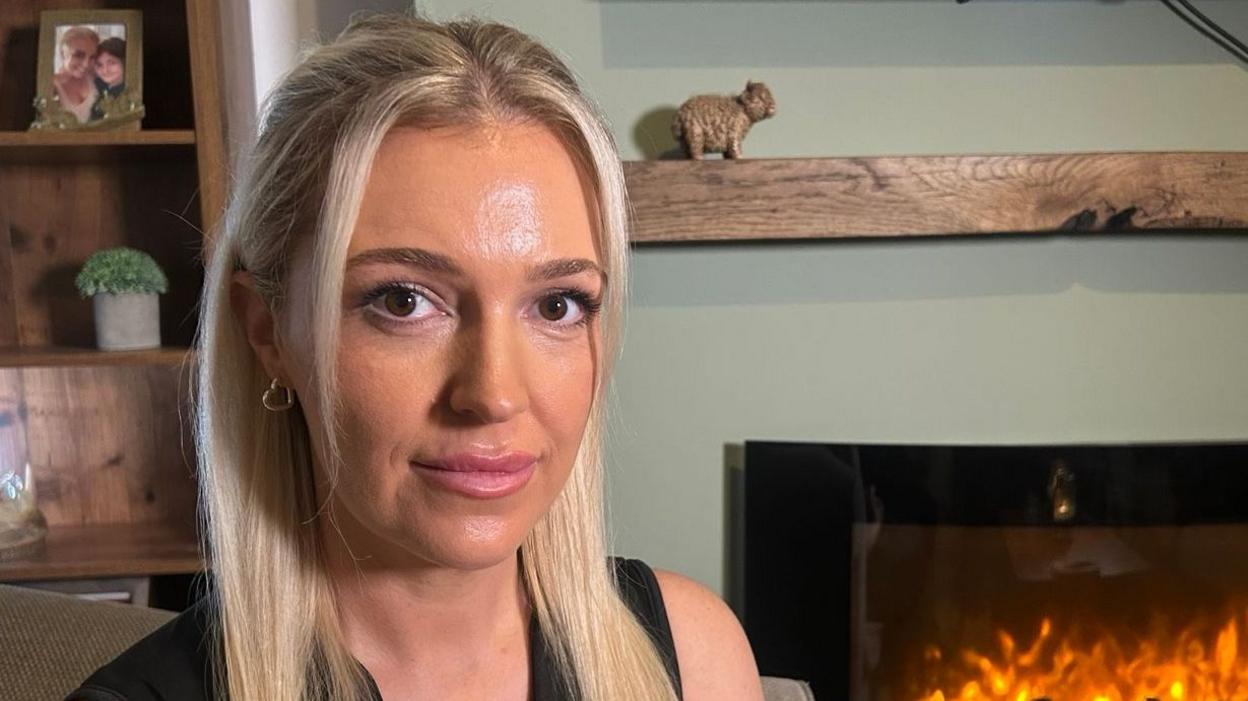
Katherine, from Newcastle, whose former partner was arrested 28 times for stalking her, welcomed the government’s decision to introduce one stalking offence instead of two.
“I’m pleased about that one because my ex was charged with [the lesser offence] of stalking without fear to start with and I was terrified,” she said.
“Anyone who’s been stalked knows how terrifying it is, so that one [without fear] was just pointless.”
But her ex had resumed his behaviour after being sentenced to three years and four months in prison, and she criticised the length of jail terms given to stalkers, which she described as “an absolute joke and an insult to the victims”.
Ashley, from Washington, in Tyne and Wear, was also disappointed the maximum sentence would not be increased.
“Stalking can have a devastating and lifelong impact on victims and their families,” she said.
“It affects your confidence, independence and ability to feel safe, even long after the relationship has ended and the perpetrator has been sentenced.”

Of the two current offences, only the more serious charge, which requires proof of fear of violence on at least two occasions, can be tried in the Crown Court, where the potential sentence is greater.
The government has accepted the introduction of a single offence for stalking that can be tried in either Crown or magistrates’ court and described it as the “biggest shake-up of stalking laws in more than a decade”.
But documents seen by the BBC show ministers rejected Wright’s proposal to raise the maximum sentence from 10 to 14 years.
Ministers said the average sentence for the more serious stalking offence in the year to March was 18.6 months, suggesting the existing maximum was not being fully used.
Safeguarding minister Satvir Kaur said: “It’s really important that victims know that we are holding perpetrators to account and feeling the full force of the law.
“The average sentences being given aren’t good enough.”
She said judges were already able to jail stalkers for 10 years so it was better to work with them to make sure they used the powers available to them than “changing the goal posts” on the maximum sentence.
 Image source, ROGER HARRIS/UK PARLIAMENT
The review was submitted to ministers earlier this year and last month Alice Ruggles’s father, Clive Ruggles, said victims of stalking would be at greater risk of dying if the government failed to publish and act on the recommendations.
Alice was killed in her Gateshead flat by her ex-boyfriend Trimaan Dhillon, who was found guilty of murdering the 24-year-old and jailed for 22 years.
Her family has campaigned for better recognition of stalking and improvements in how it is tackled.
Reacting to Thursday’s announcement, Alice’s parents said they “welcomed” the report and recommendations.
They added they were “heartened” that the response “endorses the need for a single stalking offence that focuses on the perpetrator’s behaviour and removes the onus on police and the CPS to prove the impact upon the victim”.
Wright’s review concluded confusion between stalking and harassment laws could contribute to failures in identifying and prosecuting the crime.
A previous investigation into police handling of stalking found three in every 20 stalking crimes examined had been incorrectly recorded as other offences, including harassment.
The review also recommends removing the need for victims to demonstrate actual fear or serious disruption to their lives for a stalking offence to be established.
Wright argues this would better protect victims who were unaware they are being secretly followed or monitored.
The government said it would explore introducing such a test but had not yet committed to its inclusion in the new offence, although Kaur said she was “sick and tired of it being the onus on the victim”.
‘AirTag stalking’
The review called for more consistent police investigations and greater use of specialist interventions to protect victims.
It also raised concerns about stalkers using applications to change protective orders as a means of maintaining contact with, or control over, victims.
Wright suggests additional safeguards, including requiring court permission before certain applications can proceed and ensuring victims can make representations.
The government acknowledged the problem but said it needed to explore the suggestions further.
Ashley, who was stalked by her former husband Jason Howe using an AirTag to track her movements, said she was “genuinely disappointed” by this response.
Howe was jailed for three years and four months in March last year for stalking and controlling or coercive behaviour.
But Ashley later discovered a restraining order designed to protect her had been amended, without her being consulted, allowing him to use a road through an exclusion zone near her home.
“A restraining order is supposed to protect victims, not provide another opportunity for perpetrators to maintain control,” she said.
The government has decided not to adopt a recommendation that would allow previously convicted stalkers to face a new stalking prosecution after just one further incident involving the same victim.
Instead, in previously announced legislation which comes into force on Thursday, courts will now be able to use stalking protection orders in cases of both conviction or acquittal.
“These orders can be in place for as long as is needed,” Kaur said.
The government said it would introduce the new legislation as soon as parliamentary time allowed, but had not set a date.
Follow BBC North East on X, external, Facebook, external, Nextdoor and Instagram, external.
Get in touch
Do you have a story suggestion for BBC North East & Cumbria?
-
-
Published22 October 2025
-
-
-
Published7 August 2025
-
-
-
Published27 January 2025

-
Related internet links
Disclaimer : This story is auto aggregated by a computer programme and has not been created or edited by DOWNTHENEWS. Publisher: BBC