
Cambridge, England — When Cambridge University interviewed Jason Arday for one of the most prestigious sociology positions in the world, he was an early career scholar and underqualified, by the school’s own standards.
Cambridge’s requirements, reviewed by The New York Times, called for “an outstanding research record of international stature” and a “proven successful track record” supervising doctorate students. Arday had a modest publication record and had bounced from one university to the next — not staying long enough to oversee a full three-year-or-more doctorate.
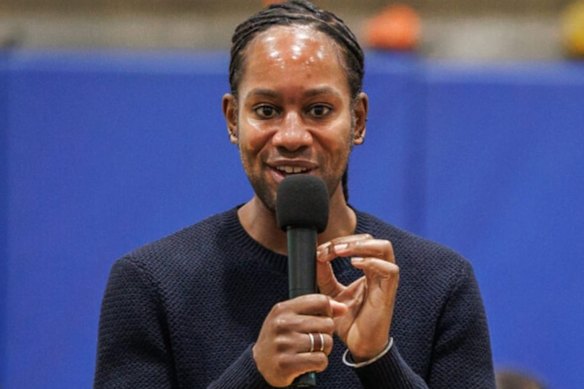
Cambridge hired him anyway in 2023, making him, at 37, the university’s youngest black professor at a time when the school was under pressure to diversify. In doing so, Cambridge thrust him into the international limelight, giving him a platform at one of the world’s elite universities to champion academic diversity and making him a target for critics.
Arday was found dead in London on Friday, days after resigning his job amid accusations that he had plagiarised chunks of his papers, embellished parts of his recently published memoir and fabricated aspects of his life story. The controversy exploded along cultural fault lines — race, neurodiversity and academic hiring.
In his August 5 resignation letter, he wrote, “I no longer wish to feel as though I am living under a constant spotlight, where every aspect of my life is subject to public examination and judgment.” He added, “This is not the end of my work. It is simply the end of this chapter.”
His family said that, since starting at Cambridge, Arday had faced a campaign of scrutiny intended to undermine him. That became too much for him, they said.
Questions about Arday’s career are unlikely to end with his death, however, because they were as much about Cambridge as they were about him. The centuries-old alma mater of Isaac Newton, William Wordsworth and kings and queens, Cambridge now faces deep scrutiny about its decision-making, even from its own faculty.
Too good to be true
While Arday was underqualified for his job, he had a remarkable story: a tale of being diagnosed early with autism and having such significant developmental delays that he spent his entire childhood in a special-needs school.
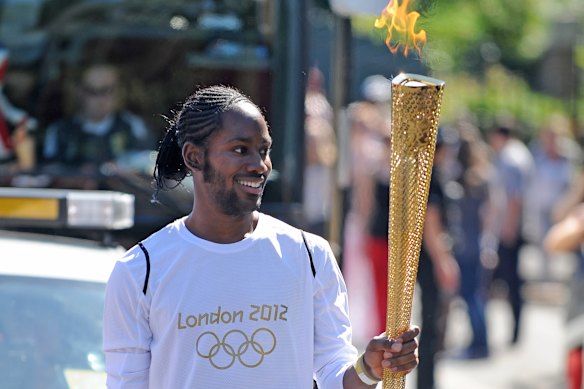
In his account, he did not speak until age 11 or read until 18, yet he managed to earn his doctorate and begin giving keynote speeches on the academic circuit. Also, he had run 30 marathons in 35 days for charity, a feat that would have placed him among the world’s elite athletes.
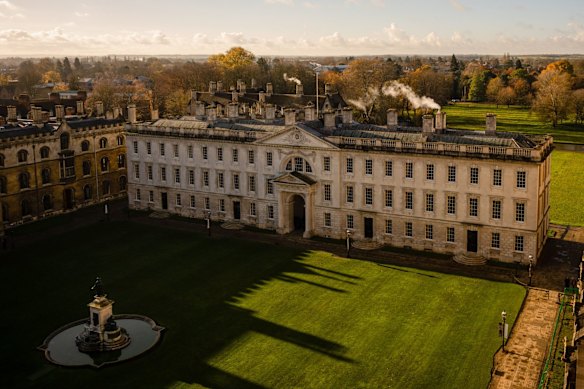
If, in hindsight, elements of Arday’s story seemed too good to be true, Cambridge ignored repeated warning signs. A review of internal Cambridge documents and interviews with former colleagues and associates shows that, in addition to passing over more experienced candidates for the job, administrators gushed publicly about Arday’s scholarship and privately disregarded complaints about his work.
They declined to investigate plagiarism concerns and accused his critics of a “vile campaign” to discredit him.
Arday’s claims about not speaking were false, a former classmate and a speech professional who worked with him told the Times. His supposedly remarkable trajectory from non-verbal preteen to PhD had no precedent in medical literature, experts in developmental and speech delays say.
That should have set off alarm bells for the Cambridge hiring committee, which included a child psychiatrist who had done research on autism, experts said.
‘DEI Kool-Aid’
Before Arday’s death, conservative commentators seized on his fall as evidence of diversity-and-inclusion efforts run amok. They said that Cambridge had been so eager to diversify that administrators let their judgment be clouded.
“They seem to have drunk the DEI Kool-Aid,” Jacob Rees-Mogg, a former Conservative lawmaker in Britain, said early this past week on The Telegraph’s “Daily T” podcast.
Prominent academics on the left agree that Cambridge must answer for its decisions. They say the ordeal has fuelled racism and cast unjustified aspersions on accomplished scholars of colour.
Cambridge said on Friday that it was “desperately saddened” to hear of Arday’s death. An administrator, in a letter to the faculty on Tuesday, called the misconduct accusations “an aberration” and “troubling”. A spokesperson separately declined to answer a list of questions about his hiring and his time there, citing a planned independent investigation — a difficult inquiry that will likely be made even more uncomfortable following Arday’s death.
Arday, for his part, had worked hard to silence any questioning of his credentials. When a journalist for Times Higher Education, a respected academic industry publication, asked about plagiarism last year, a prominent British defamation law firm had helped kill the article, the journalist said. Arday later reported the journalist to the police.
When a scholar from another university questioned his work, Arday turned the tables and filed a racism complaint with the other school, according to someone with direct knowledge of the complaint. That person, like some others who spoke to the Times, spoke on the condition of anonymity to avoid being dragged publicly into the controversy.
Arday never squarely addressed the questions of plagiarism and fabrication.
But what is clear from interviews and public records is that elements of the story would have been easy for Cambridge to check.
‘It just stretches credulity’
Arday, the child of Ghanaian immigrants, grew up in public housing in an ethnically mixed, working-class quarter of South London. Early on, he was identified as having learning difficulties.
Arday has claimed that before age 11, he could understand language but not speak. In 2022, before interviewing with Cambridge, he said that he had been educated exclusively in a special-needs school “with other pupils that had very severe learning difficulties and physical disabilities”.
In his memoir, published on Tuesday, he gave a different account, saying he attended a mainstream school but spent time sequestered alone in a classroom, again without speaking.
Both tales are false, according to people who knew Arday as a child and spoke with the Times before his death.
A speech professional who worked closely with the young Arday recalled him having a language delay but speaking with both children and adults.
One former schoolmate, Jonathan Stewart, recalled Arday cracking jokes and putting on playful accents in a minivan on the way to church activities as children.
While non-verbal children could certainly learn to speak, even at a late age, the rapid development described by Arday had no precedent in clinical literature, three experts on autism and speech said.
“In over 40 years of practice and being very acquainted with literature, I’ve never heard of that happening,” said Stephen Camarata, a speech science expert with Vanderbilt Health’s Developmental Disabilities Lab.
“It just stretches credulity.”
Cambridge’s star scholar
An established chair at Cambridge, a permanently funded position that comes with prestige and research support, is among the academic world’s most sought-after jobs.
Arday applied for an established chair of education. The university advertised internationally for the job and convened a panel of nine experts to review the candidates.
The panel selected four finalists, inviting them to Cambridge for two days of interviews. Arday was up against three more senior scholars, including two women of colour, according to a person familiar with the hiring process.
Arday’s published papers and his thesis had dozens of grammatical errors, along with identical quotes attributed to different people.
At Cambridge, the finalists were asked to submit just one piece of research, according to the person familiar with the process.
Cambridge had so few black professors that it was under pressure from faculty and students to diversify.
It is not clear which piece he submitted, or whether members of the hiring panel reviewed Arday’s speeches and interviews. If they had, they would have found elements of his story that stretched belief, like the marathon claim, or were demonstrably false, like his public assertion that he had been on the British documentary series, Seven Up. (Arday’s spokesperson recently said the assertion should not have been taken literally.)
Experts said Cambridge’s hiring panel was well-equipped to question Arday’s public claims about his childhood. Some committee members had published papers about teaching students with learning disabilities and about inclusion in education.
One influential member of the hiring panel, child psychiatrist Paul Ramchandani, had published a paper on music therapy for children with autism. Given his expertise, he would have been in position to question Arday’s assertion that he had learned to speak at 11 and read at 18, said Howard Shane, director emeritus of the Centre for Communication Enhancement at Boston Children’s Hospital.
“That should raise a red flag,” he said in an interview last week. “There’s no question about that.”
Ramchandani and others on the panel did not respond to requests for comment.
The committee hired Arday, in a decision that the education department chair described at the time as unanimous. Cambridge’s lengthy hiring announcement highlighted Arday’s remarkable personal story, which garnered media coverage on both sides of the Atlantic.
Cambridge had so few black professors that it was under pressure from faculty and students to diversify. It had set modest targets for increasing applications from people of colour for academic posts.
On the BBC, the education department chair, Hilary Cremin, told Arday that he was “the best in the world in terms of the research you do”. She did not respond to requests for comment.
Plagiarism claims emerge
Three months after Arday’s hiring, two British scholars, Martyn Hammersley and David Harris, privately wrote to Cambridge, alerting administrators to potential plagiarism in one of Arday’s papers.
Cremin, the department chair, replied that she had met with Arday, and that he had agreed to address concerns in the paper. She also mentioned his “ongoing experiences of direct and indirect racism” along with “significant health issues” that had affected his work on the paper in question, according to an email, which was first reported on a former professor’s newsletter and the academic integrity website, Retraction Watch.
Harris, whose work has challenged whether racism is ingrained in society, responded by suggesting that Cambridge also review Arday’s other papers and his thesis. “Prof Arday badly needs critical friends, in my view, not sycophants,” he wrote.
He never got a reply, Harris said.
Nor did Cambridge act months later after journals appended corrections on two of Arday’s papers. Then, in September 2025, Times Higher Education sent Cambridge a dossier of more than 60 pages that detailed apparent plagiarism in Arday’s work.
A reporter and editor at the publication, Jack Grove, had enlisted experts to review Arday’s thesis.
One of them, David Sanders of Purdue University, told the Times that, going into the review, he knew nothing about Arday. But when Sanders sat down to analyse the thesis, he concluded it was “extensively plagiarised”.
Cambridge continued to back its star professor, telling Grove that questions about Arday’s thesis would have to be addressed by the school that had awarded his doctorate, Liverpool John Moores University. Concerns about his research, Cambridge said, would similarly have to be handled by others. Liverpool John Moores stood by his doctorate.
At Cambridge, faculty members and allies hurriedly drafted a letter in anticipation of Grove’s article. “The integrity of higher education is at risk if we do not take a stand and speak out against the systematic attempts to erase Black scholarship,” they wrote in the letter, a copy of which was seen by the Times.
But Grove’s article never ran. Arday’s lawyers threatened legal action, and Times Higher Education spiked it. Arday also filed a police complaint against Grove, which led to a harassment investigation that was later dropped.
The scandal blows up
The plagiarism charges burst into public view last month when a former Cambridge scholar, Nathan Cofnas, wrote about them in his newsletter. Cofnas is known for his work suggesting that Black people were genetically predisposed to be less intelligent than white people. The university had cut ties with him in 2024.
Retraction Watch quickly expanded on Cofnas’ reporting. But once again, Cambridge defended Arday, saying he was “the victim of a vile campaign to undermine his credibility, which must stop”, according to an email seen by the Times.
‘He’s a pawn, whose ambition made him vulnerable.’Heidi Mirza, an emeritus professor of education at University College London
After new questions surfaced, casting doubt on Arday’s story, he resigned. Cambridge’s tone shifted.
But the fallout from Cambridge’s enthusiastic promotion of Arday’s story could last for years. “This has really done some harm,” Camarata, the speech specialist, said before Arday’s death.
He said that over the years, he had heard from families of children with severe autism hoping for a miracle. “I never want to take away anybody’s hope,” he said, “but this story really has created some unreasonable expectations and false hopes, and I hate that.”
Heidi Mirza, an emeritus professor of education at University College London who once mentored Arday, said in an interview this month that he had been ill-served by university administrators’ carelessness in their efforts to demonstrate their commitment to diversity.
“He’s a pawn,” she said, “whose ambition made him vulnerable.”
Georgia Gee, Susan C. Beachy and Kitty Bennett contributed research.
This article originally appeared in The New York Times.
If you or anyone you know needs support, you can contact Lifeline 131 114, or Beyond Blue 1300 224 636.
Disclaimer : This story is auto aggregated by a computer programme and has not been created or edited by DOWNTHENEWS. Publisher: www.smh.com.au






