
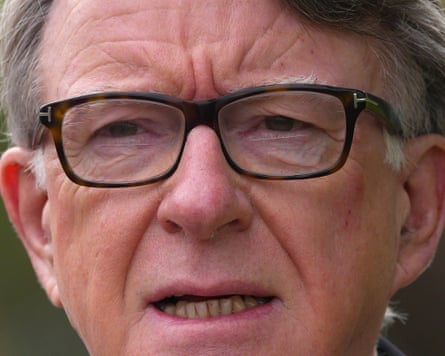
Keir Starmer has spent much of the last 24 hours working on a plan for what senior government figures are already describing as his “judgment day”: his showdown with MPs on Monday over the latest Peter Mandelson revelations.
That the prime minister was apparently not told of Mandelson’s vetting failure has provoked incredulity across Westminster and accusations he sacked a senior civil servant to save his premiership.
It has also shone a spotlight again on what many feel is Starmer’s biggest failing: his political judgment. Even though some proclaimed Mandelson’s appointment as the UK’s latest “Trump whisperer” a stroke of genius at the time, the risks were always clear.
It was common knowledge Starmer’s pick for UK ambassador to Washington had been sacked from cabinet twice, had an ongoing relationship with convicted child sex offender Jeffrey Epstein and had business links with China.
It did not need the Cabinet Office’s propriety and ethics team to raise red flags and warn the prime minister of the reputational risk of appointing him (though it did).
Had Starmer been aware that Mandelson had failed his vetting, allies say, he would have blocked the appointment. Of course, had he been aware and it had gone ahead, he would be in an even messier predicament than he is now.
Instead, the prime minister looks like a man who is not really in control, incurious and uninterested in what is really going on inside his government. While he says he was “staggered” not to have been told, it is hard to escape the impression that, if he had asked a few questions, he may have been able to find out.
So one of the things puzzling MPs right now is why, at no point, did the prime minister or his political aides think to ask about Mandelson’s deep security vetting. Or indeed, that the system was not – until last week – able to tell him.
When Starmer was told by officials on Tuesday night that Mandelson had failed his vetting, he immediately – we’re told – demanded they establish all the facts so he could update parliament.
He will no doubt be asked on Monday why he did not think it was worth sharing even just the headline fact with parliament at PMQs last Wednesday. Ministers are expected to correct the record as soon as they realise they have made a mistake – inadvertently or otherwise.
Instead, MPs learned from the Guardian, with cabinet ministers sharing stories of finding out while in mid-air, on trains, out door-knocking – all taken by surprise and adding to the sense of disarray gripping the government.
Starmer promised to restore stability and order when he came to power, after years of Tory chaos. There were high hopes this former lawyer – “Mr Rules” as one cabinet minister described him at the time – would bring back propriety.
It is not just his MPs who have been left disappointed by the Mandelson saga, but the wider public as well. What could be regarded as a story about Westminster process is, in fact, a much more significant one that goes to the heart of what sort of man the prime minister is, and what sort of government he leads.
Starmer was already facing a difficult few weeks, with Labour bracing for a rout in May’s local and devolved elections, and further economic fallout expected at home from the Iran crisis.
The prime minister’s team had carefully prepared how they were going to get him through it, and were taking some succour from the quiet in the Labour ranks as he navigated his way through a difficult international picture.
Labour MPs, many of whom have been agitating for change at the top for months, stepped back from the brink when actually presented with an opportunity: the party’s Scottish leader Anas Sarwar calling for him to go back in February. Downing Street aides allowed themselves a sigh of relief.
But Labour MPs will be watching closely – waiting to be convinced – when Starmer appears before them on Monday. And again when that sacked civil servant, Oliver Robbins, answers questions of the foreign affairs committee on Tuesday.
They know the public has been losing faith in the political system for years. Every twist and turn of the Mandelson scandal accelerates that. So when another opportunity presents itself to change leadership, they may take it.
Disclaimer : This story is auto aggregated by a computer programme and has not been created or edited by DOWNTHENEWS. Publisher: theguardian.com



