Politicians and community leaders have called for calm amid fears that the populist right is using the murder of Henry Nowak by a Sikh man to whip up racist resentment against minority ethnic Britons.
After Nigel Farage called for the public to respond with “pure, cold rage”, Keir Starmer condemned the Reform UK leader, saying Nowak’s family had explicitly asked that the case not be used to target particular communities.
Starmer said in a TV interview at Downing Street: “Nigel Farage is completely wrong to use this to try and create division. He would be wrong in any circumstances, but when Henry’s family are saying, ‘Please don’t do that, it’s our son’, then really, as politicians, as human beings, we should start where they start.”
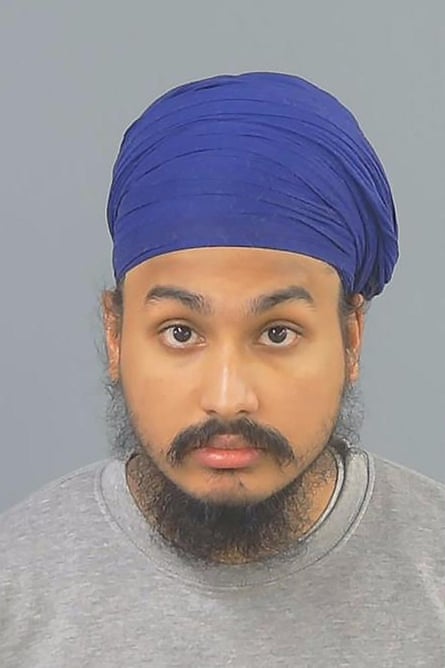
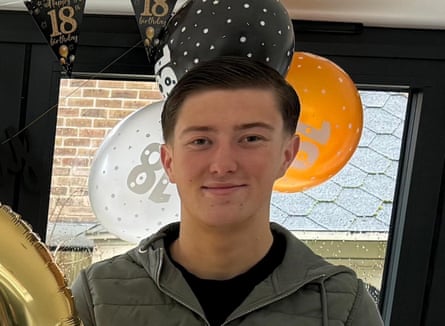
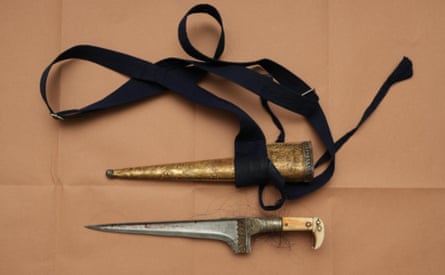
Nowak, an 18-year-old university student, was fatally stabbed by Vickrum Digwa, 23, who used a Sikh dagger, in Southampton in December 2025.
Digwa falsely claimed he had been racially abused and attacked by Nowak. Body camera footage released by Hampshire police showed Nowak being handcuffed despite repeatedly telling police officers that he had been stabbed. At one point an officer tells him: “I don’t think you have, mate.”
The treatment of Nowak by police has been highlighted repeatedly during Digwa’s trial by US hard-right commentators, including Elon Musk, who have argued it shows “two-tier” policing in which accusations of racism are prioritised.
In what he described as an “emergency address” sent out via social media on Tuesday morning, Farage repeated this argument, warning that what he termed as an excessive focus on racial equality could lead to “the destruction of society”.
He said: “Enough of anti-white prejudice. A promotion of the idea that white lives matter just as much as black lives.” The phrase “white lives matter” originally emerged among US white nationalists as a riposte to the Black Lives Matter movement.
On Tuesday evening, a crowd of hundreds of people gathered outside Southampton police station after the far-right activist Tommy Robinson called on people to gather for a “Justice for Henry Nowak” protest.
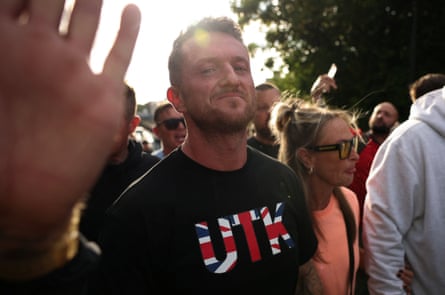
Some chanted: “Racist police, off our streets” and “Shame on you”. They held up union flags and home-made signs including: “Henry’s blood is on your hands”, “Save our kids” and “Prison 4 police on scene”.
Robinson, whose real name is Stephen Yaxley-Lennon, accused Hampshire police of institutional racism and called for Digwa’s family to be forced out of Southampton. He said: “If Henry wasn’t white, he wouldn’t have been handcuffed. Henry could be your son.” Responding to the resignation of one of the police officers involved in the arrest, he said: “We want him in prison”.
Nick Tenconi, the leader of the UK Independence Party, led a prayer at the demonstration for Nowak as members of the crowd chanted: “Henry, Henry”. Tenconi said: “The arresting officers believed persecuting him [Nowak] was more important than saving him because he was white.” He added: “I am here to fight for an end to woke policing.”
Starmer said he found the bodycam footage of Nowak’s last moments “harrowing”, saying: “There are clearly serious questions that need to be addressed, not least, how accusations of racism inform the decision making in this case.”
The Independent Office for Police Conduct (IOPC), the watchdog for police forces in England and Wales, is looking into the case, with Shabana Mahmood, the home secretary, telling the Commons that she expected to see its report within three months.
Starmer said the IOPC must examine whether racial sensitivities played a part in the case, saying: “It is impossible to watch that footage and not appreciate that those questions absolutely have to be answered.”
An image of Henry Nowak’s handcuffed hand as he lay dying, taken from the bodycam footage, has been shared widely as a meme on social media, often by hard-right and far-right accounts, including many in the US.
In a joint statement, Sikh groups condemned what they called “a moment of madness” by one individual, saying that the wider Sikh community had since faced considerable abuse and hate.
Amandeep Singh, from the Sikh charity Basics of Sikhi, said many people had faced abuse: “At least 15 people have been accosted on the streets by collectives of white individuals surrounding Sikhs and asking, ‘Have you got a kirpan [the Sikh ceremonial dagger]?’, trying to stir up racial tensions.”
After recent incidents in which older Sikhs have had their turbans knocked off in racist assaults, many are fearful that the same might happen again, he said.
Andy Burnham called today for a potential change in police policy, while also warning against attempts to inflame tensions.
“There needs to be firstly a proper IOPC investigation, and coming from that, there would appear to me to be serious issues that will maybe need to be reflected in changing in policing practice,” the Greater Manchester mayor told the Guardian as he campaigned in the Makerfield byelection.
“But what I would say is I think the words of the family also need to be at the forefront of every politician’s mind in calling for there not to be an attempt to create further division.”
Answering questions in the Commons about the case, Mahmood told MPs that it was not “a moment to pit white Britons against non-white Britons”. She added that one police officer had been misidentified as being involved in the case, having to move out of his home after receiving death threats.
The Hampshire Police Federation, which represents rank-and-file officers in the force, condemned what it called attempts at “mob or vigilante justice”, including the publication of personal details of officers with no link to the case.
Also speaking in the Commons, Tanmanjeet Singh Dhesi, the Labour MP for Slough, accused Farage and others of trying to “politicise people’s pain”. Saying he was deeply saddened at Nowak’s murder, he went on: “What’s very galling is that the likes of Reform, Restore, and the far right decided to politicise people’s pain, attacking the Sikh community for wearing the kirpan and wanting it banned.”
Although the murder weapon was described as a “large Sikh dagger” by the judge, academics have pointed out that the 21cm knife should not be confused with a kirpan, a small, symbolic knife, which was also worn by Digwa and many observant Sikhs.
Kemi Badenoch also condemned Farage’s address. “What Nigel Farage is doing is reinforcing the difference. We need to find what we have in common,” she said.
“Enough of this nonsense where we keep separating everybody and splitting people into different groups. We are descending into tribalism.”
The Guardian understands that the IOPC has found no indication of any disciplinary or criminal offence by the officers involved after six months of inquiries, after it was referred to the watchdog in December. Hampshire police said of four officers involved, three remained on full duties and one has resigned.
In remarks at Digwa’s sentencing on Monday, trial judge William Mousley imposed a term of life imprisonment with a minimum of 21 years. Today the attorney general’s office said it was considering whether Digwa’s sentence should be reviewed as too lenient, saying it had received “multiple requests” for this to happen.
Speaking outside the court, Nowak’s father, Mark Nowak, condemned what he called the “inhumane and degrading” treatment of his son by police, but added: “We do not want his death to be used to create further division, hatred or tension. We want his story to help make our streets safer for everyone.”
The incident has already led police chiefs to review part of their anti-racism commitments, after shadow home secretary Chris Philp claimed language in the preamble to the NPCC’s Race Action Plan could lead to bias.
The line in question says the organisation’s commitment to racial equality “does not mean treating everyone ‘the same’ or being ‘colour blind’ (racial equality).” A source close to the home secretary said the wording was “clumsy”.
Chief constable Gavin Stephens, chair of the National Police Chiefs’ Council, said: “We are listening to legitimate concerns about how some of these commitments are worded or phrased, and where needed we can and will make changes, but this should not detract from the intent, which is to improve the quality of policing.”
Disclaimer : This story is auto aggregated by a computer programme and has not been created or edited by DOWNTHENEWS. Publisher: theguardian.com