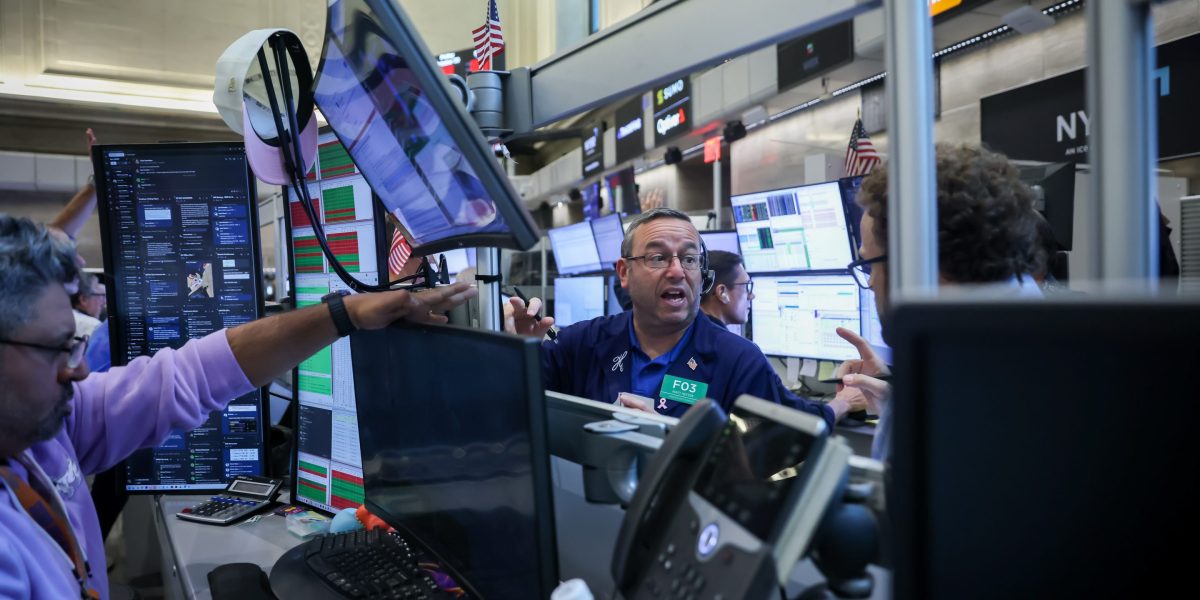
A surprisingly strong performance for Democrats so far on election night sent stock futures down sharply as Wall Street faces the prospect of intense partisanship for the next two years.
While most races still haven’t been called, Democrats won the Senate seat in deep-red South Carolina and are maintaining healthy margins in the Republican strongholds of Texas and Kansas.
Democratic gubernatorial candidates are also leading in Texas and Ohio, which have been major hot spots for data centers. But the breakneck pace of development in recent years has fueled a major backlash that could slow down the AI trade.
Futures tied to the Dow Jones industrial average fell 380 points, or 0.73%. S&P 500 futures sank 1.12%, and Nasdaq futures tumbled 2.07%.
Fears of renewed fighting in the U.S.-Iran war have recently weighed on markets, given that President Donald Trump threatened to take action after the midterm elections.
But that’s not the case on Tuesday evening after Trump told the Financial Times that he has no immediate plans to strike Iran, sending oil prices lower.
Wall Street typically prefers divided government as political gridlock prevents one party from going to extremes.
But market veteran Ed Yardeni warned deepening partisanship could turn gridlock into “damaging political paralysis” just as bond investors are growing uneasy about the U.S. debt and deficits.
“A Democratic sweep could complicate negotiations over government spending and the debt ceiling,” he wrote late Monday. “Prolonged shutdowns and fiscal standoffs could push Treasury yields higher, weighing on equity valuations.”
Yardeni also pointed out that Trump has relied heavily on executive authority, which can’t be as easily restrained by a Democratic Congress.
Some of his policies that have rocked financial markets the most, namely tariffs and the Iran war, were carried out without congressional approval, he added.
“Moreover, with the midterms behind him, Trump may feel even less constrained politically and more willing to pursue controversial policies through executive action,” Yardeni said. “Hence, a blue wave could deliver a cold shower for stocks, though we would view a significant selloff as a buying opportunity given the remarkable strength of the economy and corporate earnings.”
Disclaimer : This story is auto aggregated by a computer programme and has not been created or edited by DOWNTHENEWS. Publisher: fortune.com