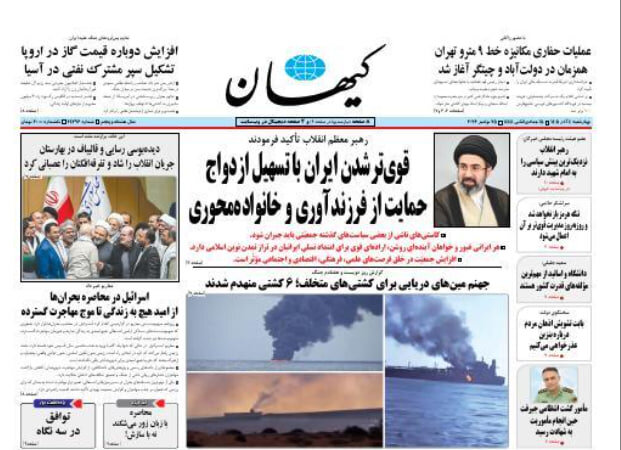
Kayhan said Western media outlets have increasingly acknowledged that the U.S. miserably failed against Iran. According to the newspaper, a campaign that was expected to topple the Islamic Republic and destroy its nuclear, missile, and drone capabilities within weeks instead turned into a political setback for President Trump.
More than nine months later, the paper said, the outcome has become so embarrassing that even some figures within the US administration are unwilling to accept responsibility for it. The newspaper further asserted that Iran’s military capabilities have not only survived but improved. It stated that Iranian missiles and drones are now more accurate and effective than before. Kayhan also highlighted changes in Iran’s military doctrine and the lifting of restrictions on missile range by the country’s leadership, arguing that these developments have intensified concerns among US officials and military planners. In the newspaper’s view, the conflict demonstrated the limits of American power and reinforced Iran’s deterrence capabilities.
Etemad: Tehran’s two main concerns about US presence in Syunik
Etemad examined Armenia’s launch of the TRIPP project, or the “Trump Route for International Peace and Prosperity.” According to the paper, the initiative is intended to be much more than an infrastructure project and could reshape economic and geopolitical dynamics across the South Caucasus. Because Iran considers this region an important part of its security environment, developments there are closely monitored in Tehran. The newspaper identified two major Iranian concerns. The first relates to the route itself, which passes through Armenia’s Syunik Province. This area is strategically important because it provides Iran with land access to Armenia and, through Armenia, to Georgia and routes leading toward Europe. Tehran therefore sees any major transformation in the region as potentially affecting its economic and transportation interests. The second concern is the involvement of the United States. Although Armenia is expected to retain formal authority over border security and customs administration, Etemad argued that extensive US participation in financing, management, or infrastructure development could significantly expand Washington’s influence in one of the region’s most sensitive areas to Iranian national security interests.
Sobh-e-No: A reality the US must accept
Sobh-e-No said that recent incidents in the Strait of Hormuz highlight Iran’s central role in regional security. The newspaper maintained that the waterway cannot be effectively managed without recognizing Iran as a key actor and rejected claims that the country’s naval capabilities have been significantly weakened. It argued that Washington’s policies have failed to keep pace with changing regional realities. The paper also called for a security framework based on cooperation between Iran and Oman, stating that regional coordination is the best way to ensure maritime security, reduce tensions, and prevent the Strait of Hormuz from becoming a source of broader international disputes.
Javan: We do not seek anyone’s permission to change our policy
Javan addressed debate surrounding potential changes in Iran’s strategic doctrine. The newspaper referred to reports suggesting that both China and Russia oppose modifications to Tehran’s nuclear doctrine. However, it argued that Iran’s decision-making should not depend on the preferences of any foreign country, whether friendly or hostile. According to the paper, Iran previously adopted its position against nuclear weapons without seeking approval from other powers and accepted the consequences of that choice. For the same reason, the newspaper suggested, Tehran would not require anyone’s permission if it decided to alter its policies in the future. The article maintained that genuine sovereignty means preserving the ability to make major national decisions independently. Looking first to foreign governments when addressing critical strategic questions, it argued, would weaken governance and undermine national independence. Javan concluded that independence is not merely the defense of past policies but also the freedom to reassess and revise them when national interests require it.
Farhikhtegan: Relations with China should be pursued seriously
In an interview with researcher Vahid Ghorbani, Farhikhtegan discussed the future of Iran-China relations. Ghorbani said the key challenge is turning Iran’s strategic view of China into a practical and results-oriented policy. He argued that Iran currently faces three major tasks: managing the consequences of war, redefining regional security arrangements, and strengthening the national economy. Achieving these goals, he said, requires more coordinated political and economic diplomacy toward Beijing. Ghorbani also stressed the importance of making better use of organizations such as BRICS and the Shanghai Cooperation Organization in support of Iranian interests. At the same time, he emphasized the need to clearly define economic priorities for Chinese partners. According to him, stronger economic cooperation with China depends on concrete projects, financing mechanisms, and effective implementation plans. Without such practical measures, strategic intentions alone will not produce meaningful economic results for either side.
Disclaimer : This story is auto aggregated by a computer programme and has not been created or edited by DOWNTHENEWS. Publisher: tehrantimes.com