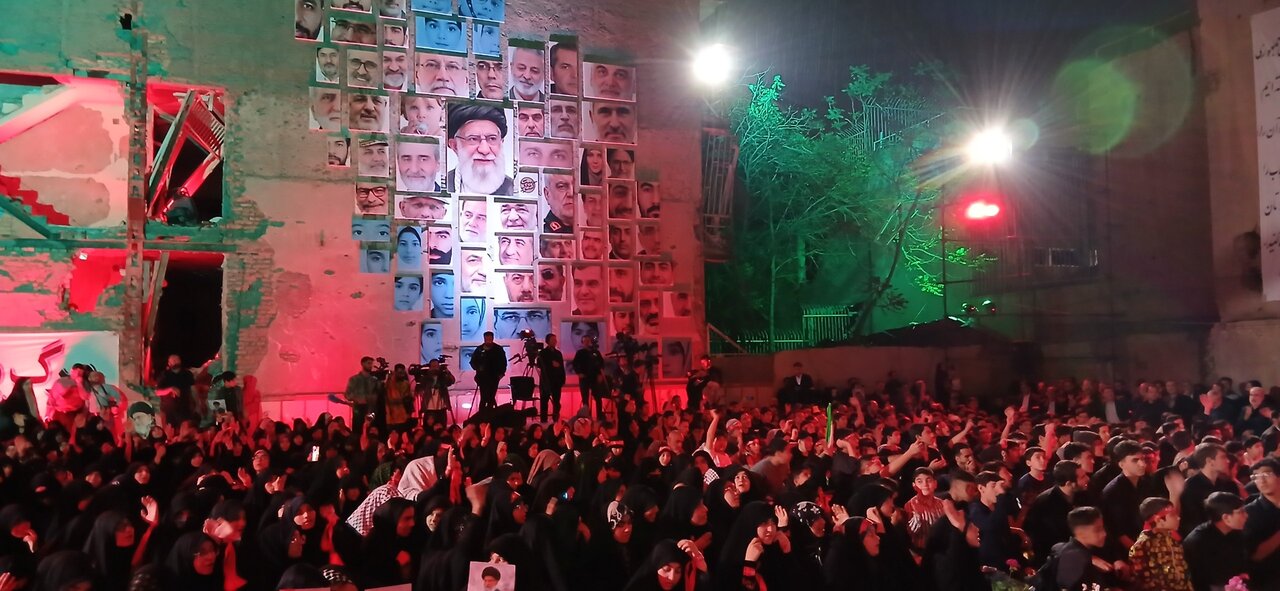
TEHRAN – This report goes beyond words. It is about a deeply emotional gathering. Every year on Aban 13 (November 4), Iranian students come together for their annual meeting with the Leader of the Islamic Revolution. This year, however, the occasion was marked by a profound absence: the leader they had gathered to meet had been martyred.
Rain fell over the city. For a reporter, it was difficult to witness the destruction without being overcome by grief and tears. Yet, alongside the devastation caused by the attacks carried out by the United States and Israel, another scene stood out: children and teenagers who had gathered to show that they would continue building their country despite the attacks.
Although seeing the impact of the war, damaged streets and destroyed buildings was difficult even for the young attendees, one scene was particularly striking: students stood together, showing no apparent fear of rumors of further attacks and demonstrating their determination and resilience.
At the same time, the absence of children killed in the war was deeply felt. They would never return to their classrooms. They were the students of Shajareh Tayyebeh School in Minab. The presence of their bereaved families added a deeply human dimension to the gathering.
For many of those attending, the martyred Minab students were children who should have been sitting at their school desks, studying alongside their classmates. Instead, their families now attend gatherings where their children’s places remain empty – an absence that neither the passage of time nor the end of a ceremony can erase.
One of the most moving moments of the gathering was a theatrical performance commemorating the martyred students. Its central message was simple but deeply powerful: “Students who are martyred are never marked absent.”
The sentence transformed the familiar language of classroom attendance into an expression of remembrance and mourning. In an ordinary classroom, being marked absent means missing a day of school. But for children who have lost their lives, absence takes on an entirely different meaning. Through this simple distinction, the performance conveyed that these students remain present in the memories of their classmates and the wider community.
Another part of the gathering focused on a letter written by Alireza Bakhshi, a fifth-grade student, to the Leader of the Islamic Revolution, Ayatollah Seyyed Mojtaba Khamenei, and the response he received.
The exchange brought a student’s voice into the public sphere and highlighted the significance of personal correspondence and a child’s expression of affection at the gathering. In his response, the Leader addressed him as “My dear friend Alireza.” The words deeply moved the young student and other attendees. The tears of joy among the students reflected their emotional connection with their young leader.
In the surrounding area, damaged buildings along Keshvar-Doust Street provided another visible reminder of the war’s impact. The traces of missile strikes brought the reality of war beyond news reports and television images and into the city’s everyday environment, where people live, walk and encounter the consequences of the attacks.
The rain, the grieving families, a student’s letter and a sentence about classroom attendance formed four distinct images of the gathering. Together, they offered a picture of remembrance and solidarity, while also reflecting the profound sense of loss.
Students gathered at the patriotic students’ assembly to reaffirm a commitment that extended beyond the ceremony itself: to remember the children who will no longer return to their classrooms, but whose names and memories remain alive among their classmates.
Disclaimer : This story is auto aggregated by a computer programme and has not been created or edited by DOWNTHENEWS. Publisher: tehrantimes.com