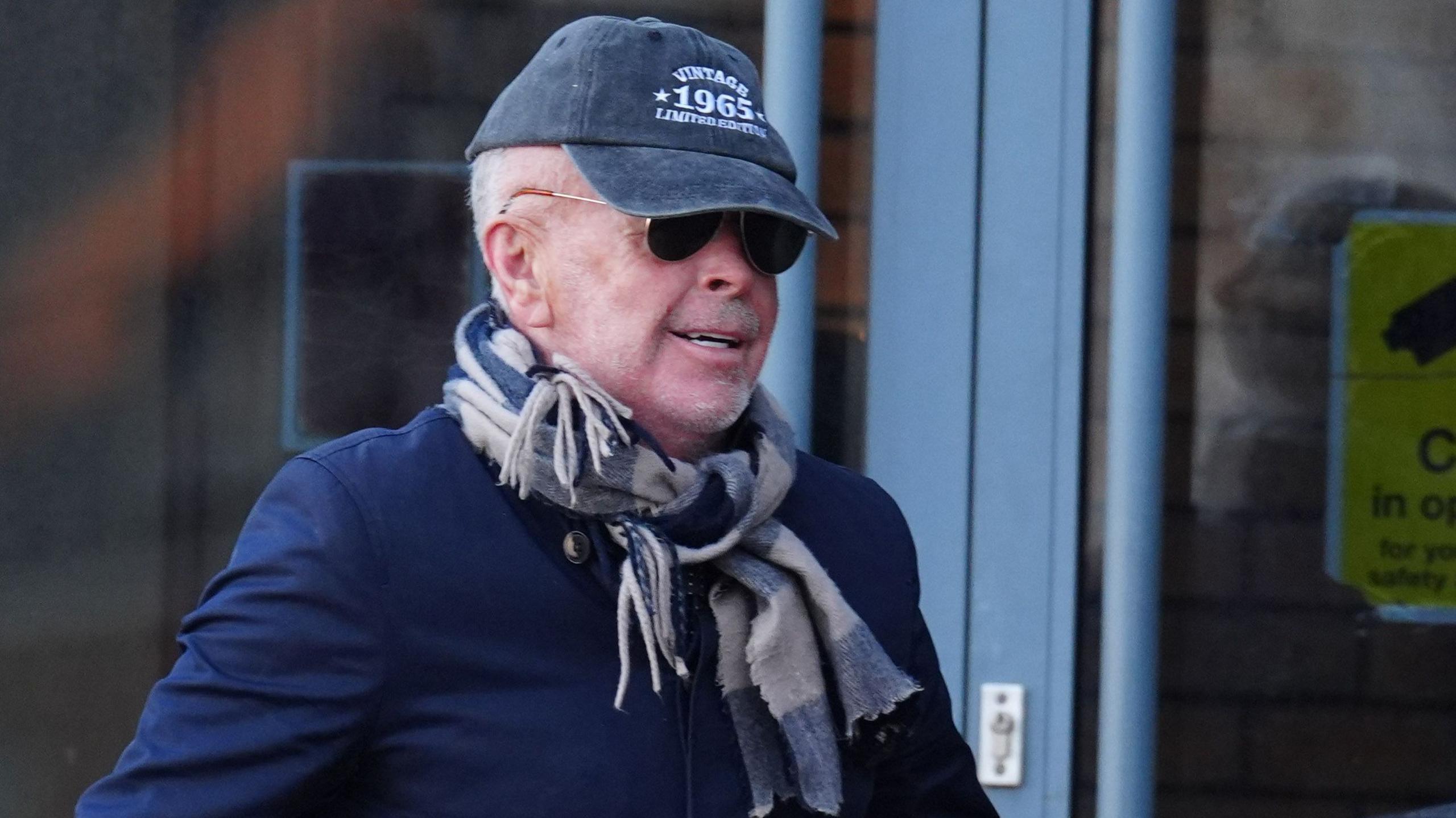
Suspended Reform councillor found guilty over post
-
Published
Warning: Some readers may find language in this story offensive
A suspended Reform UK councillor has been convicted of a malicious communication over a Facebook post about Nigerian people.
Sunderland City councillor Glenn Gibbins denied breaching the Communications Act by posting a grossly offensive message on Facebook in March 2024.
The post came to light after the 66-year-old was elected to represent the Hylton Castle ward in May 2026.
Convicting him after a trial at South Tyneside Magistrates’ Court, District Judge Zoe Passfield said: “The post was nothing more and nothing less than a grossly offensive comment about members of the Nigerian community in Sunderland and Mr Gibbins’ views as to their status, or otherwise, as human beings.”
He will be sentenced later on Monday and has been told he will not be jailed.
His legal team will appeal against the verdict.
Gibbins’ post said: “Carnt believe the amount of nigerians in town… should melt them all down and fill in the pot holes!! [sic]”
Police were informed about the post after Gibbins was successfully voted in during local elections.
Prosecutor Emma Dowling said the comment about melting Nigerians down implied they were “somewhat less than human, stripping people in that group of humanity”.
Godwin Ejeh, a community leader in Sunderland’s Nigerian community, gave evidence to say he led a protest outside the City Hall building when Gibbins should have been sworn in, hoping the councillor would apologise.
However, Gibbins had already been suspended by Reform after the post came to light and he did not attend the ceremony.
Ejeh, who stood as a Liberal Democrat councillor in the May elections, denied trying to make political capital from the situation.
He told the court: “We are talking about humanity here, it’s way beyond politics.”
‘Tongue-in-cheek’
Gibbins, a divorced former salesman who runs a stall in Sunderland city centre which prints novelty gifts, told the court it was a tongue-in-cheek joke.
“It was an unreal scenario,” he said. “No-one took it literally.”
Gibbins recalled on the day he made the post, some Nigerians had approached him about buying some of his printing equipment.
He said he had “banter” with them at his stall and the conversation had been good fun.
That night, after “a couple of cans of beer”, he said he saw a post on Facebook about Nigerians which he tried to share without success, so he typed it out and posted it to his public Facebook profile.
When Dowling asked him what reaction he intended, Gibbins said: “It was tongue-in-cheek, a bit naughty, but I thought it was fun.”
Asked by Dowling what was funny about the post, Gibbins replied: “It’s an unreal scenario, you cannot melt people down, anyone that takes that literally… you cannot do that.”
He said: “I wouldn’t dream of joking about killing people.”

Gibbins said he was not particularly political when he was approached by Reform about becoming a councillor in March 2026, but thought it would be a source of income “to tide me over” when business was quieter in the summer.
He also said he had enjoyed helping residents in the brief period when he was not suspended.
Summarising the prosecution case, Dowling said the post was grossly offensive and dehumanising.
She said it was shared “for no reason whatsoever other than to offend and humiliate people from Nigeria who live in Sunderland”.
Adam King, defending, said the post was “unfunny” and “an unpleasant joke/non-joke”.
He said professional comedians such as Jo Brand had joked about throwing acid on Nigel Farage and Jimmy Carr about gypsies in the Holocaust and they had not been prosecuted.
Even if the district judge found the post was grossly offensive, she had to be sure Gibbins intended it to be and could be taken as such, King said.
‘Not politically motivated’
Passfield said Gibbins, who has no previous convictions, accepted his post was offensive, but not grossly so, and maintained it was a joke.
She said the post was targeted at a specific ethnic minority and that they could be “eradicated” and turned into inanimate substances and used to fill potholes.
Passfield said she did not believe the case would have gone to court had he confined his observation to the number of Nigerians living in Sunderland, even if that were a racist-held view.
But he went on to reduce them to the status of Tarmac, she said.
His comments were not politically motivated, she added, as there was no wider context about immigration.
The district judge said she had considered Gibbins’ right to free expression as per Article 10 of the European Convention on Human Rights, but decided the post was not a genuine expression of political views.
Follow BBC Sunderland on X, external, Facebook, external, Nextdoor and Instagram, external.
Get in touch
Do you have a story suggestion for BBC Wear?
Related internet links
Disclaimer : This story is auto aggregated by a computer programme and has not been created or edited by DOWNTHENEWS. Publisher: BBC