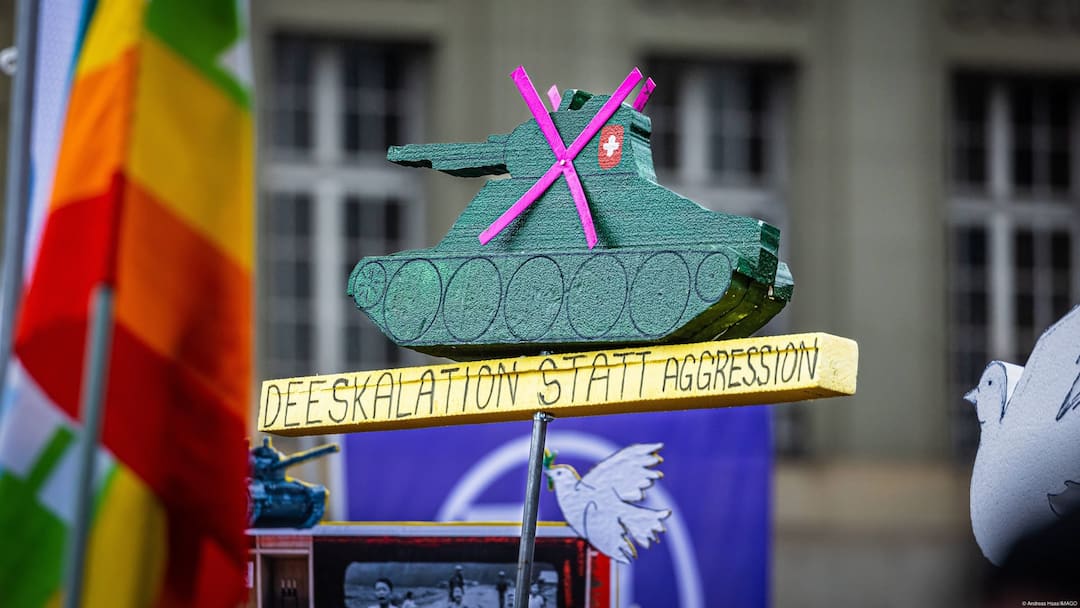
- Switzerland votes on easing strict military equipment export restrictions.
- Reforms would ease exports, allow re-transfer without prior permission.
- Ukraine war spurred neutrality debate; polls suggest tight contest.
Switzerland on Sunday is deciding on a possible easing of the country’s strict export restrictions on military equipment.
The reform of the so-called “War Material Act” is intended to facilitate the export of weapons to 36 partner countries, including EU member states, the United Kingdom, and the United States.
In addition, recipients of Swiss arms exports will no longer be required, as has been the case until now, to obtain permission from Switzerland in every instance before transferring the weapons to other countries.
Currently, countries that receive Swiss military equipment must agree not to transfer such weapons and other war materiel to conflict zones without prior approval. Under the proposal, such sign-offs would no longer be required.
The government could also allow deliveries of weaponry to a “partner state” involved in an armed conflict as long as such exports conform with Switzerland’s foreign and security interests, and allow exceptions to export controls.
Polls suggest a tight contest
The war in Ukraine has forced Swiss policymakers to grapple with the country’s longtime conception of neutrality.
Proponents of the changes say the legal reform would strengthen Switzerland’s defense industry and military. Parliament for years has sought to soften restrictions on exports of Swiss military equipment.
A coalition of center-left and green parties, along with non-governmental organizations, opposing the changes, say easing weapons export rules could open the door for extremists to access Swiss weapons, while also harming the country’s vaunted neutrality by possibly allowing Swiss arms to be used in active conflict zones.
Who is for and against?
The referendum was called for after Swiss lawmakers approved an easing of export restrictions in December 2025.
In Switzerland, if opponents of a law collect enough signatures for a referendum, its effect is put on hold to allow for voters to decide whether the new rules should take effect. The country holds several direct referendums a year on such issues, with several others also on Sunday’s ballot.
(Disclaimer: This report first appeared on Deutsche Welle, and has been republished on ABP Live as part of a special arrangement. Apart from the headline, no changes have been made in the report by ABP Live.)
Disclaimer : This story is auto aggregated by a computer programme and has not been created or edited by DOWNTHENEWS. Publisher: abplive.com