
Despite their digital childhoods – or perhaps because of it – many young people are increasingly rejecting technology and embracing analog culture.
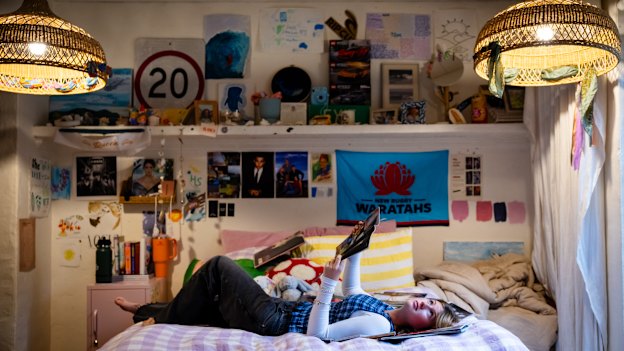
In 15-year-old Olive Berlach’s Central Coast bedroom, knick-knacks from a distant era live strewn across every surface and wall. A Dirty Dancing vinyl, stacks of CDs, a Vogue magazine collection, jars of sea glass and shells, a Luke’s Diner coaster from Gilmore Girls, a lamp with coloured scarves sewn into it and posters of teen heartthrobs (young Johnny Depp and Australian singer Ruel).
Olive wants to live like she’s “in the ’90s”. The front cover of her first self-published magazine, Olive, says it’s “for teens who want to live offline”.
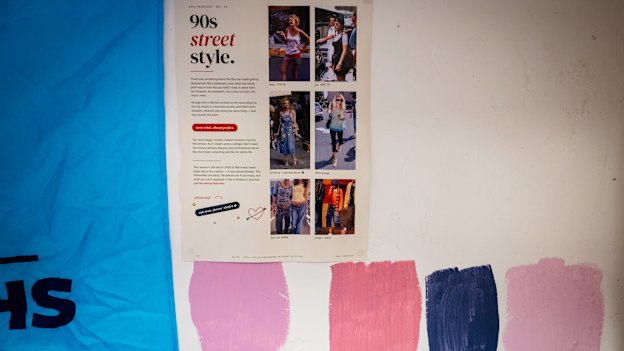
Inside, there’s a kaleidoscope of ideas and topics. There’s a pancake recipe you can cook at “your bestie’s house”, a profile on Allana Ferguson (Olive’s favourite rugby player), as well as Su-Elise Nash from 2000s girl band Mis-Teeq, ’90s fashion tips, a guide to a perfect screen-free day (and how to “put it down. Seriously”), a skincare edit and an interview with her mum, Emily.
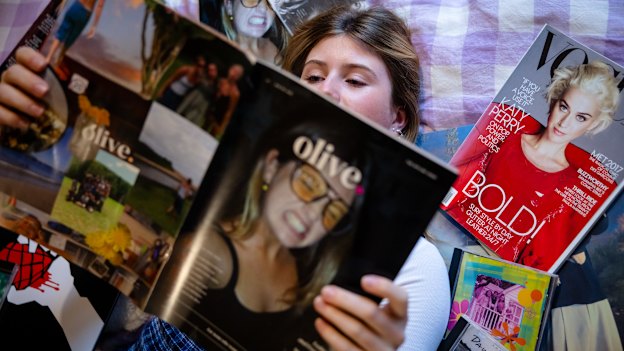
With a dream to one day work at Vogue, Olive has spent two months putting together her first issue, which retails for $20 and costs roughly $8 to print. Olive sold out of her first run of 100 issues after one week – and is halfway through the second, called The Cosy Issue.
“I am doing a photoshoot with my friends this weekend for the cover of the next issue. I interviewed Eleanor Pendleton. I’m doing a showcase with Luke Shadbolt’s photos. He was like an early noughties bodyboard photographer,” she says.
Olive, who doesn’t have a smartphone but uses a computer to create her magazine, says a lot of her peers are “really addicted to their phones”.
“They’ll be like texting their boyfriends, scrolling TikTok while we’re hanging out, and I just don’t think that’s very fun, and I think there was a lot more freedom in the ’90s with not having the opinions of so many other people just pinging at you while you’re with your friends.
“I just thought I would try to bring back living in the moment.”
Teens like Olive have never known a world without social networks like Instagram, TikTok, YouTube and the phones that house them. They are, by all accounts, true digital natives – even as the Australian government has moved to change this through its world-first social media ban (the UK looks set to follow suit).
In the six months since Australia’s social media ban came into effect, about 70 per cent of children retained their social media accounts – mostly because platforms hadn’t asked them to verify their age.
Despite this digital upbringing – or perhaps because of it – Generation Z (aged 14 to 29 today) are increasingly rejecting technology and embracing analog culture.
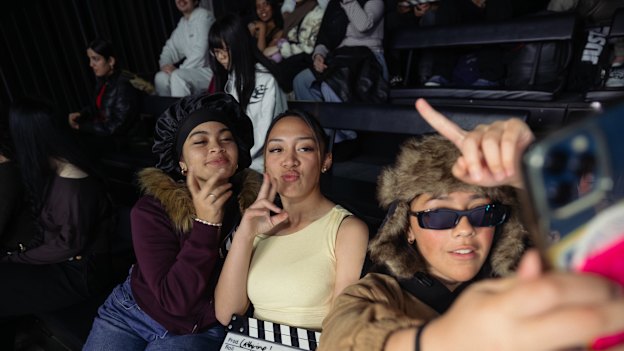
They’re documenting the world through film and digital cameras, rejecting streaming services for CDs and DVDs and hand-writing letters. Many of these are marvels from an era they never knew.
A recent study commissioned by music video platform Vevo of 1800 teens, evenly split across Australia, the US and UK, found 65 per cent of Gen Z feel nostalgic for a time in which they weren’t alive or were too young to notice (referred to as “borrowed nostalgia”), while one-third felt they were “born in the wrong generation”.
And they are, despite what others may think, the generation most wary of AI, some emerging research suggests.
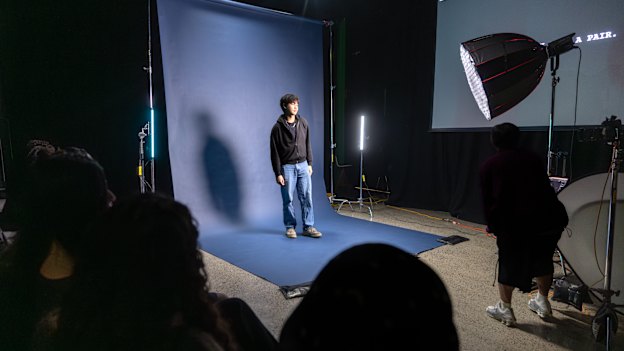
According to a Gallup study from April, for example, Gen Z’s adoption of AI has remained steady in the past year, but enthusiasm for it is dropping and scepticism is on the rise.
For some teens, access to creative mediums is still a barrier.
Inside a University of Technology Sydney workshop, 16-year-old Charmonix Vaatuitui from Liverpool has applied the finishing touches to her first short film, titled Plastic.
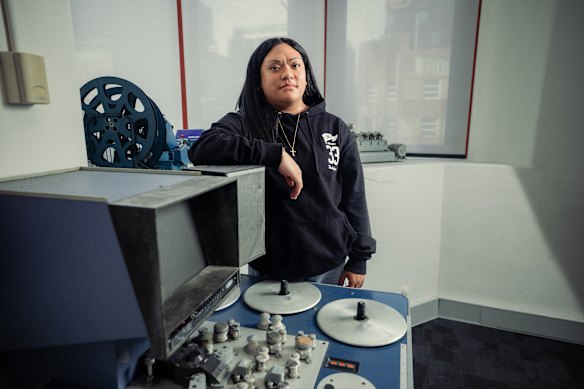
She created it via an incentive the university runs, whereby any student from western Sydney who completes the week-long creative course is guaranteed entry once they finish their HSC. They can choose from filmmaking, animation, photography and music production, all using the university’s equipment.
“My film was just talking about how I feel very connected to my [Samoan and Tongan] culture; however, I can’t speak my language, and then I’m called plastic, which is basically [challenging the stereotype when people say], ‘Oh, you can’t speak your language or not that into your culture’, and just basically feeling ashamed of not being able to work on it,” Charmonix, who is in year 11, says.
“Putting like all my thoughts and my own footage into a video has made me open my eyes.”
The experience of learning a craft with her peers, socialising each day and having a reason to be off her phone has been a highlight for Charmonix, who wants to keep pursuing filmmaking but sees herself in the media industry.
“Not just having my head just straight into my phone and being out here, leaving home early, going home late, but also making new friends like on the way there’s actually there; it helps with my personal identity,” she says.
“It’s not like I did it because I was forced to do it … I wanted to actually make a film about myself.”
She has since made another short film based on her and her boyfriend.
While Charmonix has begun learning how to create a popular medium, every Saturday afternoon, 17-year-old Arlo Temple spends hours cultivating a centuries-old craft.
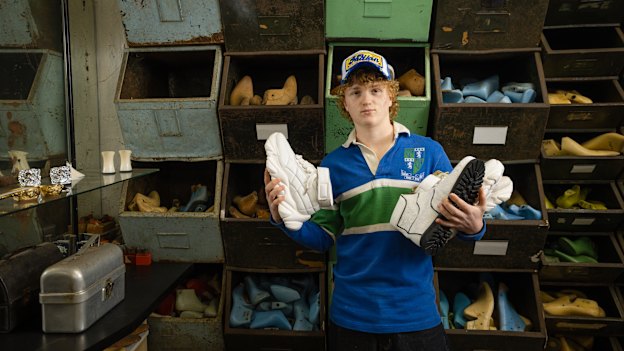
The year 11 student is learning the art of cordwainery (bespoke shoemaking done entirely by hand) at Sydney School of Footwear in Leichhardt – albeit with a modern twist.
Arlo started studying cordwainery when he was 14, and has since made three pairs (each takes roughly nine months, from sketch pad to finished product).
“I’ve always had an interest in shoes – and sneakers especially. I had a bit of a collection already,” he says, adding he already had experience with leather work from school.
Arlo says he likes sneakers because they are more complex to design and make compared to a traditional shoe, like a brogue.
“Shoemaking is a bit of a dying art, and it’s great it’s being passed on to a younger generation. Otherwise, that knowledge would probably get lost,” he says.
Sydney School of Footwear founder Darren Bischoff has been keeping the art of cordwainery alive for 17 years. He has a large library of fabrics, which for Arlo is a rich pool of inspiration.
A pair of lace hightop boots with black trim, made for a school textiles assessment, started in such a way.
“It’s a really contrasting shoe, because it’s a really rigid silhouette of the work boot contrasted with quite a delicate fabric,” he explains, adding: “it scored quite well in my textiles class”.
“When I’m designing, I’m usually thinking about form, and the dynamism between forms. I like thinking about repeating patterns and fluid movement. I think very sculpturally”.
In recent years, Bischoff has seen an uptick in young students, “who are quite uninterested in scrolling on social media. Some are even deleting their accounts and coming in here and learning to do something with their hands,” he says.
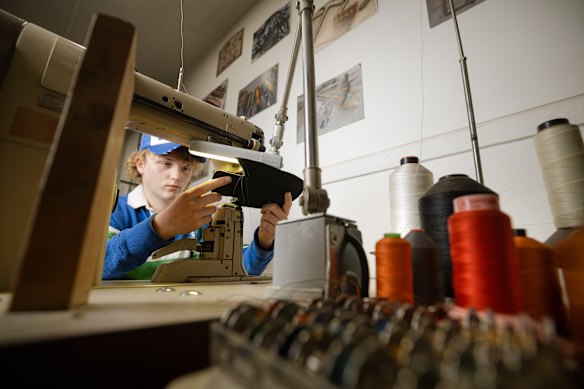
“They get really excited about it, and the next thing you know they’re back making a second, third pair of shoes.”
On the Saturday afternoon this masthead visits the school, Arlo is one of four young students each honing their craft.
One is Manus Senn, 24, who started attending classes four years ago, and is hoping to pursue a career in theatre production and costume design. He works in retail at a local footwear store.
“It’s just fun that every single time I’m doing something different. I sort of just reset my brain every time I come in … no two weeks are the same,” he says.
While several of Bischoff’s students have gone on to successful careers in the industry, he acknowledges it’s a dying trade.
“I tell them as soon as they come in, that there isn’t really a job in shoemaking unless you make it yourself,” he says.
Arlo hopes to funnel the skills he’s acquired into a career in design. While he’s still unsure what the future may hold, he’s leaning towards furniture making.
But for some teens, it’s not just channelling their creativity via the analogue – it’s also living it.
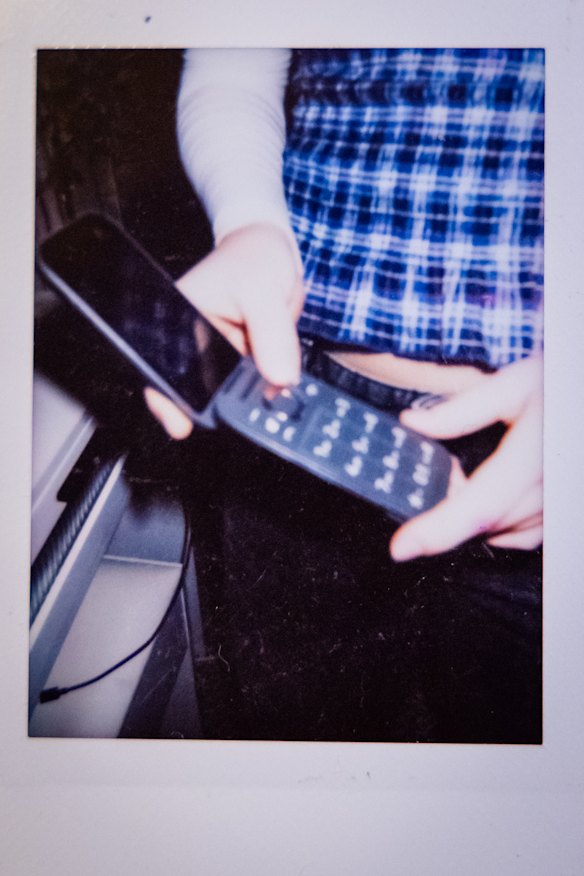
Growing up with limited technology, Olive Berlach communicates with the outside world using a Nokia flip phone.
Even though young Sydneysiders have begun making the old-school phone cool again, Olive – and her offline siblings – are not convinced by this rather humiliating method of communication imposed by her parents.
“They hate it when we call them on it,” mum Emily says, looking back at her three, slightly glaring teenagers. “I kind of try and hide it,” Olive adds.
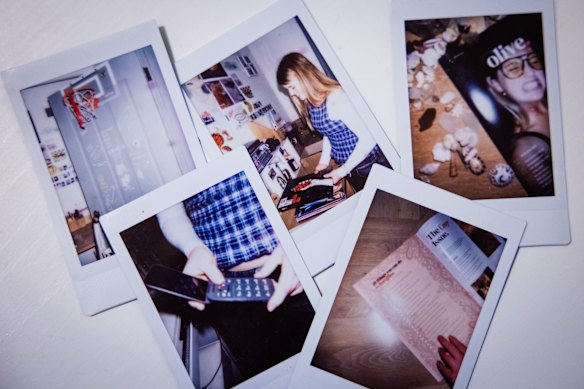
Her dream is to interview her celebrity crush, a contemporary Australian singer, Ruel – who is smiling above us and plastered on her wall. “I like his music a lot, and he’s not bad-looking,” Olive confesses.
Start the day with a summary of the day’s most important and interesting stories, analysis and insights. Sign up for our Morning Edition newsletter.
Disclaimer : This story is auto aggregated by a computer programme and has not been created or edited by DOWNTHENEWS. Publisher: www.smh.com.au





