Few films have embodied the spirit of the underdog quite like Rocky. Released in November 1976, John G. Avildsen’s sports drama introduced audiences to Rocky Balboa, a small-time Philadelphia boxer who gets an unexpected opportunity to fight reigning heavyweight champion Apollo Creed. Yet, the story behind the film was almost as remarkable as the one unfolding inside the ring. At a time when Hollywood had little interest in Sylvester Stallone as a leading man, he wrote a screenplay about a man desperate to prove his worth, only to find himself fighting an uphill battle to get it made.
Fifty years later, that struggle is returning to the screen through I Play Rocky, Peter Farrelly’s film starring Anthony Ippolito as a young Stallone. The film revisits the extraordinary gamble that saw an unknown actor refuse to surrender the opportunity to play the character he had created, even when doing so meant turning down money that could have changed his life.
The real-life fight that inspired Rocky
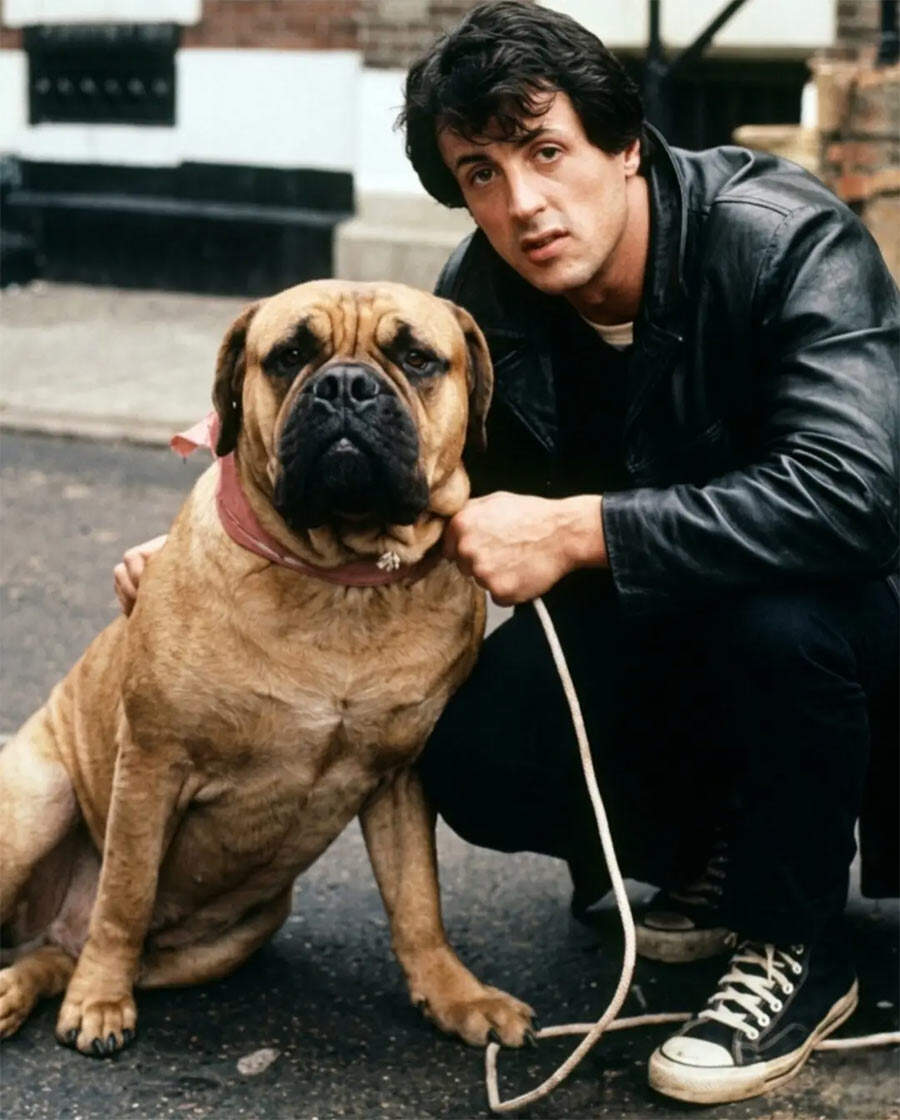
Before the idea for Rocky took shape, Stallone was an aspiring actor approaching 30, struggling to establish himself in Hollywood and make ends meet. He took up a job as an usher at a local movie theatre. Even then, the money was tight. He could barely afford to look after his Bullmastiff, Butkus, eventually selling the dog for just $40 because he could no longer afford to feed him. Butkus had been Stallone’s closest companion during this particularly difficult period, making the decision all the more painful. Stallone later recalled that it was during this period that he began teaching himself the craft of screenwriting, studying films and trying to understand how stories worked.
Stallone’s own struggles would eventually find an echo in a very different kind of underdog story. The idea for Rocky came to Stallone after watching the heavyweight championship bout between Muhammad Ali and Chuck Wepner in March, 1975. Ali was the undisputed star, while Wepner was a relatively obscure fighter whose chances of lasting the distance appeared slim. Yet Wepner stayed in the contest for 15 rounds and even appeared to knock Ali down, although the champion maintained that he had tripped. The fight left a lasting impression on Stallone, who saw something compelling in the determination of a man with little reason to believe he could compete with the best.
That encounter became the starting point for Rocky Balboa, a Philadelphia club fighter whose opportunity to face Apollo Creed offers him a chance to prove that he belongs. Stallone reportedly wrote the first draft of the screenplay in three and a half days, followed by two further drafts. Drawing on the fight, he shaped a story that was as much about self-respect as it was about boxing. Rocky is not driven by the expectation that he will defeat Creed. He simply wants to show that he can go the distance.
The character also reflected something of Stallone’s own circumstances. Before Rocky, he was a struggling actor who had found it difficult to secure substantial roles. He had appeared in a handful of films, but Hollywood had yet to consider him a potential leading man. His financial situation was precarious, and the screenplay represented an opportunity to create the kind of role that had eluded him.
The offer Stallone refused
When producers Irwin Winkler and Robert Chartoff recognised the potential in the screenplay, they were interested in acquiring it. The problem was that they did not share Stallone’s conviction that he should play Rocky. The producers and studio executives preferred an established star, with names such as Burt Reynolds, Ryan O’Neal and James Caan among those considered for the role.
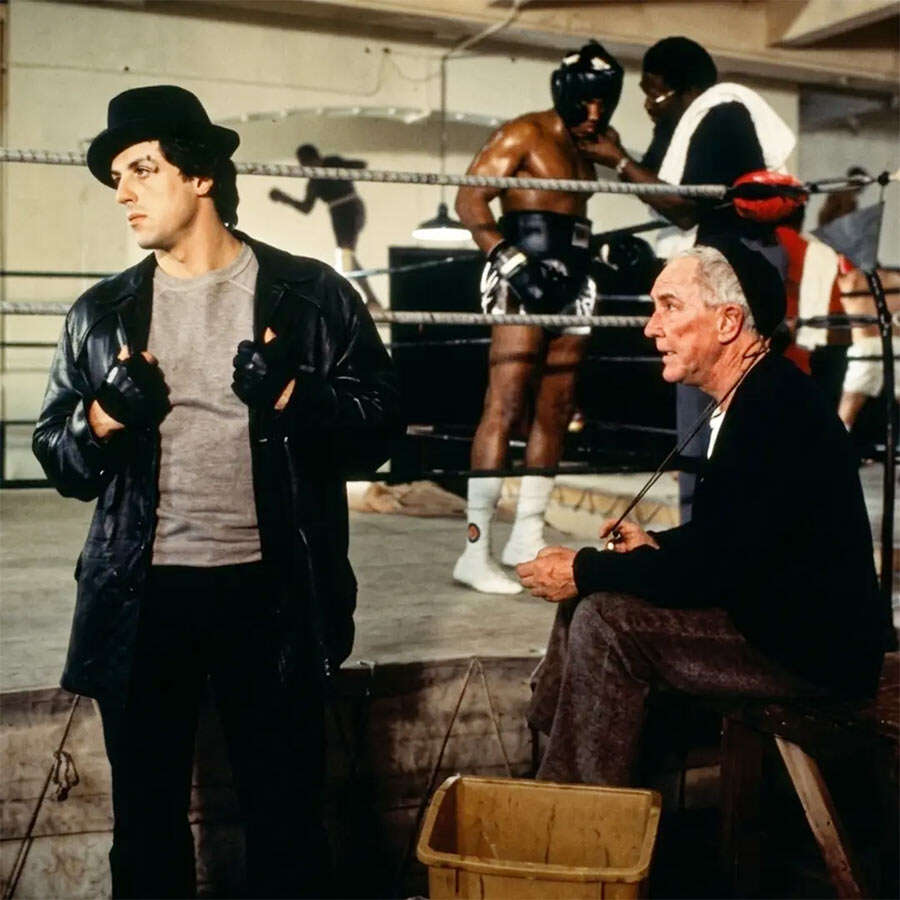
For Stallone, however, selling the screenplay without playing the lead would have defeated its purpose. He had written Rocky with himself in mind and was unwilling to hand over the character simply because Hollywood was reluctant to take a chance on an unfamiliar face. The financial offers reportedly rose substantially during negotiations. While some accounts place the highest offer at around $360,000, others cite figures closer to $275,000 or $300,000. Whatever the precise amount, it was a substantial sum for a man with very little money in the bank.
Stallone held his ground. He understood that the screenplay was his best opportunity to establish himself as an actor rather than remain someone who wrote stories for other performers. His insistence was not without risk. There was no guarantee that the film would be made with him in the lead, or that audiences would accept an unknown actor opposite a character who was supposed to be a credible challenger to a heavyweight champion.
Eventually, the producers agreed to back the project with Stallone playing Rocky, although the financial terms were considerably more modest than the offers he had turned down. The film would have to be made on a tight budget of $1 million, with little room for the kind of elaborate production that a major studio release might ordinarily command. Stallone had secured the role, but he still had to prove that his faith in the character was justified.
Making Rocky on a shoestring budget
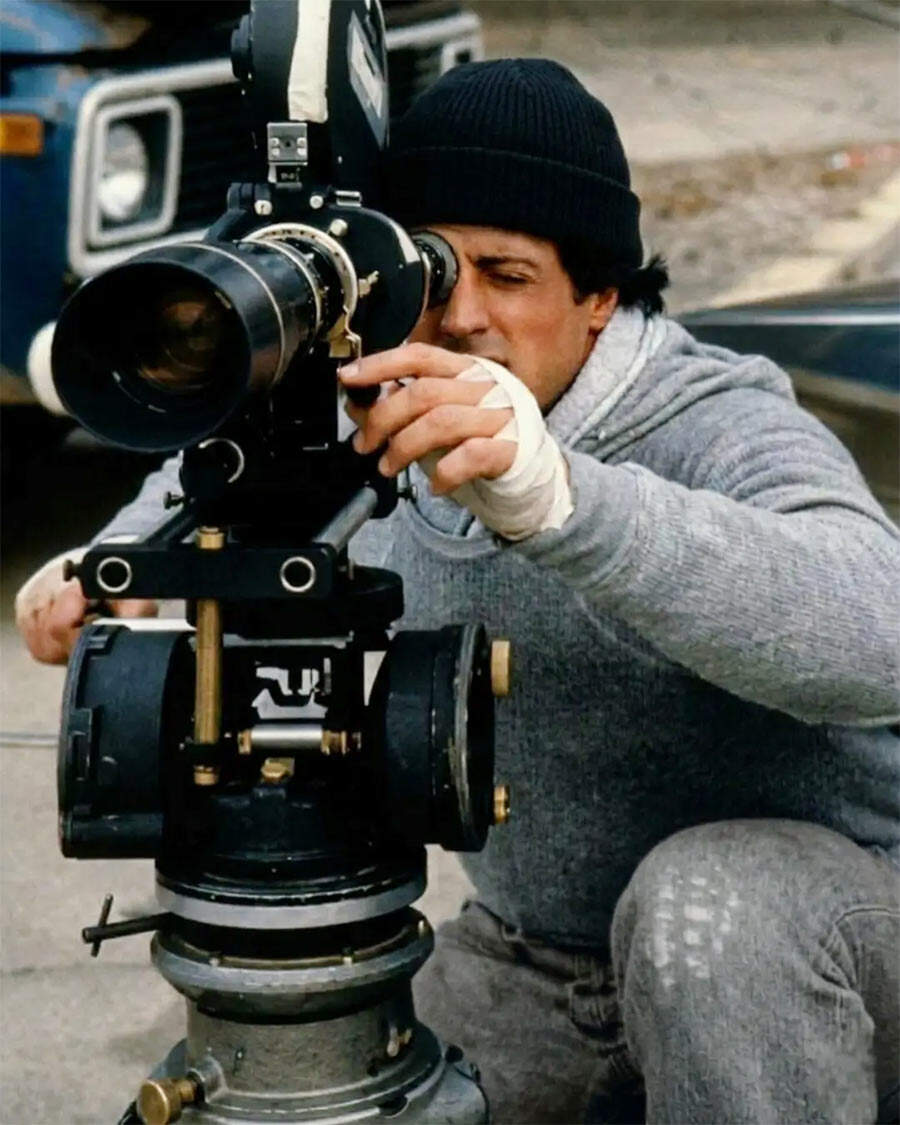
With Stallone attached as the lead, Rocky had to be made on a reported budget of around $1 million. United Artists was wary of committing substantial money to a film led by an actor who had yet to establish himself at the box office. John G. Avildsen, who had experience working on modestly budgeted productions, was brought in to direct. The shoot was completed in approximately 28 days, leaving little room for elaborate setups or expensive retakes.
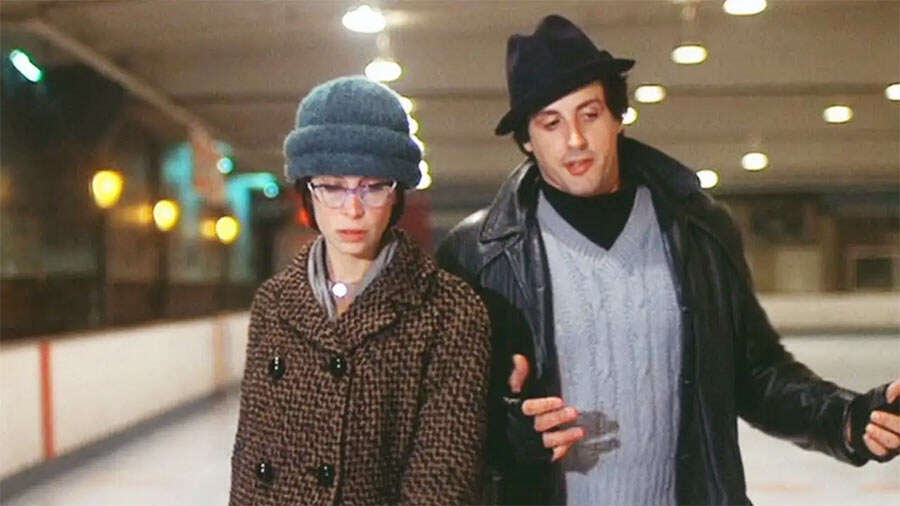
Philadelphia became an important part of the film’s identity, with its streets, neighbourhoods and familiar landmarks giving Rocky’s world an authenticity that a studio set could not easily reproduce. The limitations also shaped some of the film’s most memorable scenes. The sequence in which Rocky takes Adrian to an ice-skating rink was originally conceived as a busier outing. Hiring enough extras to make the location appear crowded would have been expensive, so the scene was reworked around an almost empty rink. What could have been a compromise became one of the film’s most intimate moments, allowing the awkwardness and tentative affection between the two characters to take centre stage.
Some of the production’s most enduring images emerged from similar practical decisions. The training montage, with Rocky running through Philadelphia and eventually charging up the steps of the Philadelphia Museum of Art, became one of cinema’s defining sequences. The film’s use of the Steadicam, operated by Garrett Brown, helped give the running scenes a fluidity that was unusual for the period, allowing the camera to move alongside Stallone without the instability of conventional handheld footage.
Much of the sequence was filmed on Philadelphia’s streets without formal permissions, using a small crew and the city itself as an improvised set. The people Rocky encounters along the way were largely ordinary residents going about their day, their reactions to a boxer suddenly running past them captured as they happened. Their curiosity, amusement and spontaneous encouragement lent the scenes an authenticity that would have been difficult to recreate with hired extras. In one particularly memorable moment, someone throws an orange towards Rocky as he runs past. Rather than interrupting the action, Stallone incorporates the unexpected gesture into his run, turning an unplanned encounter into one of the sequence’s most charming details.
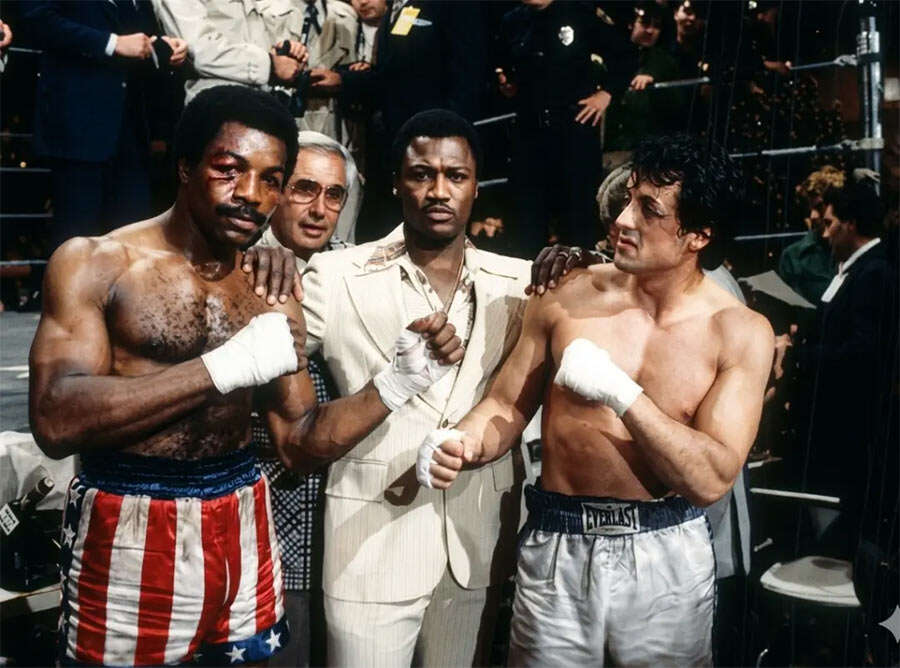
The production’s most significant challenge remained the final boxing match. The fight between Rocky and Apollo had to convince audiences that a club fighter could stand in the ring with a champion. Stallone trained extensively before filming, while Carl Weathers, who played Apollo Creed, helped bring the contest to life through rehearsals and carefully choreographed action. Their work was crucial to making the bout feel like a genuine championship fight rather than a staged confrontation.
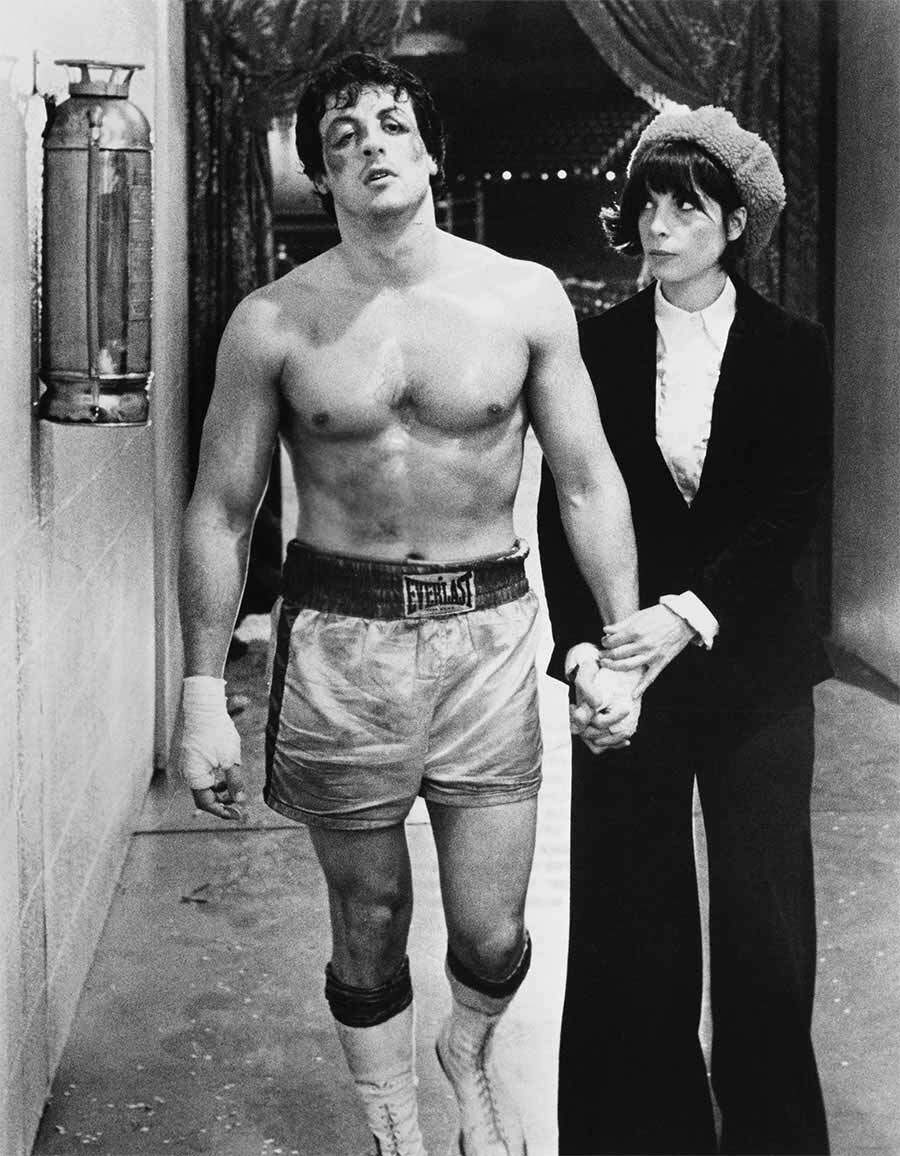
Even the ending underwent changes. The original version concluded with Rocky leaving the arena with Adrian after the fight, but the filmmakers felt the moment lacked the emotional impact they wanted. A revised ending was subsequently filmed, with Rocky calling out for Adrian as she makes her way into the ring. It is a relatively simple moment, but one that brings the story back to the relationship at its heart. Rocky may not have won the fight, but he has achieved something more personal by proving that he belongs there.
Gonna Fly Now
An equally important part of the film’s identity came from its music, composed by Bill Conti. His score gave Rocky’s journey much of its emotional momentum, moving between the stirring orchestral passages that accompany his training and the more reflective cues that underscore his relationship with Adrian. Its defining moment was “Gonna Fly Now”, the theme that accompanies Rocky’s run up the steps of the Philadelphia Museum of Art. Written by Conti with lyricists Carol Connors and Ayn Robbins, the track was originally developed to give the training montage a rhythm that would help the filmmakers shape the sequence. What began as a short musical passage gradually grew into the three-minute anthem audiences would come to associate with Rocky’s determination.
Conti later recalled that Avildsen initially asked him to compose 90 seconds of music for the training montage, but kept requesting extensions as the sequence took shape. “I didn’t sit down one day and say, here comes a song. I sat down every day and did 30 seconds,” he said, explaining the gradual process behind the track. The director’s brief, however, was clear: “We’ve got to have the people feeling that there was hope that (Rocky) can win.” That sense of possibility became central to the music, helping turn Rocky’s training sequence into an enduring cinematic moment.
From a $1 million production to an Oscar-winning phenomenon
When Rocky opened in November 1976, it exceeded expectations. The film went on to earn more than $225 million worldwide, according to estimates. Its success transformed Stallone from a struggling actor into a major Hollywood star and established Rocky Balboa as one of cinema’s most recognisable sporting characters.
The film’s recognition extended beyond its commercial performance. At the 49th Academy Awards, Rocky received 10 nominations and won three Oscars, including Best Picture, Best Director for Avildsen, and Best Film Editing. Stallone was nominated for both Best Actor and Best Original Screenplay, an unusual achievement that underlined how closely he was associated with the film’s creation.
Rocky’s success eventually allowed Stallone to reunite with Butkus. Stallone tracked down the man who had bought Butkus and paid him a reported $15,000 to get the dog back. He also offered the man a small role in the film. Butkus went on to appear in both Rocky and Rocky II.
Rocky’s legacy has endured through multiple sequels and the later Creed films, which introduced Rocky Balboa to a new generation of viewers. Yet the original remains distinctive for the circumstances of its creation. The film’s underdog story was not simply a fictional construct. It was also the story of a young actor who refused to separate his belief in a character from his belief in his own ability to bring that character to life.
Revisiting the gamble with I Play Rocky
That is the story I Play Rocky returns to as the original film marks 50 years since its release. Directed by Peter Farrelly, the drama stars Anthony Ippolito as Stallone, with AnnaSophia Robb, Matt Dillon, Stephan James, Toby Kebbell, P.J. Byrne and Jay Duplass among the supporting cast.
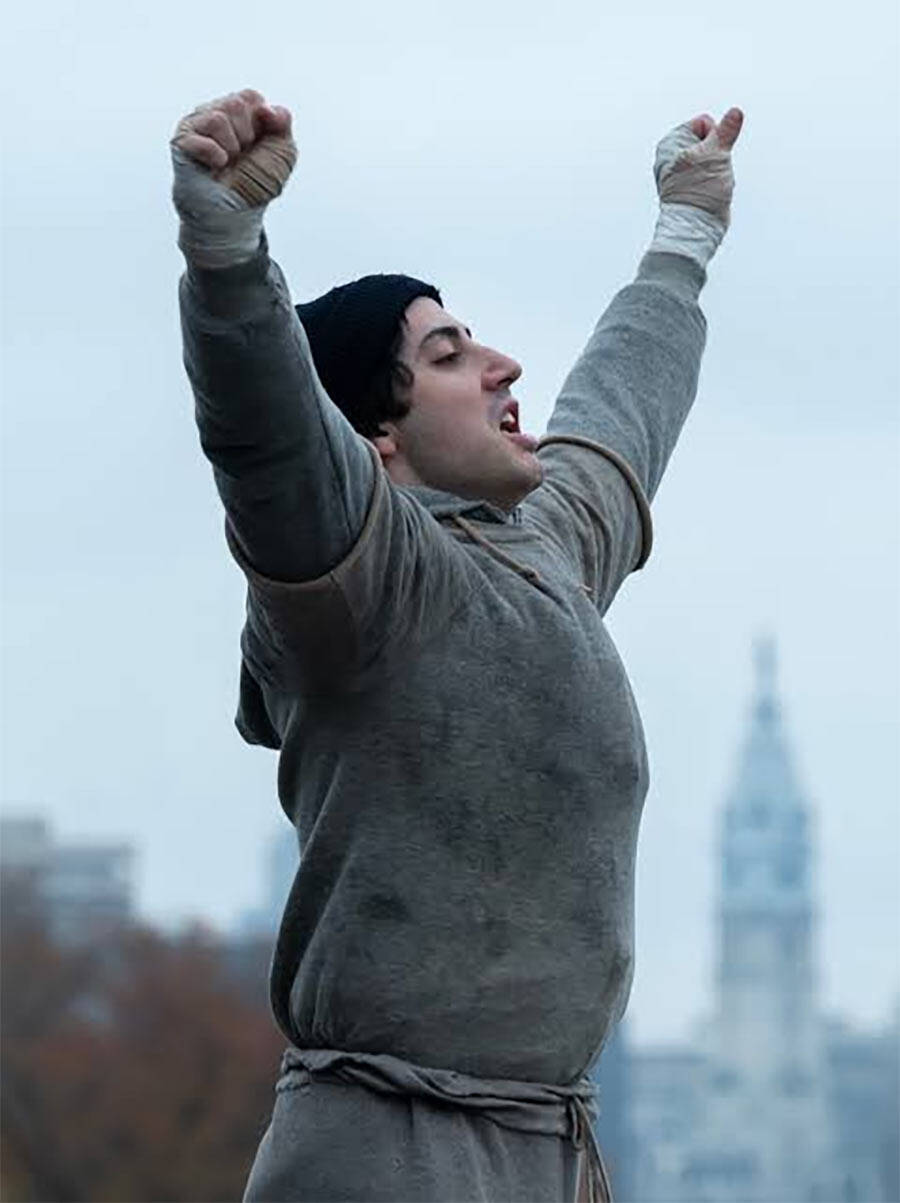
The timing offers an opportunity to look beyond the familiar images of Rocky running up the museum steps or trading punches with Apollo Creed. I Play Rocky revisits the struggle that unfolded before the cameras began rolling, when Stallone had to convince Hollywood to take a chance on a screenplay that few believed could succeed with him in the lead. That gamble gave us Rocky and its multiple sequels; and in the years that followed, the actor Hollywood didn’t initially want ended up giving us some iconic characters like John Rambo, Lieutenant Marion “Cobra” Cobretti, Judge Dredd, John Spartan, and Gabe Walker, among many others.
There is an enduring irony at the heart of Rocky. Stallone wrote about an underdog who gets one opportunity to prove himself, only to find that he had to fight an almost identical battle to get the story told. The film’s greatest achievement, perhaps, is that the man who created Rocky had to take the same gamble as his character: believe in himself when few others did.
Also Read: Tiger Shroff in Talks for Global Action Film With Sylvester Stallone & Tony Jaa
Disclaimer : This story is auto aggregated by a computer programme and has not been created or edited by DOWNTHENEWS. Publisher: filmfare.com