
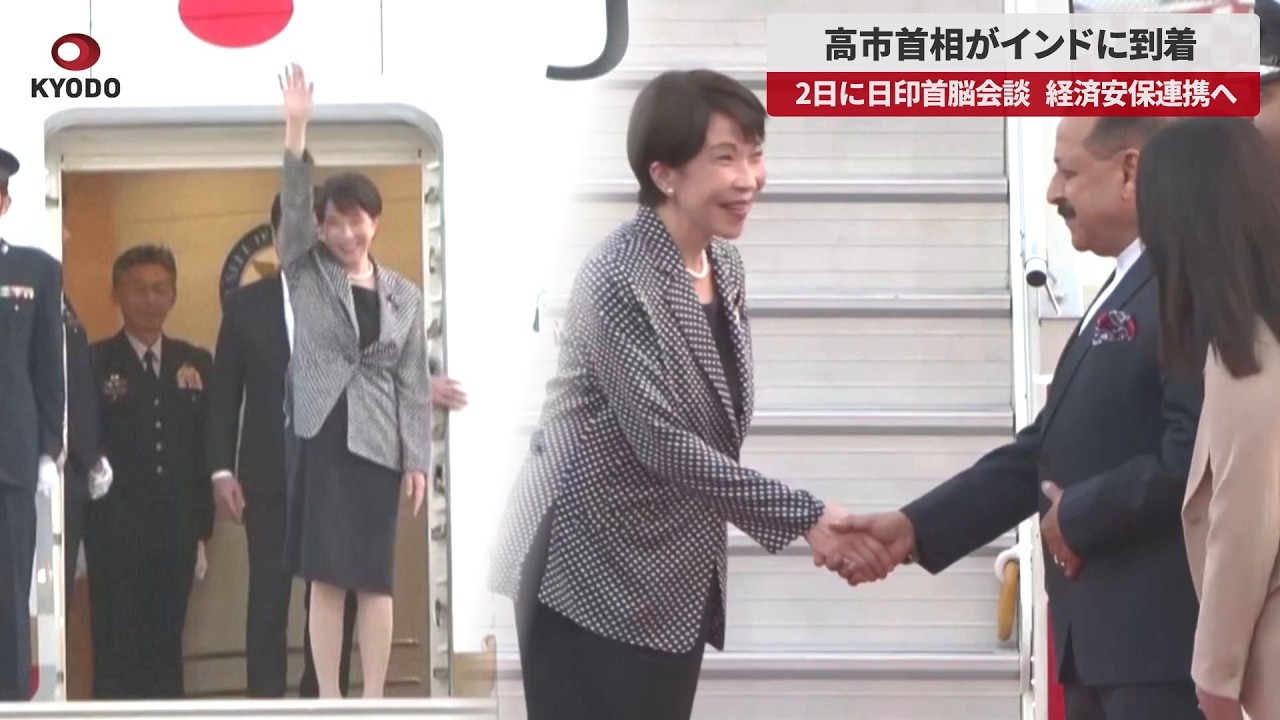
NEW DELHI –
Prime Minister Sanae Takaichi’s visit to India on July 2 placed foreign policy, economic security and strategic investment at the center of Japan’s political agenda, even as opposition parties kept pressure on the government over Diet proceedings and unresolved domestic policy disputes.
Takaichi left for India on July 1 and was scheduled to meet Prime Minister Narendra Modi in New Delhi on July 2, with both governments seeking to deepen cooperation on trade, investment, technology, defense and economic security. Before leaving Japan, Takaichi said cooperation with India was becoming more important because the two countries share basic values and strategic interests at a time of growing uncertainty in the international environment.
The visit gives Takaichi a chance to frame Japan’s foreign policy around a broader Indo-Pacific strategy. India is a key partner for Japan in balancing China’s influence, strengthening supply chains and expanding investment in infrastructure and advanced industries. The summit is also expected to cover cooperation in areas such as semiconductors, digital technology, infrastructure, defense and people-to-people exchanges.
The political importance of the trip goes beyond diplomacy. Takaichi is trying to connect her domestic growth strategy with overseas partnerships, particularly with countries that can help Japan reduce reliance on China for critical materials, manufacturing and technology. India’s large market, expanding industrial base and role in the Quad framework with Japan, the United States and Australia make it one of Tokyo’s most important strategic partners.
The timing is sensitive. Japan-China tensions have escalated after Beijing expanded export controls targeting Japanese companies and organizations involved in dual-use technologies. China has accused Japan of moving toward reckless militarism, while Tokyo has protested Beijing’s measures as unacceptable and out of line with international practice.
The dispute began after Takaichi’s remarks last November on a possible Taiwan contingency, which Beijing interpreted as interference in China’s internal affairs. Since then, China has taken a series of retaliatory steps, including export restrictions, diplomatic freezes, travel warnings and trade-related measures. The latest export-control move has pushed economic security back to the center of Japanese politics.
For Takaichi, the India visit offers a way to show that Japan is not only protesting China’s actions but also building alternative partnerships. The message is likely to appeal to conservatives and security hawks inside the ruling Liberal Democratic Party, but it also raises questions for Japanese businesses exposed to China’s market and supply chains.
At home, the Diet calendar is becoming increasingly tense as the current session approaches its July 17 end date. Opposition parties have been demanding that Takaichi attend committee deliberations, while her visit to India has added to frustration over the pace of parliamentary debate. Broadcasters reported that some Diet committees remained stalled as opposition parties refused to attend, demanding the prime minister’s presence.
The opposition is likely to use the remaining weeks of the session to challenge the government on several fronts: economic policy, fiscal management, China policy, election-related legislation and Imperial House issues. Takaichi’s absence for the India summit gives the opposition an opening to argue that the government is avoiding difficult questions, though the administration can counter that the trip is central to Japan’s foreign and economic security strategy.
Economic policy remains the core domestic issue. The government’s new economic and fiscal blueprint calls for more than 370 trillion yen in public and private investment through fiscal 2040, targeting areas such as artificial intelligence, semiconductors, shipbuilding, space, energy and other strategic industries. The plan seeks to lift Japan’s real growth rate above 1% and raise nominal growth above 3%.
The blueprint gives Takaichi a clear policy identity: pro-growth, investment-driven and security-focused. But it also brings political risks. Japan already carries one of the world’s largest public debt burdens, and investors are watching whether the government can pursue large-scale spending without undermining fiscal credibility. The administration has said it will manage fiscal discipline over multiple years rather than rely on a rigid annual primary-balance target.
The Bank of Japan is another source of political tension. Takaichi’s recent appointments to the BOJ policy board have strengthened the presence of members seen as more cautious about rate hikes. Ayano Sato, the prime minister’s second appointee, joined the board this week and said monetary policy should remain data-driven while paying close attention to the inflationary impact of the weak yen.
Although Sato emphasized the BOJ’s independence, her appointment has sharpened debate over how much influence the government may have over future rate decisions. The BOJ raised its policy rate to 1% in June, the highest level in more than three decades, but Takaichi’s economic program depends on investment conditions remaining supportive.
The weak yen has become a growing political problem. It supports exporters and tourism, but it also raises import costs, squeezes households and increases pressure on smaller companies. Reports of rising yen-related bankruptcies have added urgency to the debate over whether the government and the BOJ can balance growth, inflation and exchange-rate stability.
The political picture on July 2 therefore has two layers. Internationally, Takaichi is using the India summit to reinforce Japan’s Indo-Pacific strategy and reduce exposure to China. Domestically, she faces a compressed Diet schedule, opposition pressure and difficult questions over how to fund and manage her growth agenda.
The India visit may help Takaichi strengthen her image as a leader focused on security and strategic diplomacy. But when she returns, the government will still need to manage stalled Diet deliberations, explain the details of its investment strategy and respond to concerns over the BOJ, the yen and China’s export controls.
What To Watch Next
The outcome of Takaichi’s summit with Modi will be closely watched for concrete agreements on investment, defense cooperation, technology, supply chains and economic security.
The Diet schedule remains tight ahead of the July 17 session end, and opposition parties may continue pressing for Takaichi’s direct attendance at committee hearings.
China’s response to Japan’s protest over export controls could shape the next phase of Tokyo-Beijing tensions, particularly for companies tied to defense, semiconductors and critical materials.
The BOJ’s July 30-31 policy meeting is becoming a major political marker, as markets watch whether the central bank signals more rate hikes or takes a more cautious line after the government’s recent board appointments.
The government’s economic blueprint will remain under scrutiny as ministries, ruling party lawmakers and business groups compete over which sectors receive priority under the 370 trillion yen investment framework.
Disclaimer : This story is auto aggregated by a computer programme and has not been created or edited by DOWNTHENEWS. Publisher: newsonjapan.com









