Some teal MPs are lukewarm on forming a party for fear of losing their independence, but why must they assume that any new political party will enforce rigid central control and stop them representing their electorates independently (“Why these independents might stay solo”, May 26)? Why couldn’t the teals form a party with a constitution that legally requires MPs to consult and represent their communities, while still sharing broad principles such as climate action and integrity? That would combine independence with practical political organisation. It would also address the glaring funding imbalance. Parties like One Nation, backed by wealthy vested interests, can attract enormous donations, while community independents face tight fundraising caps and complex rules. The Labor/Coalition funding stitch-up was designed to stall the teal movement. If the teals miss this opportunity to organise as a party, they risk handicapping themselves unnecessarily, especially for new candidates, in expanding teal representation in Canberra. Politics may be imperfect, but funding still can win elections. Nigel Howard, Sydney
It is the voting paper we all fill out on election day that is the greatest handicap for the independent candidate. Designed by the Australian Electoral Commission (AEC), it promotes voting above the line, where only registered parties are listed. The Commonwealth Electoral Act of 1918 took no such stance, but has been persistently amended by both Labor and Liberal to keep independents in check. PM Albanese’s lower expenditure threshold for independents merely adds to the discrimination an independent candidate faces trying to get to Canberra. Rather than community independents joining an ever-wackier conga line of registered parties, I suggest they take their case against the AEC to the Australian Human Rights Commission. Victoria Walker, McMahons Point
I stand by what I wrote to the paper months ago – these independents would do more for their electorates, country and quite probably themselves if they joined a major party, preferably the Liberals, as that is the general hue of their electorates. They are, by and large, well-educated and talented people who have something to offer in terms of real policy development and possibly ministerial duties, which they can never do as independents. Meanwhile, we have a government that badly needs challenging by a strong opposition. Peter Thornton, Killara
I have written before that the teals, having split the conservative vote, almost guaranteed that Labor could rule for decades to come, even though teal supporters would probably never vote ALP. In his letter, my old school compatriot David Salter mentioned Gough Whitlam being a great opposition leader (Letters, May 26). Gough’s strength showed because the two opposing branches of Labor, the ALP and the DLP, finally joined forces to defeat the conservatives after their ugly split kept Bob Menzies in government for 23 years. Once the two Labor parties joined forces, in marched Gough, only to implode due to lack of practice at governing. Until today’s conservatives again join forces, PM Anthony Albanese can do as he pleases with taxation, even if his proposed changes upset many voters. David Sayers, Gwandalan
In politics, numbers are everything. As much as I like my local member who just so happens to be the PM, when I vote I don’t vote for the individual but for the party. Although not without its flaws, party solidarity strengthens my vote. Policies I support at an election are more likely to be implemented when not subject to constant amendment or rejection. A teal party in which every MP might have different priorities and opinions, and without any requirement to work together as a team, is doomed to failure. John Bailey, Canterbury
Having helped put the Albanese government into power, independent MPs and their teal friends are now attacking the prime minister over gambling. They realise after the last budget how unhappy the average Australian is with their lot. The teals were supported by a millionaire in their bid to for climate action, but now many countries have changed their stand on net zero. Clearly they need a new goal, but footy and horse racing are all part of the Australian life. When will those who voted them in realise what a mess they have made of our wonderful, free country? Alison Copeman, Palm Beach
One Nation, no direction
To see the huge risk of electing One Nation candidates (“Hanson has no solutions, but she’s winning over younger Australians”, May 26), one only needs to look at England, where Nigel Farage’s Reform candidates had massive success at the recent council elections. Many Reform candidates are total novices to the job of governing, unaware of meeting procedures, standing orders or council constitutions, and their incompetence has hamstrung numerous councils and hampered their progress. Similar dysfunction in the event of a swing to One Nation would paralyse the process of government here. No business or institution should grind to a halt due to mass ignorance and lack of experience. Mark Berg, Caringbah South
If the Liberals took all the advice in Jane Buncle’s article about the resurgence of Pauline Hanson they could become a party that makes a positive contribution to our parliamentary decision-making, and would help reduce the current polarisation in the political sphere. This could be channelled into more considered and constructive policies, rather than focusing only on being anti-government. Jim Pollitt, Wahroonga
No free rides
Nationals senator Bridget McKenzie quit cabinet in 2020 after the infamous “sports rorts” scandal. Instead of being fired, she was returned to parliament in 2021 and now has used taxpayers’ money to attend her son’s engagement and wedding (“Senator also claimed for son’s engagement”, May 26). As shadow treasurer Tim Wilson said, it does not pass the pub test. It doesn’t pass any test, in fact. It’s little wonder the Coalition is on the road to extinction. Peter Miniutti, Ashbury
Abbott not the answer
George Brandis is showing his typically outdated opinions. His support for Tony Abbott as president of the Liberal Party is hard to believe (“Liberals’ unlikely pair of saviours,” May 25). Does he not remember the vitriol spewed by Abbott at Julia Gillard, or the embarrassment we endured because of the onion-eating, knighthood-promoting, suppository of a prime minister? Abbott was kicked out of office, lost his seat, and rightly so. But George didn’t do too badly out of the old boys’ alliance. Glenda Taylor, Stanwell Tops
Brandis tries to belittle Jim Chalmers for delivering a budget that might actually help most Australians, while suggesting Tony Abbott’s new job will see a return to Liberal Party principles. Presumably he means negativity, personal attacks and telling flat-out lies, those being the most memorable moments from Abbott’s last stint in Canberra. Phil Bradshaw, Naremburn
Bondi’s hard lesson
While in reality only the briefest moment in time, the reported seven minutes and 41 seconds that it took to neutralise the alleged Bondi Beach killers would have seemed like a lifetime to those caught in the gunfire during their Hanukkah celebrations. While more will be revealed by the royal commission, I hope the police, ASIO and other agencies learn from errors of judgment, failures in communication and decisions to suspend watch list follow-ups, which allegedly allowed this attack to be planned and carried out (“Police did no risk assessment of Jewish festival before terror attack”, May 26). We depend on these agencies daily for our country’s safety and I fully support them, but after the Bondi tragedy they must do better. Patrick McGrath, Potts Point
Unknown quoll-ity
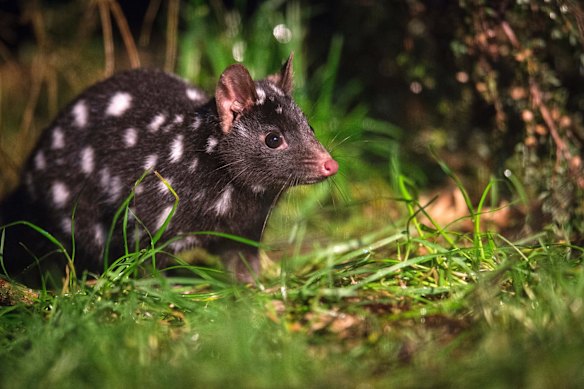
I was shocked by Nicola Barton’s article, in which she wrote that one in five Australians believe foxes are native to Australia, and at her barbecue no one knew what a quoll was (“Ignorance of quolls shows a disconnect to our nature”, May 26). Is this the reason our state government won’t remove the brumbies from our environmentally sensitive Snowy Mountains, and why the federal government cut the funding for the eradication of invasive species? Brian McDonald, Willoughby
The fall in investment in renewable energy is worrying, particularly when it comes to wind (“Renewable investment collapse risks targets,” May 26). Last year, just 94 megawatts of new wind capacity entered the grid. This compares with 7 gigawatts of rooftop and utility-scale solar. More worrying is the fact that not a single new wind farm has broken ground since December 2023. There are a number of reasons for this – higher costs, lengthy approval times, delays in construction of transmission lines – but all must be addressed if we are to achieve a smooth energy transition. Three quarters of our coal-fired generating capacity will be gone by 2035. If we don’t have alternative power sources available by then, there really will be blackouts. I hope our politicians are listening. Ken Enderby, Concord
As the latest Four Corners made clear, big mining companies like BHP have no incentive to shift their operations to electric trucks and trains while they continue to receive hundreds of millions of dollars in diesel fuel rebates. Surely it is time for this rebate to be capped, or ditched entirely. The argument about the vehicles not being used on public roads is an entirely specious one. Catherine Rossiter, Fadden (ACT)
Labor should be congratulated for its move to renewable energy rather that criticised by the many naysayers (“Power bills set to fall despite Iran uncertainty”, May 26). The announcement of cheaper electricity from July 1 has vindicated the government’s policies. In announcing these lower prices, the Australian Energy Regulator advises that the lower prices are due to fewer fossil fuels in the electricity mix. Yet the Coalition wants to increase use of coal. Maybe if they see the financial benefits of renewables, they might drop their outdated ideology. John Rome, Mt Lawley
Insurance poser
Private Healthcare Australia’s chief executive, Dr Rachel David, who expounds the value of health insurance, obviously doesn’t live in rural or regional NSW, where hospital beds are in short supply (Letters, May 26). I recently had the option of using my private health coverage for a short stay in hospital. I chose not to because the hospital had no means of providing me any care or treatment different from what a public patient would receive. Gillian Baldwin, Windradyne
Pokie posturing
I thought times were hard. Clearly not, $9.3 billion having been liberated from working people’s pockets by pokie machines in 2025 (“Battle over pokies comes to premier’s backyard”, May 26). The government seems to have pretty much given up on this problem. And why wouldn’t they when taxes on that huge amount go straight back into the government wallet? It is difficult to believe that pokies are propping up so much employment that the thought of correcting the situation has the government quivering in its boots. Ted Bush, North Epping

So now we know why Premier Minns won’t bring in gambling reforms and why we had a sham cashless trial – he doesn’t want to compensate clubs for reduction in their gambling profits. But why should he compensate them? They have built their gaudy empires on the back of poker machine profits, so let them downsize and become comfortable places to go to, like they used to be. John Frith, The Entrance
The premier’s fears over job losses caused by the removal of pokies appear to be unfounded. He only need speak to the operators of the growing number of licensed venues that are doing very well without them. Peter Mahoney, Oatley
AI: Testing times
The correspondence concerning the problem of AI influencing HSC assessment reminded me of my solution to a similar problem some time ago (Letters, May 26). In my role as head of mathematics I was told by the principal that my HSC assessment policy wasn’t satisfactory because it consisted solely of in-class tasks and that I needed to include a home assignment, which in my opinion would compromise the exercise. My reaction, to satisfy the required system, was to include a “home research task”, which would be subject to questions with responses completed in class, ie, a test. My students came to embrace the “research task” concept as it were, and everyone, including the principal, was satisfied. Better still, the integrity of the assessment was maintained. Max Redmayne, Drummoyne
AI is the latest threat to appropriate assessment for the HSC. There are many students who have received direct assistance from friends, relatives or hired tutors for take-home assignments. As a teacher and former chief examiner at NESA, I have always believed that all students should receive a grade that represents their own work, effort and ability. It is time to reduce the proportion of assessment weighting given to take-home assignments. Brad Elliott, North Rocks
Herzog speaks truth
Israel’s president Isaac Herzog has acknowledged “a terrible process of brutalisation” creeping into Israeli society, including the abuse of detainees (“Herzog berates extremist settlers who ‘defile our home’,” May 26). Yet we are supposed to believe the Israeli ambassador to Australia, Hillel Newman, when he says that those detained from the aid flotilla were treated with respect despite the evidence of torture and beatings. Graeme Finn, Campsie

Isaac Herzog’s condemnation of the violent Jewish settlers in the West Bank is as welcome as it is overdue. His description of them as lawless and anarchistic is the plain truth. He goes on to say they “depart from every basic norm – moral, legal or Jewish”. The president would have truly burnished his credentials as a defender of moral, legal and Jewish norms had he applied them to the Israeli state’s destruction of Gaza. Tom Knowles, Parkville (Vic)
Stuff of legends
My wife and I were doing the Herald puzzles and needed an Australian expression for “rejection” with a three and a seven-letter word. After a bit of thinking we came up with “get stuffed”. We looked at each other and laughed. After decades living in this country, we have clearly developed “Australian values”. Mukul Desai, Hunters Hill
- To submit a letter to the Sydney Morning Herald, email letters@smh.com.au. Click here for tips on how to submit letters.
- The Opinion newsletter is a weekly wrap of views that will challenge, champion and inform. Sign up here.
Disclaimer : This story is auto aggregated by a computer programme and has not been created or edited by DOWNTHENEWS. Publisher: www.smh.com.au