
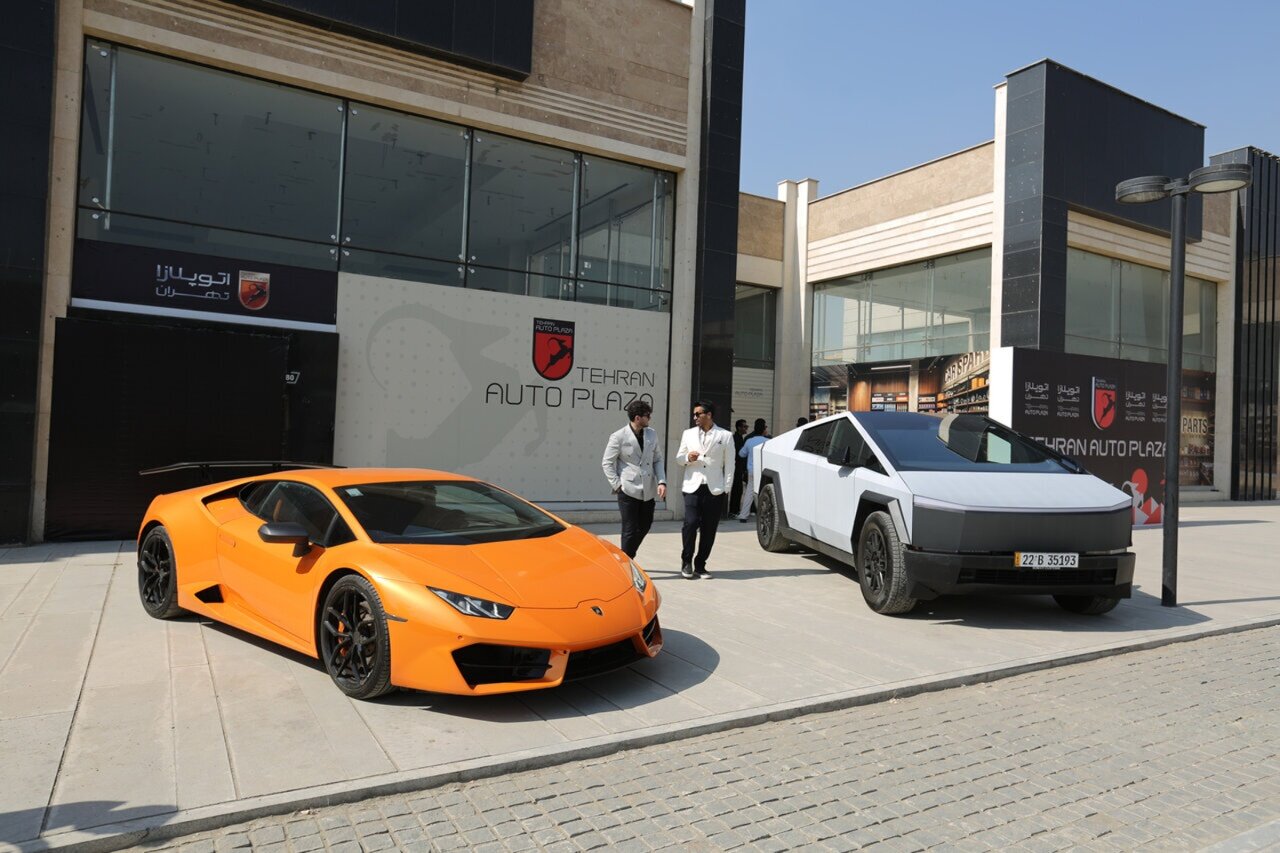
TEHRAN – For many motorists, a visit to a car showroom has a specific purpose: to inspect a vehicle, discuss a price and decide whether to buy. Tehran Auto Plaza is being developed around a broader idea, one in which the automobile becomes the starting point for a day of discovery, specialist services, social encounters and new experiences.
Introduced to the media on October 12, the complex is planned as a large-scale automotive destination, bringing together vehicle showrooms, specialist facilities, commercial outlets and spaces for activities beyond buying and selling cars.
The development is designed to accommodate approximately 90 showrooms, alongside workshops, vehicle-tuning facilities, parts and accessories outlets, and services related to vehicle care. Its broader program also envisages cafés, restaurants, shopping opportunities, family-oriented amenities and events intended to attract people whose interest in cars extends beyond ownership.
The idea is to create a place where visitors can encounter different parts of automotive culture in one setting. Some may arrive to explore new models or specialist equipment; others may be interested in vehicle customization, automotive technology, photography or events that bring enthusiasts together.
By combining commercial activity with opportunities for leisure and participation, Tehran Auto Plaza aims to establish a more expansive role for the automobile in the urban experience.
A destination on Tehran’s western edge
Situated along the Lashgari Expressway, which connects Tehran with Karaj, the development occupies a substantial site in the capital’s western corridor. The project materials describe an eight-hectare complex, while other published descriptions refer to a larger combined area for its commercial and service functions.
The layout is intended to distinguish the principal vehicle-display areas from much of the technical infrastructure. The upper section is planned to accommodate the showrooms, while the lower section is intended for workshops, spare-parts businesses, tuning facilities and related automotive services.
This separation gives the project an organizational logic: visitors can explore vehicles in a dedicated display environment while technical work and specialist activities take place in designated areas.
The scale is also central to the concept. Rather than presenting a single brand or a narrow category of vehicles, the development is intended to accommodate a variety of automotive businesses and services. That breadth could make it relevant to first-time buyers, experienced motorists, collectors, families and people simply curious about new developments in the car industry.
Its eventual character will depend on the mix of businesses that become operational and the range of activities available to visitors. Nevertheless, the plan points toward a destination that seeks to bring together commercial, technical and recreational uses rather than treating them as separate experiences.
More than a place to look at cars
The showroom remains the natural starting point, but it is not intended to define the entire visit.
The planned facilities encompass services for different stages of vehicle ownership, including maintenance, repairs, detailing, paintwork inspection, car washing, parts supply and customization. These activities address different interests: a motorist may need a routine service, while another may want to improve a vehicle’s appearance, upgrade its equipment or learn more about specialist products.
Detailing and vehicle-care services, for example, can appeal to owners who take particular care of their cars’ interiors and exterior finishes. Tuning and customization facilities offer another dimension, allowing motorists to explore equipment and modifications suited to their vehicles.
The inclusion of specialist outlets also has the potential to bring together customers and professionals who might otherwise operate in separate parts of the city. For enthusiasts, this could provide opportunities to discover products, compare approaches and exchange knowledge with people who share their interests.
A spare-parts hypermarket is among the facilities planned for the complex, adding a retail dimension to its technical offering. The intention is to make it easier for visitors to find components and accessories while accessing related installation or maintenance services.
The broader proposition is convenience, but also variety. A visitor who arrives with one particular task may discover services or products that were not part of the original plan for the trip.
Where technology meets automotive culture
Technology is another part of the development’s identity. In addition to the proposed automotive super app, the complex envisages opportunities to introduce new technologies, demonstrate specialist equipment and organize activities that bring visitors closer to developments in the industry.
A digital platform could complement the physical experience by helping users discover services, arrange appointments and access information before arriving. It could also help connect visitors with businesses operating within the complex, making it easier to plan a visit around specific interests.
The planned intelligent features and vehicle-related digital services form part of a wider effort to connect the physical and digital sides of automotive activity. For a visitor, this could mean exploring a product in person, obtaining information through a digital service and arranging a related appointment without having to begin the process again elsewhere.
Technology demonstrations and specialist events could give the complex an additional educational role. They may offer opportunities for customers to learn about new equipment, compare products and understand how technological developments are influencing vehicle use and customization.
The effectiveness of this approach will depend on the quality of the content and services provided. Digital tools are most useful when they make information easier to understand and help people take practical action. Similarly, technology events will be more engaging if they provide demonstrations and useful explanations rather than simply displaying products.
A meeting point for enthusiasts
One of the more distinctive aspects of the plan is the intention to host automotive gatherings and specialist events.
Car culture encompasses more than the purchase of a vehicle. It includes the design and engineering of automobiles, the restoration of older models, customization, photography, motorsport-related interests and the communities that form around particular brands or types of cars.
The planned events at Tehran Auto Plaza could provide a setting for these interests to intersect. Gatherings of enthusiasts, specialist presentations and displays of new equipment could encourage people to exchange experiences and become acquainted with developments beyond their usual areas of interest.
Such activities can also create opportunities for automotive businesses to meet customers in a less transactional setting. A product demonstration, technical presentation or themed gathering allows participants to explore an idea before making a purchase or committing to a service.
The proposed program includes events related to emerging automotive technologies and opportunities for brands to introduce products and developments to interested audiences. Test-drive experiences are also part of the wider concept being promoted for the destination.
For the complex, a regular calendar of events could help establish reasons to return after an initial visit. Instead of depending entirely on people who arrive to buy or service a car, it could attract visitors interested in a particular exhibition, demonstration or gathering.
The success of this approach will depend on the variety, organization and regularity of the events. A lively automotive destination needs more than physical space; it needs activities that give people a reason to use it.
A place for families and leisure
The inclusion of cafés, restaurants, shopping opportunities and recreational spaces reflects the project’s intention to welcome a broader audience.
For families, these facilities could make a visit more comfortable, particularly when different members have different interests. Someone comparing vehicles might spend time in the showrooms while others take a break in a café or explore other parts of the complex.
For automotive enthusiasts, food and leisure facilities could encourage longer visits and make it easier to attend events or spend time with fellow enthusiasts. For casual visitors, they could help turn the complex into an accessible destination even when there is no immediate intention to purchase a vehicle.
This approach places greater emphasis on the experience surrounding the automobile. The car remains the central theme, but the visit can include dining, social interaction, browsing and entertainment.
The quality of the visitor experience will depend on practical details as much as on the range of amenities. Clear wayfinding, convenient parking, comfortable shared spaces and effective coordination between commercial areas will be important to making a large complex easy to navigate.
Parking is a particularly significant consideration for a destination of this kind, where visitors may arrive in their own vehicles and spend time moving between different facilities. Published accounts of the project describe substantial parking capacity, although the precise figures vary across reports.
If the planned amenities and circulation arrangements work together effectively, the complex could accommodate visits of different lengths and purposes, from a brief stop at a specialist outlet to a longer outing built around a vehicle display or event.
A platform for automotive media and content
Tehran Auto Plaza also envisages a role in automotive media and content production.
The proposed capabilities include professional photography and video production, specialist automotive content, press gatherings and events designed to introduce new products and technologies. These activities could create opportunities for journalists, photographers, filmmakers, reviewers and other content creators to work in a setting that brings different vehicles and automotive services together.
For media professionals, a concentrated range of showrooms and specialist facilities can offer practical advantages. It can make it easier to arrange vehicle photography, record product demonstrations, interview industry representatives and produce material about equipment or services.
The complex could also provide a setting for public-facing content that helps audiences understand technical subjects. Automotive journalism, for instance, can explore not only a vehicle’s design and features but also maintenance, safety, ownership costs and developments in technology.
A dedicated environment for media activities could encourage collaboration among businesses, technical specialists and content producers. It might also give automotive brands additional ways to introduce products to potential customers, provided that promotional material remains clearly distinguished from independent editorial coverage.
The proposed facilities therefore have the potential to support both commercial communication and more informative coverage of the automotive sector. The range and quality of the resulting work will depend on the resources made available and the relationships developed with media professionals.
Employment and business opportunities
Beyond its appeal to visitors, the complex represents an effort to concentrate a range of automotive businesses within one commercial environment.
The planned activities could create opportunities for showroom personnel, mechanics, technicians, parts specialists, vehicle-care professionals, sales staff, hospitality workers, event organizers and media-production teams.
The project’s management has estimated that it could generate more than 2,000 direct jobs, potentially rising to around 2,300 to 2,400, alongside thousands of indirect jobs. These are projections rather than verified employment outcomes, and their realization will depend on the number of businesses that become operational and the scale of their activities.
The concentration of different services could also encourage cooperation among businesses that have traditionally operated separately. A customer purchasing a vehicle, for example, might subsequently use a detailing service, obtain accessories or attend an automotive event at the same destination.
For smaller specialist businesses, being part of a larger complex could offer access to visitors who might not otherwise discover their services. For customers, it could provide a broader choice of providers and make it easier to explore related offerings.
The commercial model will need to balance the interests of the businesses operating within the complex with the expectations of visitors. A successful destination must offer a compelling reason to visit, while providing its occupants with a viable environment in which to operate.
Building a lasting identity
Tehran Auto Plaza enters the market with an ambition that extends beyond assembling showrooms and service outlets. It seeks to establish an identifiable destination around the automobile, bringing together commerce, specialist knowledge, technology, leisure and community activities.
That ambition will be measured by what visitors can actually experience once the planned facilities and programs are operating. The variety of vehicles on display, the quality of specialist services, the accessibility of shared spaces and the regularity of events will all influence whether the complex develops into a destination people choose to revisit.
Its appeal could ultimately lie in the combination of these elements. A place that allows motorists to explore vehicles, obtain specialist assistance, discover new products, meet fellow enthusiasts and spend time with family offers a different proposition from a conventional showroom.
Tehran Auto Plaza is setting out to create such a place on the western edge of the capital. If its commercial, recreational and cultural plans are delivered in a coordinated way, it could give Tehran’s automotive community a new meeting point and offer visitors a more varied way to engage with the world of cars.
The longer-term challenge is to turn the scale of the development into a consistent experience. Its success will depend not simply on how many businesses occupy the complex, but on whether the combination of services, activities and visitor amenities gives people a clear reason to make the journey and return.
AM
Disclaimer : This story is auto aggregated by a computer programme and has not been created or edited by DOWNTHENEWS. Publisher: tehrantimes.com




