TEHRAN – Iran and Iraq are set to begin implementing a memorandum of understanding on granting reciprocal scholarships to students from the two countries, with the aim of expanding educational cooperation.
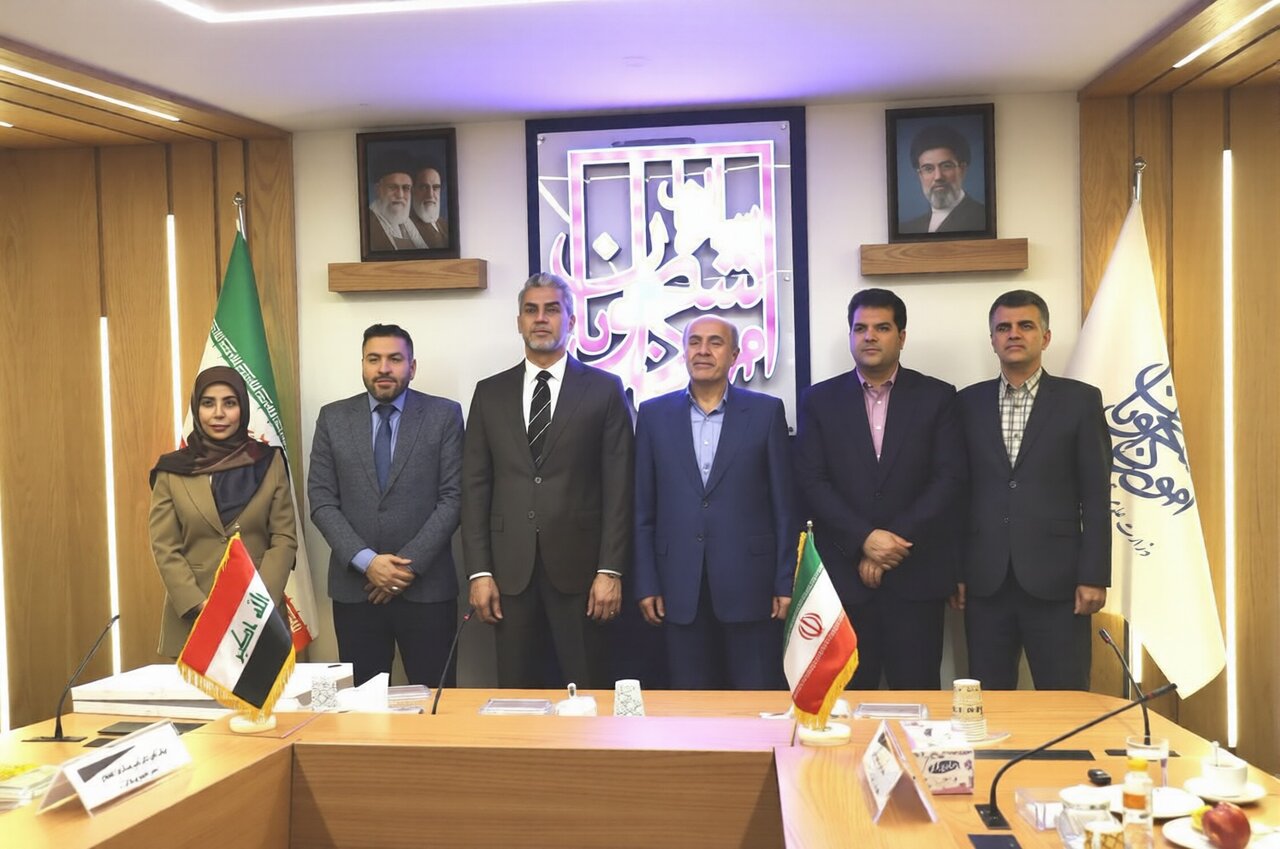
Under the agreement, Iraq will award 200 scholarships annually to Iranian students, while Iran will provide 100 scholarships each year to Iraqi students, IRNA quoted Iraqi Ambassador to Tehran Yasser Abdul-Zahra Al-Hajjaj as saying.
The official made the remarks in a meeting with Saeed Habiba, the head of the Organization of Student Affairs, on Monday.
He also lauded the efforts of the Organization of Student Affairs in addressing the challenges of Iraqi students majoring in Iranian universities.
For his part, Habiba highlighted the prominent academic standing of Iran’s higher education, ranking 15th-16th globally, saying that the Iraqi students with the highest scores at high school diploma examinations (like mathematics and geometry for engineering fields) will receive scholarships.
Should the initial year prove successful, the number of scholarships will be expanded in subsequent years. The selected students will have the chance to study in top-tier Iranian universities.
The official underlined the need for Persian language proficiency in attracting international students, saying that Iraq can benefit from Iranian Persian language professors to hold training courses for Iraqi students and facilitate their presence in Iranian academic institutions.
Referring to the challenges faced by international students, including those from Iraq, the official said they have until December 2 to upload their documents in order to resolve their outstanding issues.
Fostering academic ties
Iranian and Iraqi officials have discussed ways to strengthen academic and scientific cooperation, promote the exchange of specialized expertise, and expand partnerships between universities and research institutions in the two countries.
The discussions took place during an academic session titled “Horizons of Scientific and Professional Development,” organized by the Association of Iraqi Graduates of Iranian Universities in Baghdad.
Iran’s scientific counselor in Iraq, Mohammad-Javad Najafi, the head of Iraq’s Center for Strategic Affairs, Salah Boushi, and a number of Iraqi graduates of Iranian universities attended the meeting.
The session provided an opportunity to explore avenues for closer academic collaboration and the exchange of scientific and professional experience.
Addressing the event, Najafi described the Iraqi graduates from Iran as valuable assets playing a key role in fostering scientific and technological collaborations, developing joint research projects, and exchanging knowledge and experiences between the two countries.
The official urged the graduated students to maintain ongoing contacts with their respective universities in Iran.
For his part, Boushi expounded on the role of graduates from Iranian universities in the scientific and professional development of Iraq. He highlighted that the value of higher education is manifested through problem-solving capabilities, enhancement of organizational productivity, and the provision of service to society, noting that obtaining an academic degree serves as the initial step for developing competencies and acquiring professional skills.
The official also called it essential to benefit from the scientific achievements of universities in major research projects, and emphasized the need to boost synergy among the higher education system, the requirements of the labor market, and the country’s development priorities.
Also, Iraqi students shared their perspectives, concerns regarding post-graduate issues, and provided some suggestions.
On October 20, Iraqi Ambassador to Iran Yasser Abdulzahra Al-Hajjaj stressed that scientific cooperation between the two countries should extend beyond student recruitment to include joint research projects, exchanges of professors and researchers, and stronger technological ties.
Universities are not merely educational institutions; they also serve as bridges for dialogue and the exchange of expertise among scientists from different countries, particularly Iran and Iraq, IRNA reported.
He made the remarks while addressing a national festival held at the Iran University of Science and Technology.
Referring to the significant progress achieved in bilateral scientific relations, Al-Hajjaj said today that thousands of Iraqi students are studying in more than 80 Iranian universities, majoring in medical and non-medical fields, across the country.
The past two Iran-Iraq science weeks brought together over 70 and 80 university chancellors of the two nations, and more than 250 memoranda of understanding (MOUs) were signed, indicating a good experience in expanding scientific collaborations.
The official said that the establishment of a branch of Tehran University of Medical Sciences in Iraq promoted and stabilized academic relations between Iran and Iraq more than ever.
He went on to say that a branch of the University of Tehran will be inaugurated in Karbala and Najaf in the near future. He expressed hope that a branch of Sharif University of Technology and Iran University of Science and Technology would be launched in Iraq as well.
According to the official, Iraq is expanding its educational and research infrastructures, and with the increase in the number of domestic universities, the majority of Iraqi students would tend to study at home.
Given that 85 percent of Iraqi students in Iran are employees who, based on the new legislation in Iraq, will have problems studying abroad, the official suggested considering the situation as an opportunity rather than a threat to revise the model of scientific interactions between the two sides. Otherwise, the probable decrease in the number of Iraqi students in Iran would give rise to new challenges.
Iraqi official called for the implementation of joint research projects in medical, agricultural, sand and dust, oil, gas and emerging technologies like artificial intelligence.
Developing joint educational courses and co-supervising theses were among other issues highlighted by Al-Hajjaj.
MT/MG
Disclaimer : This story is auto aggregated by a computer programme and has not been created or edited by DOWNTHENEWS. Publisher: tehrantimes.com