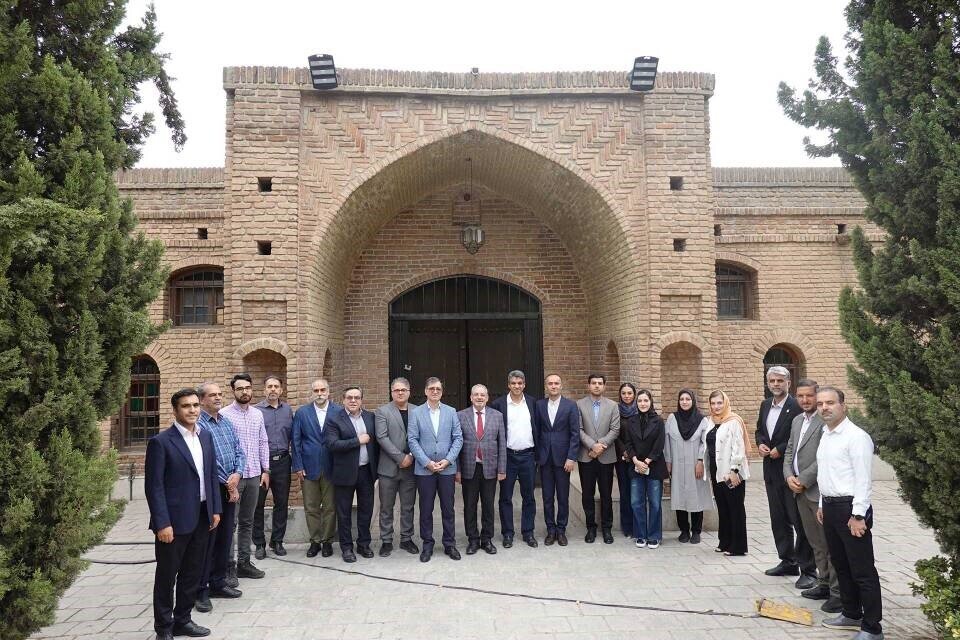
TEHRAN – The National Road Safety Commission, in collaboration with the World Health Organization (WHO), has convened a high-level consultative workshop on motorcycle helmet safety to strengthen the country’s legislative framework and improve protection for motorcyclists.
The workshop brought together key national stakeholders to address gaps in road safety legislation and advance measures aimed at enhancing motorcycle helmet safety and reducing the risks faced by motorcyclists, according to a press release published on the WHO website on September 9.
Organized as part of the United Nations Road Safety Trust Fund project, ‘Protecting riders in MENA: strengthening motorcycle safety laws’, the initiative seeks to strengthen the Islamic Republic of Iran’s traffic legislation by explicitly requiring motorcycle helmets to meet approved safety standards, be worn correctly and remain securely fastened, thereby closing an important gap in enforcement and rider protection.
The need for action is urgent. Motorcycle crashes account for 23.1 percent of all road traffic fatalities in the Islamic Republic of Iran, with young men aged 18 to 24 disproportionately affected. Head injuries remain the leading cause of death and serious disability among motorcycle crash victims.
Although the country’s helmet legislation already aligns with four of the five WHO criteria for effective helmet laws, the absence of explicit provisions requiring helmets to be properly fastened limits effective enforcement and reduces the protective benefit helmets are designed to provide. Riders wearing unfastened or loosely fastened helmets may technically comply with the law yet remain highly vulnerable in the event of a crash.
To address this issue, the proposed amendment introduces clear legal requirements for motorcycle helmets to be securely fastened and correctly adjusted while in use. The amendment has been designed as a practical, targeted, and enforceable measure that can be implemented within the Islamic Republic of Iran’s existing legal and institutional framework.
The workshop brought together representatives from a broad range of sectors, including: The WHO, the National Road Safety Commission, the Ministry of Roads and Urban Development, the National Standards Organization of Iran, the Ministry of Industry, Mine and Trade Academic institutions, Industry associations, and the Tehran municipality.
During the workshop, participants reviewed nine proposed legal provisions grouped under two thematic modules. The first focused on the supply chain oversight and conformity assurance, including type approval, production quality control and import regulation. The second addressed market governance, safe helmet use and implementation sustainability through market surveillance, retail inspections, public awareness campaigns, employer responsibilities and periodic monitoring and evaluation.
The discussions enabled valuable technical input that will help refine and finalize a practical and enforceable legislative amendment with significant potential to prevent death and serious injuries. The collaborative process also reinforces the country’s commitment to achieving the global target of reducing road traffic deaths and injuries by at least 50 percent by 2030.
Opening the workshop, Jean Jabbour, WHO Representative in Islamic Republic of Iran, underscored the importance of a comprehensive approach to helmet safety: “A helmet is effective only when it meets appropriate safety standards, fits the rider properly, is worn correctly, and remains securely fastened throughout the journey. Clear legal requirements can support more consistent enforcement while reducing ambiguity for riders, police officers, inspectors, manufacturers and retailers alike.”
Afshin Ostovar, National Professional Officer for Noncommunicable Diseases at the WHO Country Office, highlighted the public health impact of the proposed amendment: “This initiative is about more than introducing a legal provision. It is about creating a framework that can save lives and prevent devastating head injuries, particularly among young riders who face the greatest risk on our roads.”
Feedback collected during the workshop will be incorporated into the final draft amendment before submission to the relevant authorities for review and ratification. WHO remains committed to supporting the Government of Islamic Republic of Iran and the National Road Safety Commission throughout the consultation, revision and ratification process.
The ‘Protecting riders in MENA: strengthening motorcycle safety laws’ project is being implemented in six countries across the Middle East and North Africa. Funded by the United Nations Road Safety Trust Fund, the initiative aims to strengthen the safety of powered 2- and 3-wheelers by enhancing legislative frameworks and aligning helmet laws with WHO recommendations and International best practices.
Disclaimer : This story is auto aggregated by a computer programme and has not been created or edited by DOWNTHENEWS. Publisher: tehrantimes.com