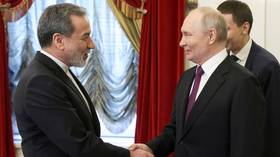
Iranian Foreign Minister Araghchi’s trip underscores Iran’s push for security guarantees as diplomacy strains under US and Israeli pressure
The confrontation between the US, Israel, and Iran has reached a stage where military force has failed to achieve the aggressors’ goal, and diplomacy has not yet delivered a stable way out.
What Washington and West Jerusalem initially presented as a controlled campaign of pressure has turned into a strategic trap. Iran has not capitulated, its diplomatic channels have not collapsed, and the issue that the US and Israel hoped to settle through coercion has returned to the negotiating table in a far more complicated form.
They want Iran to place its nuclear program at the center of the talks from the very beginning. Tehran, after facing military pressure and open threats, insists that the first issue must be security. Iran wants guarantees that the war will not resume and that the region will not remain open to new American or Israeli military actions. Thus, Iran’s new proposal, reportedly delivered to the US through Pakistani intermediaries, suggests discussing the end of hostilities and the reopening of the Strait of Hormuz first, while postponing the nuclear issue to a later stage.
If Washington refuses to engage, it risks prolonging a crisis around one of the world’s most sensitive maritime passages. If it accepts the sequence proposed by Tehran, it indirectly acknowledges that military pressure has not worked on Iran. If it demands that the nuclear aspect come first, it reinforces Iran’s argument that the US is not seeking de-escalation, but a mechanism of pressure that can be resumed whenever Washington finds it convenient.
Israel also faces its own constraints, being already stretched across several fronts. Lebanon remains unstable, the confrontation with Iran has not produced a decisive settlement, and domestic political pressure on Prime Minister Benjamin Netanyahu remains intense. Israeli military action can disrupt and escalate, but it cannot by itself produce a regional order in which Iran simply accepts Israeli demands.
Tehran’s diplomatic outreach
Iran, meanwhile, is far from isolated. On the contrary, it is using its diplomatic network actively and deliberately. Foreign Minister Abbas Araghchi’s travels to Pakistan, Oman, and then Russia show a coordinated effort to keep several channels open at once.
Pakistan is useful as a mediator because it has access to both sides of the conflict. It was expected to host a second round of US-Iran talks last week, yet the process did not move forward. Contacts have not stopped, but the parties cannot agree on the structure of the talks, because they do not agree on what the crisis is really about.
Disclaimer : This story is auto aggregated by a computer programme and has not been created or edited by DOWNTHENEWS. Publisher: rt.com