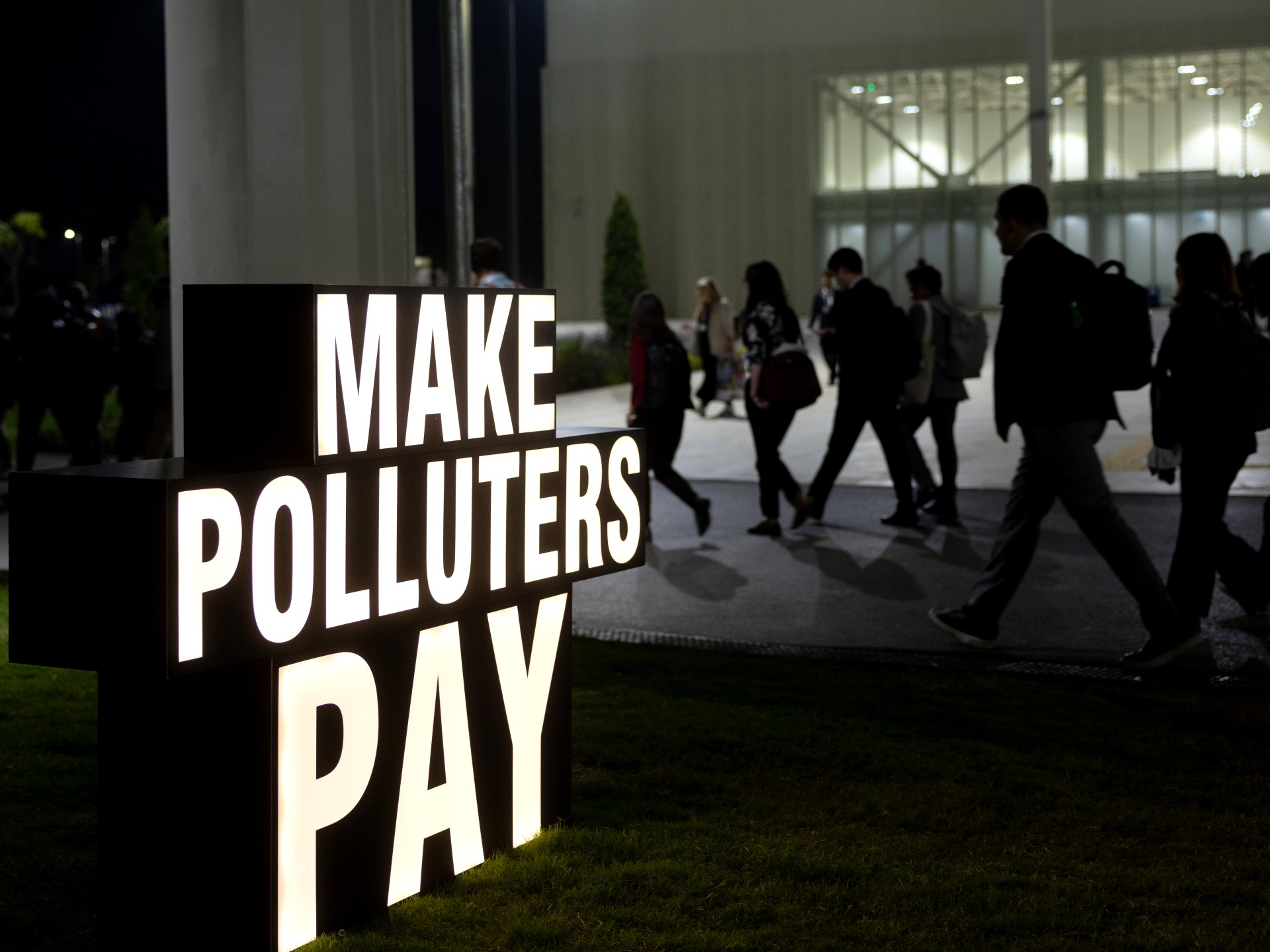
Publication of the IPCC’s seventh assessment report becomes a sticking point at UN climate talks
Published On 17 Nov 2026
A contentious draft deal has laid bare divisions between delegates from states participating in this year’s United Nations climate COP31 talks in Turkiye.
The 18-page draft “cover decision” published by summit cohost Australia on Monday includes a broad range of demands, including calls for a phaseout of fossil fuels.
Recommended Stories
list of 3 itemsend of list
The draft, as written, could make the negotiations “untenable”, said Wopke Hoekstra, the European Union’s climate envoy, adding that “the cover decision does not go in the right direction and needs significant change”.
“It’s very easy to draw red lines at the start of the process,” said Joao Paulo Capobianco, Brazil’s environment minister, adding that deadlocks can be overcome through “an adjustment in the wording” in the draft.
Australian Climate Minister Chris Bowen, who is steering COP31 negotiations, acknowledged that the text included elements “that not all parties agree on”, and that there might be “at least one more draft” introduced before the end of the week.
The talks are scheduled to end on Friday, but climate negotiations usually run into overtime as agreements must be reached by consensus, meaning even a single country can block the entire process.
The draft text includes a call for wealthy nations to achieve net zero emissions by 2030, and wording on phasing out fossil fuels that oil-rich countries have long resisted.
Consensus on the issue of net zero emissions at COP31 “might be very, very difficult”, said Michael Joseph, the environment minister of the island state of Antigua and Barbuda, adding that he “would love to see a commitment that calls on the phasing out of fossil fuels”.
Advertisement
“Emerging countries want to impose as many obligations as possible on developed countries. It’s tactical,” an official from a European country who requested anonymity told the AFP news agency.
“These things are obviously unacceptable,” the official said, pointing to a bloc of countries whose members include Saudi Arabia and India.
Contention over IPCC reports
Saudi Arabia is also at the centre of another battle over the timeline for the publication of crucial reports by the UN’s climate science panel, which dozens of European, African and Pacific states want published before a crucial verification of global carbon-cutting efforts at the next COP33 conference due in 2028.
The Intergovernmental Panel on Climate Change (IPCC) publishes a series of reports every five to seven years that provide the definitive scientific assessment of global warming and inform global policy responses to the crisis.
The IPCC suspended its last meeting after failing to break the impasse, and a new session was set for December to resolve the issue, with Ilana Seid, chair of the Alliance of Small Island States, describing delays in publishing the IPCC’s seventh assessment report as “unjustifiable”.
The dispute has become one of the main issues being debated at COP31, which ends Friday.
On Tuesday, the kingdom’s delegation at COP31 defended its position on the publication timeline for the IPCC report, saying “Saudi Arabia is not seeking to delay climate science”.
Saudi Arabia “advocates publication timelines that allow sufficient scientific review, transparency and meaningful participation”, the statement said, without explicitly mentioning when Riyadh would like to see the reports published.
Disclaimer : This story is auto aggregated by a computer programme and has not been created or edited by DOWNTHENEWS. Publisher: aljazeera.com