Across the United States, kitchens will fill with the smell of roasting turkey as Americans gather to celebrate the Thanksgiving holiday on Thursday.
Every family has its own traditions. Some swear by sweet potatoes topped with marshmallows. Others have carefully guarded family recipes for gravy, and there is always the perennial debate over pumpkin or pecan pie – and whether it should be served with a dollop of whipped cream or a scoop of ice cream.
Recommended Stories
list of 4 itemsend of list
But regardless of what makes it onto the Thanksgiving table this year, many Americans have something less appetising in common: a heftier grocery bill. The cost of a typical Thanksgiving meal is up 11 percent from last year, according to a new analysis by the think tank The Century Foundation.
Grocery prices jump
The prices of many typical side dishes are up by double-digit percentages. Green beans are up 36.7 percent in price for a 1.5-pound bag, from $2.99 to $4.08 in a year’s time. Russet potatoes are up 6.8 percent for a five-pound bag, and Granny Smith apples, which are typically used in apple pie, are up 10.2 percent for a three-pound bag.
The centrepiece of the Thanksgiving table, the turkey, is also up by 26 percent compared with this time last year.
“Thanksgiving is supposed to be about gathering around the table, but this year many families are deciding how many people they can afford to feed,” Kyle Moore, chief economist at The Century Foundation, said in a statement.
Measuring just by the number of guests, the American Farm Bureau forecasts a rise of 6 percent for a 10-person meal, marking the first increase in price since 2022, when prices hit a record high, according to the report.
Advertisement
Some grocers are doing what they can to keep prices lower for consumers, including Baris Avci, who runs Green Valley, a small neighbourhood grocery store in the Bushwick neighbourhood of Brooklyn, New York.
“Some very important things like eggs, milk, sugar, we sell almost at cost. We don’t make much money, but we also have a certain percentage to [sustain] the business. Like how the people struggle, we struggle too,” Avci told Al Jazeera.
Higher prices mean that some shoppers are having to rethink their traditions. Sam Braverman, who was shopping at Green Valley, told Al Jazeera that in past years, his mother hosted Thanksgiving and took care of all the costs, but given price increases, his family is taking a different approach.
“Well, my ma is more open to kind of a potluck vibe this year, of people sort of bringing a few things,” Braverman told Al Jazeera.
“To make that same meal is going to be 130-150 percent of what it was last year, so you might as well accept some offerings.”
Heightened costs can stem from bottlenecks in the Strait of Hormuz because of the US-Israel war on Iran, which has led to a rise in the cost of both fuel and fertiliser needed in the food production supply chain.
During the spring planting season, prices for urea, which is used in fertilisers, jumped by as much as 50 percent when the war began, meaning that farmers needed to pay more for fertiliser. Those costs were ultimately passed down along the supply chain from farmers to warehouses and then onto supermarket shelves.
Tariff-driven pressures have also led to heightened costs. For example, tariffs on steel used in cans have caused prices to increase on canned goods for consumers. In September, Campbell’s Soup said it would raise prices by 4 to 5 percent on 60 percent of its products.
Some big-box retailers like Walmart, however, are using their economies of scale to cut prices for consumers. Every year, the Bentonville, Arkansas-based chain offers a holiday meal package that consumers can buy, which includes a complete holiday meal for 10 people. It will cost shoppers 12 percent less than the same deal last year.
Financial strain
For those bearing the brunt of the costs, that means more people are finding ways to borrow or at least scale back. A third of Americans who are planning on hosting this year say that doing so is putting them under financial strain, according to a report from LendingTree, an online loan marketplace.
As a result, nearly 62 percent of hosts say they’re going to borrow money to host this year – 18 percent of whom say they’re using what are called buy now, pay later (BNPL) loans, which are deferred payment plans for expenses.
Advertisement
Usage has jumped significantly in recent years, with 16 percent of Americans using BNPL loans, which are offered by fintech companies like Affirm and Klarna, marking a six-percentage-point jump since 2021, according to an August report from the US Federal Reserve.
It found that those with lower credit scores and lower incomes, as well as younger people and both Black and Hispanic adults, are more likely to use these services than the general population.
Travel slump
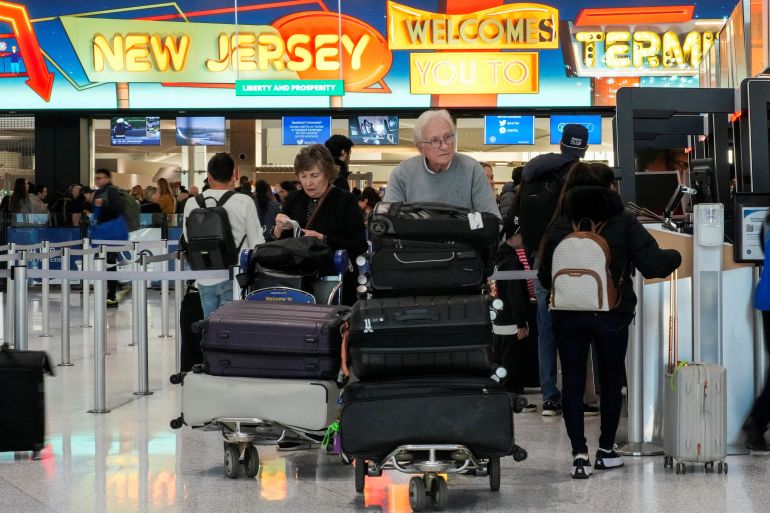
There are slightly fewer people travelling for Thanksgiving this year, too. The American Automobile Association (AAA) forecasts that more than 81.6 million Americans will travel, marking a slight decline of 121,000 travellers, including those travelling by plane, car, bus and train. The decline marks a reversal of the trend, as the number of travellers climbed over the last three years.
“After three years of record highs, the number of travelers is slightly lower, partly because of higher travel costs this year,” Stacey Barber, vice president of AAA Travel, said in a news release announcing the data.
Seven in 10 Americans are planning not to travel this holiday season at all, according to a report from the financial services company BNO, marking a 10-percent drop from this time last year.
While the average price for a gallon of petrol (3.78 litres) is down from last month – $3.61 on Tuesday versus $4.29 a month ago for regular fuel – it is still higher than this time last year, when it was $3.06, according to AAA’s daily fuel price tracker.
For those hitting the skies, domestic airfares rose 31 percent for Thanksgiving travel, averaging $402, according to a report released in September by the travel website Hopper, which tracks holiday travel trends, marking this Thanksgiving as the most expensive holiday travel season in a decade.
Disclaimer : This story is auto aggregated by a computer programme and has not been created or edited by DOWNTHENEWS. Publisher: aljazeera.com