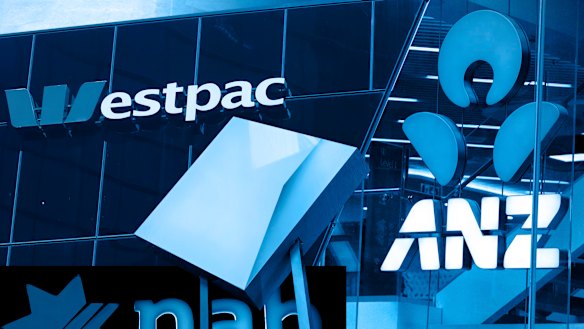
The 30-year boom in Australian house prices has created plenty of corporate winners, but few companies have benefited quite as handsomely as the big banks.
Housing loans have powered these financial giants for years, and armies of small shareholders – not to mention superannuation giants – have come along for the ride.
The year 2026, however, has not been one for bank shareholders to cheer. Not only have bank shares underperformed, they’re now also contending with a slowdown in their most important type of lending: mortgages.
Within hours of Treasurer Jim Chalmers’ reining in of negative gearing and capital gains tax concessions last week, analysts were asking if we’d reached the end of the multi-decade housing boom.
If that’s true, what would it mean for the four giants of Australia’s financial system, which count home loans as their biggest assets?
And given the major banks play such a central role in our economy, should any of this be a wider concern, as opposed to just one for share investors?
Markets appeared to deliver a brutal verdict last week, sending CBA shares on their worst day on record after the budget – a 10.4 per cent drop. While its shares recovered a bit later in the week, it’s been a fall from grace for CBA’s market value, which last year reached an eye-popping $300 billion, an amount that’s since fallen to a still-hefty $267 billion.
Other banks have also had a poor run of it lately: NAB is down 13.9 per cent this year, Westpac is down 8 per cent, and ANZ is down 3.3 per cent – all have underperformed the 1 per cent slide in the ASX 200.
That may be surprising when you consider the big four made a combined $15.2 billion in profits in their first half – a huge sum.
But despite the multi-billion dollar profits, market experts say the going has been getting tougher for the banking giants’ profit engines lately, and the Treasurer’s shake-up of housing tax breaks is only the latest blow.
First, banks’ profitability from retail banking has faced serious competition from Macquarie in recent years, as the “millionaires’ factory” tries to muscle in on the business of taking deposits and writing loans for households. Mortgages were once seen as a key source of the banks’ “rivers of gold,” but senior bankers insist that’s now changed, and Macquarie is part of the reason (alongside the rise of mortgage brokers).
Second, the worsening economy was making bank investors jittery well before last week’s budget.
Ever since the Iran crisis erupted, analysts have been raising their forecasts for bad debts from business customers that may end up in strife due to the weaker economy, softer consumer spending, or struggling to pass on higher input costs.
Now the banks also face a slowdown in the property market, thanks to government policies aimed at making housing less of an attractive investment, and therefore more accessible to first home buyers.
Residential mortgages make up roughly two-thirds of Australian banks’ domestic lending, so how hard will the tax shake-up hit the big four’s bottom line?
Most analysts say these changes are a “headwind” to profit, as opposed to a major worry. The main effect of Labor’s property tax changes on banks will be a slowdown in lending to property investors, which will mean that overall housing credit growth slows too.
Macquarie analysts, for example, expect total housing credit growth could slow from about 7 per cent to 5 per cent. CBA and Westpac will probably be hit the hardest by this because they’re the largest mortgage lenders, while there’s also a chance that sentiment in the housing market more generally suffers.
The banks might take a modest hit on their profit margins if they try to make up for the softer investor loan market by chasing other customers such as first home buyers, or other owner-occupiers. UBS analysts point out that loans to investors generally have higher interest rates, and they’re tipping a slight narrowing in banks’ net interest margins – funding costs compared with the cost of loans – as investor lending cools.
But all up, softer investor loan growth looks more like a minor irritant for banks, rather than something more serious.
What’s more, a weaker period for banks’ credit growth could have a silver lining for customers because it could push banks to compete harder in other markets to make up for the lack of housing investors.
The most obvious place we’re likely to see such an outbreak of competition would be the $1.66 trillion market for loans to owner-occupiers.
Macquarie’s bank analysts said in a report last week they thought lending competition had stepped up in the latest half, and they expected lending competition would remain intense.
And who are the biggest winners in any bout of competition? Customers, because a fight for market share prompts bankers to offer better interest rates to keep borrowers on their books, or pinch clients from their rivals.
It’s too early to say if we’ll see another outbreak of lending competition from a weakening property market, but it’s certainly a plausible scenario.
Meanwhile, the country’s banking giants are likely to be fixated on how the housing market responds to the biggest property tax overhaul in 25 years.
Retail banking’s rivers of gold may not be flowing like they once did, but the big four still have a huge amount riding on bricks and mortar.
The Business Briefing newsletter delivers major stories, exclusive coverage and expert opinion. Sign up to get it every weekday morning.
 Clancy Yeates is deputy business editor. He has covered banking and financial services, and was previously national business correspondent in the Canberra bureau.Connect via X or email.
From our partners
Disclaimer : This story is auto aggregated by a computer programme and has not been created or edited by DOWNTHENEWS. Publisher: www.smh.com.au