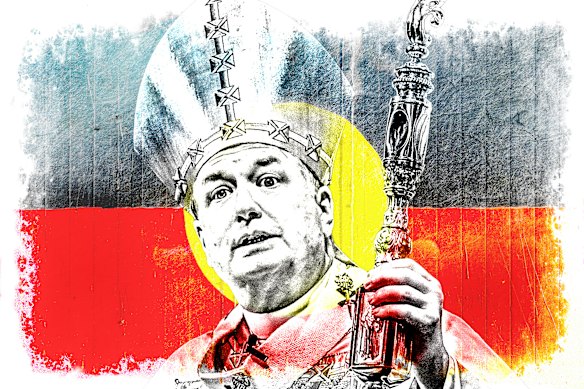
I agree with the proposition that the Catholic Church is neither legally nor (arguably) morally obliged to “gift” the Redfern building to the health service (“Catholic Church’s morals queried over Redfern property”, October 16), but it could have at least behaved with somewhat more sensitivity and compassion as it wove its way towards a blanket refusal. Certainly, as lessor, it should maintain the building in a habitable and fit for purpose condition. Also, perhaps engaging with more empathy, understanding and even offering to lease the premises for a peppercorn rent in conditional perpetuity may have gone a long way in salving the open wound of its troubled relations with the Indigenous community. Frederick Jansohn, Rose Bay
Given the good work performed over many decades by the Aboriginal Medical Service at Redfern and their proven track record, it would seem there is only one way for Archbishop Anthony Fisher to get out of this unseemly mess. Sometimes, I’m inclined to think that actual Christianity is stronger outside the Catholic Church than in it. Bob Edgar, Moss Vale
I see that the Catholic education sector is in some financial strife. The church, globally, owns more than 40 Caravaggio paintings. The last known sale of such a piece made about $140 million in 2014. Selling some of the family jewels perhaps could ease this funding crisis and help the more pressing needs of supporting the education of its children. Paul Johnson, Avalon Beach
No, the church “has not lost sight of a blessed vision”, but irrespective of ownership, it is saving the government from its responsibilities to support Aboriginal health. The same goes for Catholic schools saving governments millions of dollars. Predictably the church’s ownership of valuable real estate is attacked – but it is we who go to Mass and send our kids to Catholic schools who have built and paid for these properties. The church is the people of God (Vatican II). Should the people of God simply hand them over to anyone who thinks they know what Jesus would do? Seamus O’Grady, Balmain East
There has been much commentary on the meanness of the Catholic Church in not donating the Redfern property to the Aboriginal Medical Service. Perhaps we should address the issue of the charitable status of religious institutions. Churches do some amazing work in supporting many charitable causes, but I find it unacceptable that their tax exemptions extend beyond those ventures. The obscene wealth of many of these churches has been gained at the expense of the wider community. The power of religious lobby groups would be turbocharged to fight against such a proposition. However, it is high time that the business side of these massive money-making organisations paid their way. Come on, Labor – fair is fair. Robyn Thomas, Wahroonga
Does Anthony Fisher see himself just as an archbishop of the Roman Catholic Church or as a follower of Jesus Christ? As he continues to heap up riches on Earth for the church, it would appear, in his mind, the two are mutually exclusive. Elisabeth Goodsall, Wahroonga
Pat Dodson has obviously forgotten a lot of the theology he learnt when he was studying for the priesthood. To say that the Catholic Church’s decision not to simply give away its assets is “bordering on the immoral” shows a lack of understanding of morality. I think that the church should be commended for charging, over a period of many years, only a peppercorn rent for a valuable property so that care can be given to those in need. To argue, as some have done recently, that the church should give away this property because it has other properties is lacking in any kind of logic and one suspects, just an opportunity for more Catholic bashing. Michael Walsh, Croydon
Maybe the reading for this Sunday (Letters, October 16) will be taken from the good news as recorded in Matthew 6: 19-21 (19: Lay not up for yourselves treasures upon Earth, where moth and rust doth corrupt, and where thieves break through and steal. 20: But lay up for yourselves treasures in heaven, where neither moth nor rust doth corrupt, and where thieves do not break through nor steal. 21: For where your treasure is, there will your heart be also.) Allan Gibson, Cherrybrook
” loading=”eager” src=”https://static.ffx.io/images/$zoom_0.284%2C$multiply_0.7725%2C$ratio_1.5%2C$width_756%2C$x_92%2C$y_0/t_crop_custom/q_86%2Cf_auto/64989417c9340579c1613c3a7b51137cfbcad9c8″ srcset=”https://static.ffx.io/images/$zoom_0.284%2C$multiply_0.7725%2C$ratio_1.5%2C$width_756%2C$x_92%2C$y_0/t_crop_custom/q_86%2Cf_auto/64989417c9340579c1613c3a7b51137cfbcad9c8, https://static.ffx.io/images/$zoom_0.284%2C$multiply_1.545%2C$ratio_1.5%2C$width_756%2C$x_92%2C$y_0/t_crop_custom/q_62%2Cf_auto/64989417c9340579c1613c3a7b51137cfbcad9c8 2x” class=”sc-d34e428-1 ldCIuB”>
Turn down the hate
The rising threat level of political violence highlighted by Waleed Aly is frightening (“More Australians think political violence is OK than go to church”, October 16). Politicians must take the lead by dialling down their level of outrage and invective against each other and set the standards that they expect from others. Overblown, theatrical recent examples, are: the Liberal MP who called for Labor Minister Anne Aly and Prime Minister Albanese to be “stoned” over nothing more than a credit card fee issue; the Liberals and Nationals referring to Labor MPs as “communists” (they’re quite obviously not); and constantly referring to the government as the “the worst”, “lousy” or “hopeless”, when it has outperformed the previous decade of Coalition governments. This language won’t convince voters to change their allegiances anyway. Sensible, costed policies might. No matter what one’s political beliefs, most politicians seek election intending to make Australia a better place, despite believing that they have a different way of achieving that aim. Respectful discourse and lowering the temperature of those conversations between opposing sides is imperative. It wouldn’t hurt either if politicians in opposition could look at and support legislation on its merits or propose amendments that would improve parts they disagree with, instead of opposing everything for cheap political mileage. Alan Marel, North Curl Curl
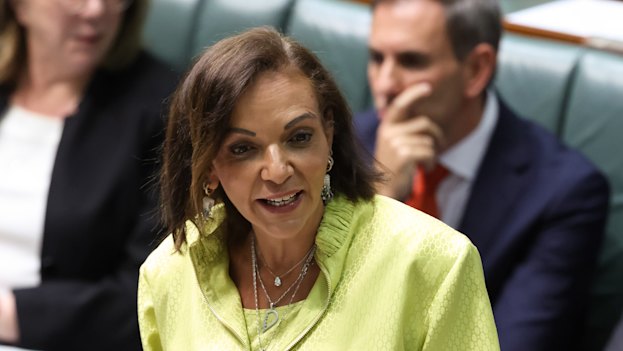
If 2 million people are receptive to using political violence, imagine the task faced by ASIO and the AFP. Trying to anticipate and stop the one in a thousand who takes it further than words is impossible. Yet when an attack does take place, will we accept it was inevitable, or go on a witch-hunt to find someone to blame for not preventing it? Neville Turbit, Russell Lea
Waleed Aly highlights the alarming reality of both spoken violence as well as those angry nutters who would perpetrate physical violence. At the centre of this are the likes of Hanson, the hard right media and other politicians whose angry words wind up the mob. “There’s no such thing as a good Muslim” and “We’re in danger of being swamped by Asians” is just racism, and not helped by “should be stoned in the square” nonsense from Angie Bell. It’s past time for politicians and those in the media to wake up before they incite actual violence and then the doors will open for other copycat types. Hanson particularly has to show that she’s not just a complainer, display some leadership and start producing realistic and costed policies or get off the pot. We have real issues with cost of housing, rentals and everything else due to chaos from Trump, Putin’s attack on Ukraine and local inflation etc, but it’s not as if we’re starving in the streets. So cool it, everyone, or we’ll quickly head down the same path as some crazy Americans and the rest of those hard right loudmouths who are happy to blow up the world. Ian Ferrier, Long Jetty
Rebate carve-out is meanest test
Health insurance rebates for older Aussies are far from saved (″Compromise could cost Labor $1.6b″, October 16). Despite the reprieve in the Senate, the horse-trading to carve out pensioners is in full swing. This would leave part-pensioners and self-funded retirees on low, fixed incomes exposed. Eligibility for the rebate is means-tested. So, in effect, such an amendment would be means-testing the means test. Part-pensioners and self-funded retirees on limited incomes would still pay the extra $1600 per couple next year or be forced to go public. It would be intrinsically unfair. The higher rebate recognises that eligible pensioners, part-pensioners and self-funded retirees are on low fixed incomes, less able to cope with sharp cost changes, but they are also high users of high-end hospital services. We implore all parties opposed to these draconian changes to hold the line. It would be unconscionable to pit older Australians on fixed, limited incomes against one another.
Brett Heffernan, CEO,
Australian Private Hospitals
Association, Canberra
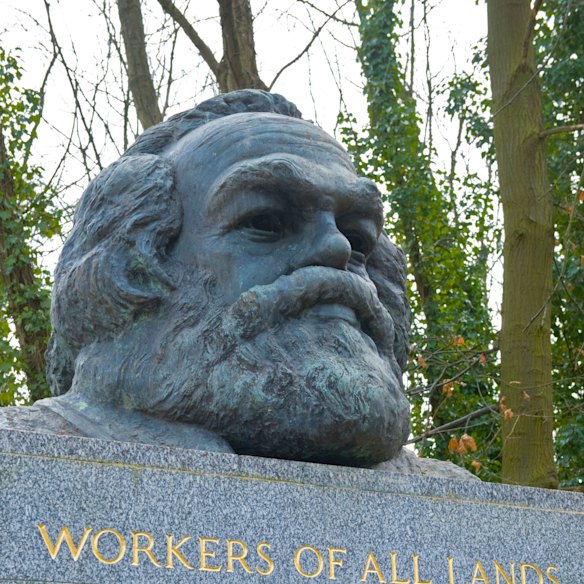
It may surprise people to know that it was John Howard’s government that increased the private health insurance rebate for seniors, in line with the ideology of Karl Marx, “from each according to his ability, to each according to his needs”. Many are claiming it is fair for the rebate to be the same for all, but it must be acknowledged that aged pensioners live on a fixed and limited income, and demonstrably need access to the private health system more than younger people, since most of the surgery they will need happens there. What is most surprising to me is that the Labor government appears to have forgotten Marx’s wisdom, if they were ever familiar with it. Jennifer Briggs, Kilaben Bay
I agree with your correspondent (Letters, October 16) that “all income should be subject to the same tax laws”. My tax is being increased simply because of my age. I’m a self-funded retiree, over 65 with private health insurance. Labor’s selective taxes appear to be carefully targeted to be higher for those unlikely to vote for them. William Lloyd, Denistone
Labor has tried its best to save some money by minimising payments to some older Australians via reducing the private health insurance coverage, but they are criticised by one and all. Maybe it is time to bring out the big one. In the lead-up to the 2019 election, Labor promised to abolish the payment of excess franking credits. It said these were no longer affordable. There is a subset of people who are entitled to use available franking credits and the ATO now indicates that this cohort cost taxpayers about $30 billion per annum in forgone revenue. The economy today is in much worse shape than in 2019. Where is the sheriff of finding savings, Jim Chalmers, when you most need him? Put this forward and watch the Coalition freak. John Rome, Mt Lawley (WA)
Hopefully, the Coalition, the Greens and Jacqui Lambie will hold their nerve in opposing Labor’s attempt to change older Australians’ private health fund rebates. Labor is unlikely to use this bill to trigger a double dissolution, which it would lose. Labor backbenchers are already worried about their jobs. Denis Suttling, Newport Beach
I agree with your correspondent (Letters, October 16) and the resistance to the removal of the additional subsidy for private health insurance for over 65s. This introduction by John Howard was one of his many electoral bribes he made to seniors. Also, Howard’s multi-million handout for private health insurance is a serious misallocation of resources. Another Howard legacy is the intergenerational inequity in our taxation regime, which strongly favours seniors. Tony Simons, Balmain
Brethren’s dogma
The revealed behaviour of the leaders of the Plymouth Brethren Church (“Brethren boss allegedly vowed to keep sect’s ‘secrets’ before fronting inquiry”, October 16), is a clear demonstration of the differences between living an ethical and Christ-like life and the self-interested teachings of institutional churches. For current Brethren inmates, I would like to point out that they are more likely to encounter puppies and kittens in heaven than the truth-twisting “businessmen” of the kind allegedly running their church. A higher threshold of transparency and public benefit must be required of all those who propose to seek the taxation, indemnity and other financial advantages of Church status, and a minimum set of rights, as well as rites, for followers must be seen to be adhered to. Garry Dalrymple, Earlwood
Your correspondent (Letters, October 16) is astonished that Exclusive Brethren cannot own pets. I’m astonished anyone would want them to. For a sect whose rules place such restrictions on women, family relationships and education, imagine the miserable, unfulfilled lives pets might lead. Animals, like humans, deserve affection, companionship and freedom, not a life dictated by religious dogma. Perhaps being spared such a household is the kindest thing that could happen to them. Vivien Clark-Ferraino, Duckmaloi
Cruelty, not care
I am absolutely appalled by the latest raft of changes to the aged care system (“How a rule change could save aged care users thousands”, October 14). Despite paying exorbitant amounts of money to enter an aged care facility, a new resident is now expected to pay for “luxuries” such as television, phone, Wi-Fi, occasional entertainment and maybe even a hot breakfast. These things have previously been included in the weekly charges and should be considered as part of the package, not as extras. Are we then to have a two-tier system in which those who cannot afford the extras are to be denied these things? What happens to those who can afford them when the money is exhausted? Do we then remove all these things, including medication which must be paid for, and leave these people in their rooms to die? Apparently, the reason the management of these facilities can do this is because the government allows them to do so. How low have we become when we treat aged people in this way? These people have worked and contributed to society all of their lives, and in their twilight years, the government allows this price-gouging to remove every last penny possible. Surely something can be done about this diabolical situation. Does the term “care” inaged care mean nothing? I live inhope that members of parliament have some compassion and reverse these dreadful Dickensian conditions or God help us all. Beverley Sawdy, Arncliffe
Barbarism in bullets
Shooting fellow soldiers in the name of religion is a barbaric act. But should America stoop to the same level of barbarity by executing the perpetrator by firing squad? At least the livestream has been cancelled (“Trump calls off livestream of execution”, smh.com.au, October 16). Maybe condemning the man to life incarcerated in a wheelchair would not only be a greater punishment but also a greater deterrent to anyone considering similar actions. Execution awards the perpetrator martyrdom. Stephanie Edwards, Leichhardt
For anyone who wants an Australian example of why we should not have the death penalty, I offer you the name Lindy Chamberlain (“I was in Florida when Ted Bundy was on trial. My mother was right about his, and every, execution”, October 16). During the early 1980s, she was probably one of the most hated people in the country, having been accused and then convicted of murdering her baby. After spending three years in prison, she was released when new evidence was found showing that a dingo had indeed taken her baby and she was not murdered by her mum. If the death penalty had existed, we would have killed an innocent person. Con Vaitsas, Ashbury
Oats to the rescue
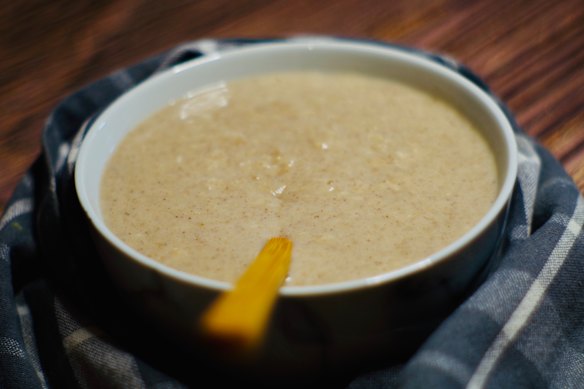
When pennies don’t go far in supermarkets, struggling parents could skip the choco-flavoured processed cereals that cost maybe five times more per kilogram and get their kids enjoying simply cooked, boiled oat porridge. According to the experts, oats are good for the heart and regulate blood sugar and digestion. Nutritionists say oats contain beta-glucan, a soluble fibre that forms a gel in your gut, binds to cholesterol-rich bile acids and helps to lower “bad” cholesterol. Beta-glucan slows digestion and absorption of glucose, which prevents sharp blood sugar spikes and increases insulin sensitivity. The high fibre and water content increases fullness and triggers satiety hormones helping you stay full longer and eat less. Beta-glucan also acts as a prebiotic, feeding healthy bacteria in your digestive tract and helping relieve constipation. Oats contain avenanthramides – unique plant compounds that help reduce chronic inflammation and supporthealthy blood pressure. And that’s not all. Oats supply carbohydrates, plant protein, B vitamins, iron, magnesium, zinc and phosphorus. Rob Buchanan, Kerikeri (NZ)
Superior filleting
I’d like to suggest re-routing the light rail from bisecting Wentworth Park to run parallel to Bridge Rd and provide a proper fish market station (“Last dash at Wentworth Park triggers dog fight”, October 16). Lewis Kaplan, Birchgrove
- To submit a letter to the Sydney Morning Herald, email letters@smh.com.au. Click here for tips on how to submit letters.
- The Opinion newsletter is a weekly wrap of views that will challenge, champion and inform. Sign up here.
Disclaimer : This story is auto aggregated by a computer programme and has not been created or edited by DOWNTHENEWS. Publisher: www.smh.com.au