
The economic challenges facing the next prime minister
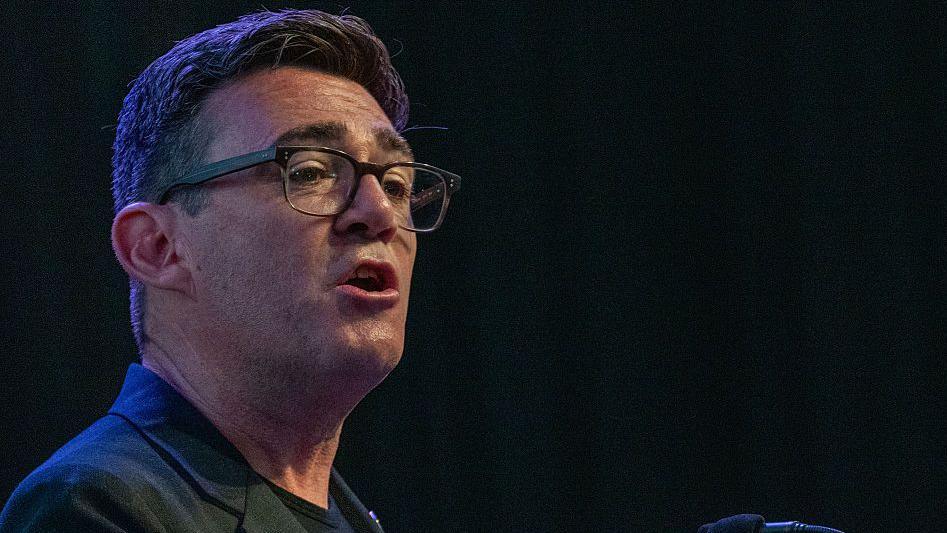 Image source, Getty Images
-
Published
We’ve had six prime ministers in a decade and it looks increasingly likely that Andy Burnham will be the seventh. But whoever is in charge, they face the same challenges.
That’s because what has underpinned political instability over recent years has been, to a great extent, the economy.
Lack of job opportunities, lack of improvement in living standards, and pressured public services – the public expects change and its patience has been wearing thin.
So here are the issues the next prime minister will have to tackle.
Fiscal rules
Burnham has pledged to revive the economy but also stick to the current government’s own rules on borrowing and spending.
That means only borrowing to invest, not to fund day to day spending, and in a few years’ time reducing debt as proportion of the whole economy.
Before the US-Israel war with Iran started, Chancellor Rachel Reeves reckoned she could meet her financial rules with £24bn to spare. But much of that could have been eroded because of the conflict.
Burnham’s pledge to stick to the current government’s rules shows he is wary of upsetting the bond markets, the government’s lenders, at a time when just the interest repayments on our national debt account for one in every £10 the government spends.
Even the plans Burnham has hinted at so far could easily exceed the available wiggle room. His ambitions may be thwarted and some ideas may not survive contact with financial reality.
He could tweak those rules. For example, bond markets could be sympathetic towards borrowing to fund more investment if they were convinced that would pay off in the terms of higher growth.
Or he could simply look to raise the money from elsewhere to fund priorities, including through taxes – or cutting from other areas.
Household income
Growth, putting more money in pockets, will have to remain the government’s number one priority.
Between 1990 and 2007, the average person was better off by roughly 2.5% per year.
Since then, living standards have improved at half that rate, meaning households are thousands of pounds worse off than they could’ve been otherwise.
A lack of investment – public and private – in the years of austerity and then following Brexit has taken its toll on productivity and that has affected our prosperity. This was then made worse by the disruption of Covid and higher energy prices.
Meanwhile, food prices have jumped by 40% in just a few years, which has clobbered people’s finances.
While we’ve been hit less by the war than once feared, there remain several challenges to ensuring economic growth is raised sustainably and permanently.
More investment is likely to be needed, and more focus on skills. While his plans remain unclear, Andy Burnham has implied boosting both – as well as more state control of utilities to lower bills.
Jobs
Underpowered growth is one reason why hiring is at its lowest level for five years, with young people hit particularly hard.
The reluctance from companies to hire reflects more than just recent economic woes. Automation and the government’s own policies, including higher national minimum wages and taxes, have played a role.
The latter is most telling in the concentration of job losses in sectors such as retail and hospitality. These are industries most vulnerable to an increase in labour costs and, crucially, they are typically a source of entry-level jobs.
The recent report by former Labour minister Alan Milburn highlighted how a longer term erosion of such posts contributed the recent rise in youth joblessness, adding to the rising number of those not in employment, education, or training (NEETs).
He warned NEETs could rise to one in six young people, potentially blighting lives for decades.
The second part of that report, containing policy recommendations, will be published later in the year. It’s been suggested that it will call for a radical overhaul of the way every part of the public sector – from education to health and the welfare system – interacts with the private sector.
The next prime minister will have to decide exactly how those recommendations are taken on board, and there will be a cost involved.
Defence
Talking of costs, the bills to provide us with better and safer lives could mount fast.
Still unsettled is the government’s pledge to increase spending on defence to 3.5% of GDP by 2035. Burnham has indicated he wants to support that.
But that takes more than good intentions. Rather, it could take tens of billions of pounds.
John Healey quit as defence secretary over what he termed the unwillingness of the Treasury to “commit the resources that the nation needs to defend the country at this time of rising threats”.
Finding that cash may mean taking some away from other bits of government spending because of the self-imposed constraints on public finances. And remember, many departments are already facing a squeeze on their budgets.
Welfare
That brings us on to welfare spending. That is set to rise by over a quarter between 2025 and 2030, with the main increases being sickness-related payouts for working age adults and pensioner benefits.
Pushing through welfare reform has proved difficult for Prime Minister Sir Keir Starmer. Will a new prime minister have greater will and freedom to do so?
The government’s official forecasters have flagged that the cost of providing the state pension under the triple lock system – which increases it by the greater of 2.5%, inflation or earnings every year – is set to double within the next 50 years.
Simplifying that formula could mean smaller pension increases and would save tens of billions of pounds. It’s an approach backed by many economists, including Lord Jim O’Neill, one of Andy Burnham’s new advisers.
But would Mr Burnham venture where few politicians have and upset the most influential group of voters?
Housing
While older people are most likely to vote, it is younger generations who feel the most short changed.
With house prices rising more slowly than earnings, purchasing a home for the first time is more possible compared to just a couple of years ago. At the start of the year, the Nationwide Building Society said mortgage payments accounted for a third of take home pay – well below the record of 48% in 1989.
But today’s prospective buyers tend to be juggling high rental costs too, making it harder to save for a deposit. This is partly he average age of the first time buyer has risen over recent years.
The most sustainable solution is to build more homes, but the government’s behind on its target. The number of new homes was down by 6% last year and below the 300,000 needed to reach the government’s target.
Andy Burnham wants to build more social housing, which would help. But, as successive governments have found, it’s not easy.
Housing is one the many big plans Burnham has hinted at to cure our economic malaise, but he has to grapple with a challenging inheritance.
Ironically, the easiest way to fund his plans would be to draw on the spoils of faster growth.
Like many before him, Andy Burnham’s vision appears to be that you have to spend more money to make money. But whose money?
-
-
Published12 hours ago
-
Disclaimer : This story is auto aggregated by a computer programme and has not been created or edited by DOWNTHENEWS. Publisher: BBC