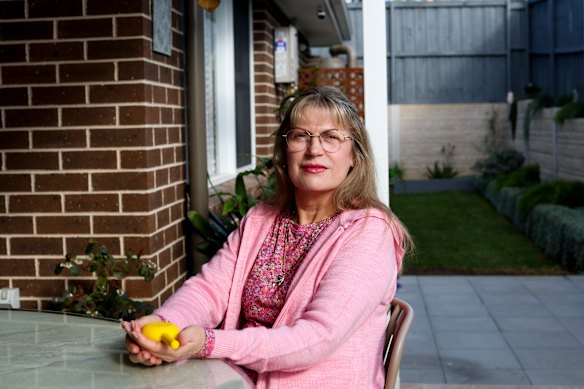

At least one in four people live with a condition like Jenny Greer’s, but almost none of them talk about it and most don’t seek help.
The Campbelltown resident has lived with chronic constipation for decades, since the birth of her two sons in her late 20s. She is forced to schedule her life around a weekly laxative, which can leave her feeling nauseous and can “muck up a whole day” on the weekend.
Now, she’s trialling a new world-first bowel physiotherapy device developed by Western Sydney University clinical researcher Dr Jerry Zhou, named Ins&Outs. The device lets patients complete bowel physiotherapy at home and was recently awarded more than $1.3 million by the NSW Medical Devices Fund.
While functional bowel disorders don’t hold the same life-or-death stakes as cancer or diabetes, Zhou said they have a profound impact on the millions of Australians living with constipation and faecal incontinence: “Yes, they’re not life-threatening, but this really impacts quality of life.”
Zhou estimates only 1 per cent of Australians seek biofeedback physiotherapy treatment for bowel disorders. There is a long wait for a place at a handful of public hospital clinics that offer the treatment, and even at private physiotherapy practices, demand can be high.
Biofeedback encompasses anything that monitors a process in your body and prompts you to change it. Zhou said even a smartwatch could be classified as a biofeedback device, as you might use its live data on your heart rate or breathing to reduce stress or improve your health overall.
In a clinical setting for functional bowel disorders, biofeedback measures and trains the anal sphincter and rectal muscles through balloons, probes or even a clinician’s finger. Studies have found biofeedback is more effective at reducing symptoms than laxatives or pelvic floor exercises alone, but Zhou said many people avoid in-person treatment due to embarrassment or discomfort.
He said his team focused on making the Ins&Outs device colourful and attractive, ensuring it wouldn’t look out of place in someone’s home or bathroom.
“It doesn’t just have to work, it has to be something they want to use because it’s like a piece of exercise equipment: If you don’t use it, doesn’t matter how good it is, it’s not going to have the effect,” he said. A slick, bright app gives the user real-time feedback, which Zhou asked his wife, a UI designer, to help develop: “I promised to take out the trash for a few weeks”.
Pelvic floor physiotherapist Isabella Lees-Trinca treats bowel disorder patients from across the country at Central Melbourne Gastroenterology. She said Ins&Outs would be an “extremely useful” tool for the rural and remote patients her clinic treats over telehealth.
However, Lees-Trinca said it won’t be right for everyone. “I wouldn’t feel comfortable with a patient just buying this off the shelf and doing it at home on their own. I think there’d be a risk of failure,” which she feared would lead people into “thinking that biofeedback couldn’t help them, or that they can’t get better”.
Zhou said the app gives patients running feedback on how accurately they’re performing exercises, and said they can also nominate to share the app’s data and reports with their GP or physiotherapist.
While it’s still early days for Greer, she hopes Ins&Outs will “retrain my system” ahead of an upcoming tour across South America, when she would otherwise have to balance a concoction of laxatives and anti-diarrheal medication on long travel days.
“My favourite muscle is the anal sphincter muscle because it’s the only muscle that’s there to protect our dignity,” Zhou said. “This research is to help people have some dignity as they age and as they experience life.”
Make the most of your health, relationships, fitness and nutrition with our Live Well newsletter. Get it in your inbox every Monday.
From our partners
Disclaimer : This story is auto aggregated by a computer programme and has not been created or edited by DOWNTHENEWS. Publisher: www.smh.com.au