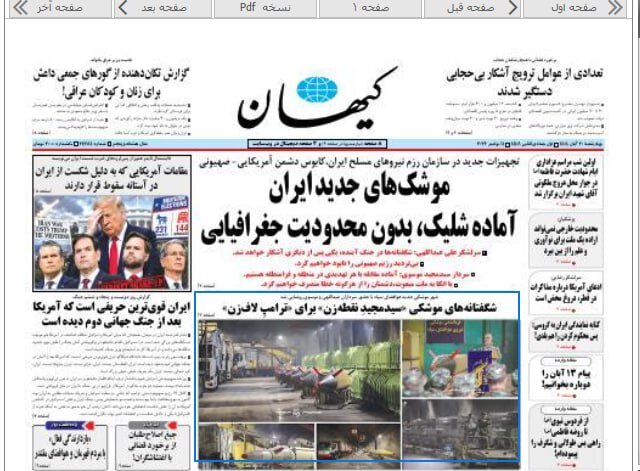
In an article, Kayhan examined what it described as the enemy’s objective in spreading reports about the possible resumption of war. The newspaper argued that preserving the current situation is not in Iran’s interest and warned that officials should remain fully alert because the continuation of existing conditions could bring adversaries closer to their goals.
According to the paper, repeated military threats are intended to keep Iranian officials focused on the risk of attack while economic pressure gradually produces results. Kayhan argued that the ultimate objective is to force Iran into negotiations from a position of weakness and secure concessions. The newspaper maintained that opponents have greater confidence in economic pressure than in direct military action. It further claimed that concessions would not stop pressure but instead be interpreted as a sign of weakness, encouraging further demands. In this view, even if negotiations continue, military pressure could eventually return unless the strategy designed to combine economic and security pressures is disrupted.
Sobh-e-No: Iran’s rights must be respected
In an analysis of Iraqi Prime Minister Ali al-Zaidi’s brief visit to Tehran, Sobh-e-No highlighted his meetings with Iran’s president and parliament speaker. The newspaper said the meeting with Mohammad Bagher Ghalibaf was especially significant because it emphasized the need for the US to respect Iran’s rights within the framework proposed by Tehran. According to the paper, this position reflects Iran’s view that ending tensions and moving toward any future agreement cannot be separated from recognition of its rights and demands. Sobh-e-No described al-Zaidi’s visit as part of Baghdad’s diplomatic efforts to convey messages between the parties and help bring their positions closer together. The newspaper argued that the trip was more than a routine diplomatic consultation and provided an opportunity for Tehran to clarify its views on ending the conflict while stressing that any diplomatic process must be based on respect for Iran’s rights and acceptance of the framework proposed by the Iranian side.
Etemad: A strategic opportunity
Etemad focused on diplomatic opportunities to reduce tensions between Iran and the US and to prevent the return of war. The newspaper argued that years of sanctions, maximum-pressure policies, and efforts to contain Iran have failed to achieve their intended objectives. It claimed that Washington now recognizes the need to address some of Iran’s key demands if it hopes to overcome the current deadlock. According to the paper, the present moment offers an important opportunity for Iranian diplomacy, but success depends on vigilance, domestic cohesion, and careful management of negotiations. The commentary emphasized that Iranian policymakers should use existing diplomatic momentum and public support to strengthen their position internationally. It concluded that sustainable peace remains the most effective foundation for economic development, stability, and improvements in citizens’ living conditions.
Hamshahri: If the Strait of Hormuz is open, why is Trump talking nonsense?
Hamshahri examined what it described as contradictions in Donald Trump’s statements regarding Iran. The paper questioned why keeping the Strait of Hormuz open would be presented as a condition for an agreement if shipping and oil exports are already continuing as normal or even above previous levels. It also noted that Trump had previously focused on Iran’s nuclear program as the principal issue in negotiations. According to the analysis, the shift in emphasis may indicate an effort to prepare public opinion and political conditions for a potential agreement. At the same time, the newspaper suggested that uncertainty remains over Trump’s intentions. It argued that the statements could either represent an attempt to facilitate diplomacy or serve as preparation for renewed confrontation. The paper said only future developments will determine whether the objective is a negotiated settlement, lower oil prices, or the creation of favorable conditions for further escalation.
Arman-e-Melli: Diplomacy at the peak of tension
Arman-e Melli argued that recent diplomatic activity demonstrates a broad regional effort to prevent the dispute between Iran and the US from escalating into war. According to the newspaper, leaders across the region are increasingly focused on finding alternatives to military confrontation. The analysis suggested that Trump may have concluded that continued tensions could create substantial political and economic difficulties for both himself and the Republican Party while producing few benefits for the White House. The paper also pointed to developments in Israeli politics, including challenges facing Prime Minister Benjamin Netanyahu, as additional factors influencing regional calculations. It argued that governments throughout the region are closely monitoring these developments and reassessing the costs and benefits of the current situation. As a result, they are weighing not only the consequences of existing tensions but also the potential impact of any future conflict between Washington and Tehran.
Disclaimer : This story is auto aggregated by a computer programme and has not been created or edited by DOWNTHENEWS. Publisher: tehrantimes.com