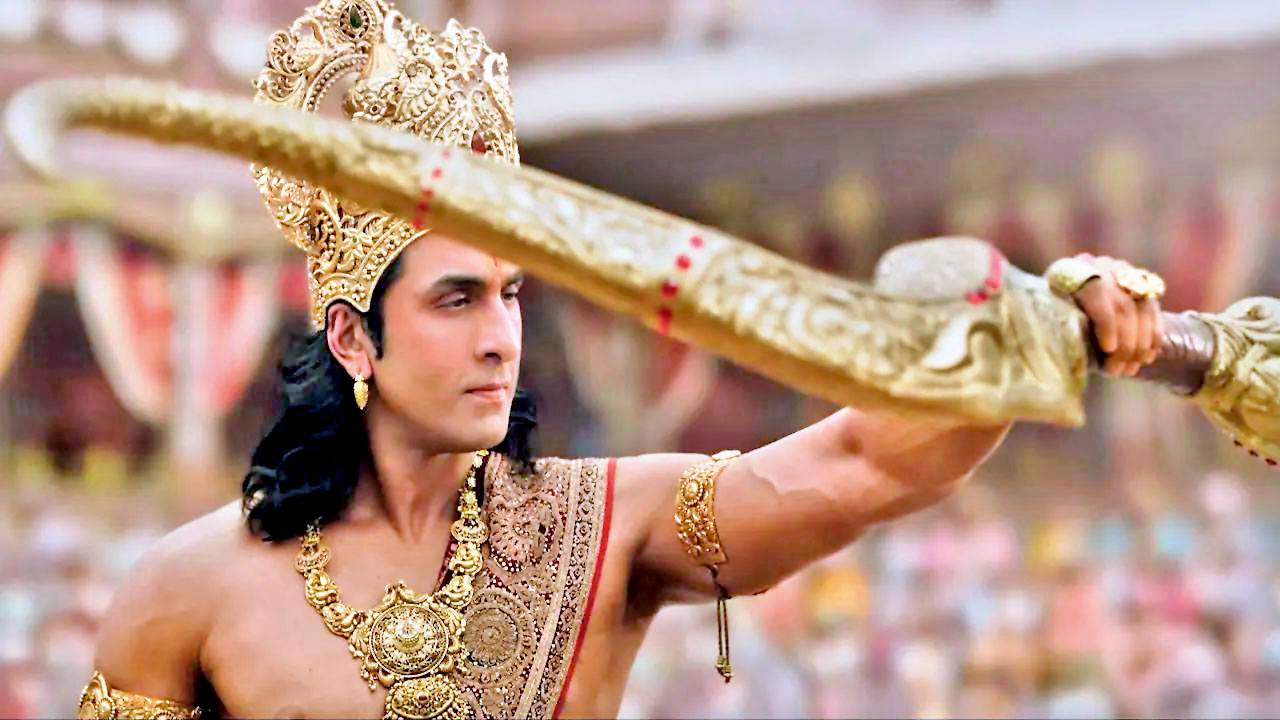
Nitesh Tiwari’s Ramayana: Part 1 is generating conversation beyond its cinematic scale. Ravana’s portrayal and the treatment of other revered characters have brought an age-old question into the spotlight: how far can filmmakers go when adapting an epic rooted in faith?
For millions, the Ramayana is a cultural and spiritual inheritance. And when filmmakers reimagine its characters, the debate is as much about creative licence as it is about fidelity to the source.
WHERE FREEDOM ENDS
Actress Madhavi Latha, questions why filmmakers experiment with sacred figures when fiction offers endless possibilities. “If filmmakers want creative freedom, they can create fictional stories about kings and kingdoms, just like Rajamouli garu did with Baahubali. There are so many ways to be creative. Why specifically choose Lord Rama, Goddess Sita and other revered characters and portray them in ways that hurt people’s sentiments?” she asks.
She says the distinction between fiction and faith cannot be ignored. “When it comes to fictional characters, filmmakers are free to create and portray them in any way they want. But Lord Rama and Goddess Sita are deeply revered figures, and millions of Hindus believe in their divine existence and their connection to India’s sacred history,” she says.
THE ANTI-HERO EFFECT
Latha questions the growing glamourisation of negative characters and its possible influence on younger audiences. “On one side, you have Lord Rama, who stands for goodness, protects his family, respects women and follows Dharma. On the other side, the negative character is shown as more powerful and attractive, even without any values or ethics,” she observes.
She insists that adapting the epic demands research and responsibility. “Then why shouldn’t they take even more care while making a film on the Ramayana? It is a sacred Itihasa followed and respected by millions. If a filmmaker wants to make a film based on Valmiki Ramayana, they must refer to the original Valmiki Ramayana,” she says.
She also rejects the defence that such films are merely fiction when audiences object. “When filmmakers make movies touching upon the Ramayana or Mahabharata and face criticism, they simply say, ‘It’s just a story, we are inspired by something else. Don’t connect it with religion. Just watch it as a movie.’ I strongly disagree with this argument,” she says. Her message to filmmakers is clear, “Filmmakers can enjoy complete creative freedom, but when it comes to our religion and sacred traditions, they must respect authentic scriptures and sentiments,” she adds.
CULTURE OVER CGI
Prof. (Dr.) Ripu Ranjan Sinha believes visual ambition must not eclipse the epic’s spiritual significance. “The Ramayana is not merely a mythological tale or a work of fiction. For millions of people, it is Itihasa and serves as a moral and spiritual foundation of Indian civilisation,” he says.
He urges filmmakers to draw from Maharishi Valmiki and Goswami Tulsidas, rather than Western fantasy conventions. Dialogue, too, must retain its dignity.
“Using casual, contemporary expressions or superficial language for revered characters such as Lord Rama, Godess Sita and Lord Hanuman can undermine their dignity. Their dialogues must retain linguistic purity, grace and philosophical depth,” he says.
Costumes, character design and settings such as Ayodhya and Lanka should reflect Indian artistic traditions, he adds. “The true beauty of the Ramayana lies in its values of dharma, sacrifice, family responsibility and commitment to truth. Modern filmmaking must demonstrate cultural humility alongside its technological ambition,” he says.
THE INDUSTRY REACTS
The makers have defended the creative approach. Producer Namit Malhotra argued that “Ravana is that celebrated evil character that the world should come and see for who he is”, defending the decision to give the antagonist a deeper, multi-layered backstory. Actor Addinath Kothare also defended the film’s focus on Ravana and praised Yash’s performance.
Highlight: Filmmakers can enjoy complete creative freedom, but when it comes to our religion and traditions, they must respect our sentiments.
Disclaimer : This story is auto aggregated by a computer programme and has not been created or edited by DOWNTHENEWS. Publisher: deccanchronicle.com