Every time venture capitalists write a check, they’re secretly running numbers in their heads about different exit scenarios. It’s their job as fiduciaries. But nearly all will tell you (publicly, anyway) that every portfolio company is headed for an IPO.
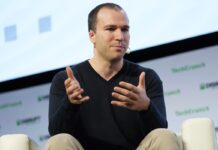
Stephen Ward, the co-founder of Brightmind Partners, a two-year-old cybersecurity fund in New York, says otherwise outright. “You have to sell on the way up,” he says.
Ward’s unvarnished pragmatism is one reason he stands out. Another is the size of his firm’s debut fund late last year: a whopping $250 million fund, which he closed with co-founder Gur Talpaz. A third reason is his resume, which includes a stint with the Coast Guard, nine years in the Secret Service, and CISO jobs at TIAA and Home Depot before he ever thought about investing.
One proof point that suggests the combination is working is SGNL, the identity security startup CrowdStrike agreed in January to buy for $740 million, 11 months after Brightmind led its Series A.
Now, Ward is raising a second fund, targeting roughly the same size as the first one. This time, though, he’ll be doing it without Talpaz, who left in April along with another early colleague, leaving Ward as the firm’s sole general partner. He’s betting on himself at a moment when early-stage cybersecurity startups are raising more money than later-stage rivals for the first time in more than a decade.
His unemotional approach to exits traces back to an unlikely career. Ward says he grew up in northwest New Jersey between two farms, in a family that couldn’t afford college for his older brothers. After high school, he joined the Coast Guard, inspired by a commercial of a man jumping out of a helicopter, though he says he barely knew how to swim at the time. He spent four years in search and rescue.
Afterward, he studied criminal justice at Seton Hall in New Jersey and thought half-heartedly about law school. “I didn’t know what I wanted to do,” Ward told me last week over Zoom, wearing a pale hooded sweatshirt and looking more like a basketball coach than a venture capitalist. “I was kind of lost. I missed the military and the camaraderie and all of that.”
After graduating in 1998, he says, he mailed out some 300 resumes but no one responded. A Seton Hall professor who was also a chaplain to Secret Service personnel, as well as to members of the FBI and CIA, began introducing him around, and the Secret Service called first.
The Secret Service has two primary missions: protecting people and investigating financial crimes. Ward gravitated to investigations, then to “cyber” after the September 11 attacks in 2001. That year, he married a former college classmate, a Syrian Muslim who’d also become a Secret Service agent. Colleagues warned him the background check would be “miserable.” (They’re still happily married.)
What came next took Ward’s life down an unexpected path. Stationed in New York, he arrested a hacker who’d pulled off the largest credit card data theft of that era. Instead of charging him, however, Ward flipped him, turning him into an informant and running him for about three years. But the hacker kept hacking behind Ward’s back, and after he was caught again, he told the agency, as a diversionary tactic, that Ward was in on it.
By that time, Ward had left for the private sector, and he ultimately spent roughly 18 months clearing his name. “It was hard to get out of bed,” he said of that period, describing the investigation as “almost like a spouse cheating on you,” given his love of the agency. The hacker ultimately received a 20-year sentence, and Audible bought the rights to the story, turning it into an eight-episode podcast called “Operation Firewall.”
Ward’s corporate career has been a success by most measures, though he describes it as a series of jumps he really wasn’t qualified to make. His first private-sector job at J.P. Morgan, where he was recruited in 2007 to build a cybersecurity unit, was the hardest transition of his career, he says. He felt like “the dumbest person in the room,” missed his Secret Service crew, and twice thought about going back, unaware he was still under investigation. He stuck it out and now calls the investment bank the “best management school.”
Six years as CISO at the financial services company TIAA followed, and then two years at Home Depot starting in 2019. But in 2021, feeling burned out, he quit without anything lined up for the first time since age 16.
That chapter didn’t last long. The founders of Wiz, whose security software Ward had used at Home Depot, put him on a short list for a job at their company. Jeff Horing, a venture capitalist at Insight Partners, which had co-led Wiz’s $100 million Series A round in late 2020, interviewed Ward for the role, then offered him one at Insight instead.
It’s a good-news, bad-news story, given that Wiz was acquired last year by Google for $32 billion. When I asked him about it last week, Ward observed that the friend who took the Wiz job “made life-changing money,” but said it doesn’t bother him.
Regardless, he spent just three years at Insight, where he says he worked on Wiz, Abnormal Security, and Elisity, which IonQ agreed in October to buy for up to $1.3 billion. Then, at age 49, he thought about striking out on his own for the first time.
He says people told him it was a young man’s game. He left anyway and began cold-emailing limited partners. Ultimately, fewer than 20 LPs filled the fund, including Horing.
Ward started Brightmind in 2024 with Talpaz, a CrowdStrike corporate development executive whose deals overlapped with Ward’s during his time at Insight. Tayler Sipperly, another CrowdStrike corporate development alum, was the firm’s third employee.
The partnership ended this past spring. Asked what happened, Ward, using carefully worded legalese, cited “differences in opinions regarding operations and the future of Brightmind.” In August, Talpaz and Sipperly co-founded a new venture firm with Elia Zaitsev, CrowdStrike’s global CTO for the past three years. Called Cognition, it’s now reportedly targeting a $170 million first fund to back cybersecurity startups.
Brightmind’s first fund has made 14 investments to date, with one exit: SNGL.
Some investors asked why Brightmind didn’t ride out that bet even longer. But Ward says he’s seen enough across his career that he feels confident in warning founders when they’re “going to race past the turn.”
In cybersecurity, he says, the best sales come between a startup’s third and seventh years. Indeed, he says his team tracks every security acquisition and what buyers are building versus buying. If Palo Alto Networks is likely to buy something, he says, CrowdStrike will experience “FOMO, then Zscaler is going to look over and go, ‘What did they just do? I should probably do the same thing’.”
Understanding how the pieces fit together is the trick, Ward explained, offering some hypotheticals. If CrowdStrike is building a product, he said, it’s unlikely to buy a portfolio company that makes something similar. Palo Alto Networks might love a company, but not if buying it would force its customers to switch away from something it bought five years ago.
“It’s very easy to go, ‘Good match,’ ‘terrible match’,” he said. “And that’s really what we spend a ton of time figuring out.”
He has timing on his side, at least. Early-stage cybersecurity startups are out-raising their later-stage rivals for the first time in more than a decade, according to PitchBook, which counts $4.7 billion worth of seed-through-Series B deals through September.
That total is already ahead of the entirety of 2025, even though the number of deals fell to 248 from 358 last year. Seed rounds in particular are ballooning, per PitchBook. The average cybersecurity seed round jumped to $8.4 million in the first nine months of this year, from $5.54 million a year earlier.
Ward questions how much of that money is really going to AI security. By PitchBook’s count, 278 deals in the first half of 2026 were bucketed as such, but his team’s manual review found only 30 true ones. He doesn’t think Anthropic or OpenAI will “take over the security world,” but instead will do “just enough.”
For real-time protection, which he terms “zero second,” he favors cyber-specific models that run locally on a customer’s own systems, like that of Empirical Security. He also looks for startups that could trounce established companies that he considers vulnerable, name-checking 27-year-old Qualys and 24-year-old Tenable.
Ward says Brightmind’s second fund won’t be entirely cybersecurity, focusing about 20% on AI infrastructure deals. He expects a meaningful number of teams to come from Israel, too. (Roughly 40% of the debut fund’s startups are based in Tel Aviv.)
Asked about the founders he’s most comfortable backing, the response is immediate: second-time founders who stick together.
Brightmind is comprised of five people right now: COO Iva Messy, also a Seton Hall graduate, came from venture firms Felicis and Andreessen Horowitz (a16z) on the recommendation of Ward’s cousin, Carl Eschenbach, a former Workday CEO who is now back at Sequoia. Sven Wollschlaeger, a Midwesterner whom Ward calls one of the hardest-working people he’s known, spent three years alongside Ward at Insight, and is a principal at Brightmind.
CTO Jamie Mneimneh, whom Ward first hired at Home Depot as a distinguished engineer, is the most technical person of the team. He built the cloud computing environment on Amazon Web Services (AWS) where the firm tests startups’ products. Mneimneh also built the AI agents that now source most of Brightmind’s deal flow, which is how the firm avoids hiring a bench of analysts and keeps management fees down, says Ward.
Taylor Cleveland, Ward’s chief of staff at Home Depot, joined the firm a few months ago.
For all the career changes, Ward says the real force driving him hasn’t changed. He grew up without money and still worries it could happen again, saying he’s being paid to produce a “3x net fund,” and he’s “not going to celebrate until we get that.”
Said Ward: “I don’t know what’s wrong with me. I have a level of being very naive to like, not being qualified to do something. I’ve just always looked at people and been like, ‘Okay, you know more than me today, but tomorrow, it’s going to be a little less, and the day after that, it’s going to be less, and eventually, I’m going to catch you and surpass you, and I’m going to know more than you.’ That’s how competitive I am.”
When you purchase through links in our articles, we may earn a small commission. This doesn’t affect our editorial independence.
Disclaimer : This story is auto aggregated by a computer programme and has not been created or edited by DOWNTHENEWS. Publisher: techcrunch.com