The ousted chief executive of the Australian Film Institute, Damian Trewhella, is seeking to be reinstated, alleging that he was the victim of a sham redundancy, in a case before the Federal Court in Melbourne this week.
The case is set to expose deep divisions at the organisation that runs the country’s version of the Oscars and has such celebrated screen identities as George Miller, Russell Crowe, Nicole Kidman, Cate Blanchett, Baz Luhrmann and Catherine Martin in honorary positions.
Weeks of bitter recriminations have followed the institute’s chair, film financier, writer and producer Jack Christian, surprisingly announcing that long-time chief executive Trewhella was departing just over a month after the horror film Bring Her Back and miniseries The Narrow Road to the Deep North dominated the Australian Academy of Cinema and Television Arts Awards.
“On behalf of the board I thank him for his vision, tireless commitment and contributions,” Christian said in a statement from the board on March 19. Later the same day, Trewhella made it clear that he wanted to keep his job. “I have not resigned, nor have I agreed to ‘step down’,” he said in his own media release. “I remain fully committed to returning to my role.”
The same month, one of the AFI’s four board members also departed after alleging she had been bullied. Another board member has raised concerns about Trewhella’s salary of $327,000 a year running an organisation that he said was constantly in crisis.
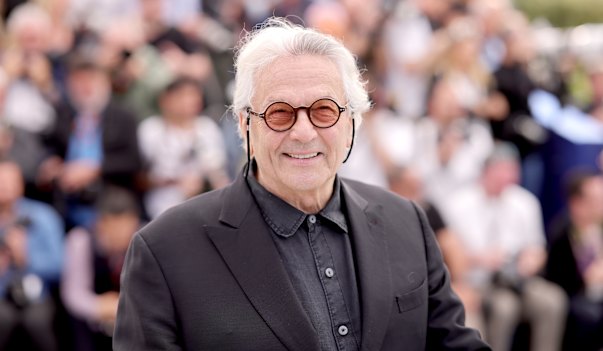
Amid heated claims and counterclaims, George Miller, the Oscar-winning director of Mad Max and Happy Feet who has been the AFI’s patron for 25 years, has called for an extraordinary general meeting so the organisation’s 3900 members get the chance to hear about “really serious and troubling governance issues” and vote in “a board worthy of the job”.
It’s an important issue for the film and TV industry. The AFI is a crucial organisation, running awards since the late 1950s, initially under its own name and now under the AACTA banner. It also runs a five-day AACTA Festival and Screen Careers Expo around the awards and a year-round program of industry screenings and events.
While there have been stumbles, including the short-lived AACTA International Awards in Los Angeles, a controversially engineered best film tie between The Water Diviner and The Babadook in 2015, and a high turnover of board members, the industry largely recognises the value of the awards and the AFI’s other screen culture work.
Another surprise exit
If the contrasting announcements about Trewhella’s exit left many in the industry bewildered, the departure of the AFI’s longest serving board member, Jo Smith, co-director of the Newcastle International Film Festival, has been kept behind closed doors.
Smith has lodged a complaint to the Australian Charities and Not-for-Profits Commission (ACNC) – the AFI is a not-for-profit organisation – alleging that she felt bullied by Christian and that she had governance concerns ahead of a board meeting on March 10 to discuss a proposed restructure that involved making Trewhella redundant. Christian declined to comment when asked about Smith’s allegation. But another board member, Tony Petani, a partner in law firm GrilloHiggins who is also AFI company secretary, denied the chair had bullied Smith.
In her complaint, Smith claimed she reported the bullying to Petani and indicated she was uncomfortable discussing the redundancy given these governance issues at short notice. The next day, Smith said, she was advised the board had decided that her place had become vacant. Petani categorically denied this alleged sequence of events or that Smith’s departure was related to the complaint she had raised concerning Christian.
The trigger, Smith said, was a clause in the AFI’s articles of association that she had missed three board meetings that had been called in less than 24 hours to engineer her departure. Her claim to the ACNC alleges that the board’s decision was an unlawful failure of governance and that she should be allowed to continue as a director.
“I have legal advice that I’m still on the board but they have chosen to exclude me,” Smith said.
Petani, one of three remaining board members at the time along with Christian and actor Shane Jacobson, said it was factually incorrect that three meetings in 24 hours had been called after the complaint.
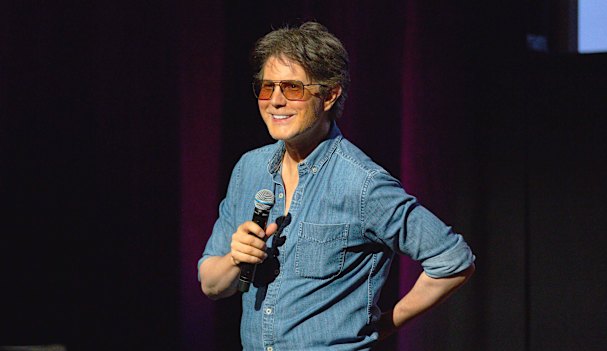
“She had already missed three meetings at the time that she made the bullying complaint and the fourth had already been called,” he said. “I had also already warned her of the operation of Article 18(f) before she made the bullying complaint.”
Petani added: “We’ve found some evidence in Damian’s emails that he told her to try to delay the meeting [at which his redundancy would be discussed].”
Smith, who said she sought legal advice about the bullying in February, responded that Trewhella had only been advising her how to deal with it. “Damian wasn’t telling me what to do,” she said. “I find the suggestion deeply offensive and, as a woman, misogynistic.”
Smith’s complaint to the ACNC and the circumstances of her board position being made vacant are yet to be investigated.
This masthead is not suggesting that Petani and Christian’s actions were improper or unlawful, just that Smith has claimed they were.
The two sides
The AFI’s lawyer, Elizabeth Lacey from Lacey & Co, has set out its reasons for making Trewhella redundant in a letter (with two sections redacted) to Tim Davey at MinterEllison, who has Trewhella, Smith and Kennedy Miller Mitchell – Miller’s production company – as clients.
In a response to the interlocutory application filed by Trewhella, Lacey said the chief executive and company accountant roles had been abolished to allow a restructure that included a new general manager (yet to be appointed), finance manager, partnership manager and other senior management roles.
She alleged “serious conduct issues which have come to light since your client was dismissed” and the breakdown of his relationship with the board meant his reinstatement was impossible.
The allegations (which are yet to be examined by a court) include: that Trewhella wiped data from a phone and laptop before belatedly returning them to the AFI despite repeated requests that there be no deletion or alteration of data; that he attempted to delete “a substantial volume of emails” from the AFI’s systems; and that the AFI had received complaints that he had regularly said in public that “he does not like Australian films”, “the Australian film industry is ‘dead’” and “he has little respect for Australian screen content”.
Trewhella claimed that he had only “tidied up” personal information on devices, including family photos, before returning them. “Many of the emails were also personal,” he said. On the quotes attributed to him, he said: “I’ve spent my career trying to draw attention and audiences to the very best of Australian film and TV.”
In its letter, the AFI alleged that Trewhella had not followed its policies regarding work expenses. He disputed that: “Any material expenses were very evident to the board and the AFI bookkeeper,” he said.
The AFI alleged that former auditors had reported that, when they felt that Trewhella had been “aloof, non-responsive and deflected” queries, they went to a now-former board member and subsequently expressed “serious concerns about [his] capacity, noting that he appeared to have been suffering from dementia or some other form of cognitive impairment”, which meant he “essentially said yes” to any question.
Miller told this masthead that “the willingness of [the AFI] to make false and reckless allegations about the cognitive state of a former [board member] is shameful.”
The AFI alleged that former auditors determined that Trewhella had “white-anted” or “martyred” board members who tried to improve governance and accountability; and that he had built up significant accumulated annual leave, $200,000 of which he had cashed in as part of a deposit to buy a family home in 2021.
Trewhella disputed that he had white-anted board members. “In Victoria, it’s OK to cash out annual leave and our cash flow was fine at the time,” he said. “It’s hard to take annual leave in a 24/7 job. When the auditor queried [the cashing in], it was reviewed by the board and signed off.”
The AFI alleged it had been provided with evidence that Trewhella had interfered with and manipulated AFI board elections, issuing complimentary memberships to staff and their family to vote for Jo Smith in 2019.
Trewhella claimed he had never engaged in vote rigging and would welcome an independent review of all these issues, adding: “There wasn’t a hint of any of these issues until I stood up publicly and said ‘no, I haven’t resigned’. I let the board know that I was seeking legal advice on the subject and then the muckraking began.”
The AFI indicated it was considering a cross-claim to recover funds from Trewhella, which allegedly included credit card expenses for which he had not accounted and “not legitimate AFI business expenses”, including parking fines, family accommodation on trips to Manly, unnecessary flights and travel, flights for family members including his daughter’s flight to China in 2025, his daughter and her friend’s trip to the 2026 AACTA Awards, expenses in Cannes and “double-dipping” of per diems for travel.
Trewhella said he disputed all these claims. “One example: yes, my daughter did come to China,” he said. “I booked two flights on my credit card one way and two flights on my personal card the other way so we could sit together.”
The AFI also alleged that Miller had “threatened individual board members with serious reputational harm in an attempt to intimidate them, initially to prevent the restructure and redundancy, and when that went ahead, to procure Mr Trewhella’s reappointment”.
Miller claimed he had not threatened board members. “We are simply going to present the membership and the industry at large with evidence of [the board’s] troubling behaviour,” he said.
The AFI’s allegations and any counterclaims are likely to be tested in any legal action brought by Trewhella and, until then, remain unproven.
The latest developments
Last week, the AFI announced that three new board members had been appointed: Roving Enterprises’ executive producer Craig Campbell, ABC chief partnerships and negotiation officer Toni Skaife and Foxtel Group executive director of entertainment content Daniel Monaghan.
“A great deal of work has been under way in recent weeks, with a clear focus on strengthening the organisation, supporting the team and building the right foundations for a stronger academy,” Christian said.
Even with these new directors, Miller is driving a campaign for an extraordinary general meeting, insisting the AFI board has not been open about the restructure and had repeatedly refused to engage with concerns he has raised.
“They have not informed anybody who should have been informed, which includes the officers – Russell [Crowe], Nicole [Kidman], Cate [Blanchett], Baz [Luhrmann] and Catherine [Martin] – as well as me as patron and, most importantly, the members,” Miller said. “Initially [they also did not inform] Damian and the staff. And when I tried to find out what was happening, they responded with legal letters.”
Despite all the AFI’s allegations, Miller believes Trewhella should be reinstated as chief executive given how much he had achieved during almost two decades with the organisation.
“The last three years of the AFI-AACTAs have been the most successful in the organisation’s entire 68-year history because of the way it has adapted an awards ceremony into a five-day festival and expo,” he said. “At the height of its effectiveness, the board has pulled this move and resorted to retrospective muckraking to justify their dubious actions.”

Miller described the board’s actions as “an existential threat” to the organisation, saying: “It really feels like they are steering the Titanic into the iceberg.”
Petani responded that he was “a big fan of Dr George and had great respect for him as a filmmaker” but believed he had been misinformed about a restructure that was essential for the AFI’s future. He claimed that another factor contributing to the redundancy, given the need for financial sustainability, was Trewhella’s “probably above market” salary of $327,000 plus benefits.
“Five per cent of our turnover [went] to paying Damian,” Petani said. “The CEO’s role had become basically a department of everything … [The organisation] was always in a constant state of crisis.”
Trewhella said Petani would have been involved in approving his salary five years ago after industry benchmarking.
So how does the board feel about the call for a new one?
While also having great respect for Miller and his contribution to the industry, Christian said the board had legal and governance responsibilities to the organisation, members and stakeholders.
“Any formal request for an EGM will be considered in accordance with the organisation’s governing documents and applicable obligations,” he said. “The board does not accept that it has failed to engage, nor that serious governance allegations should be determined through the media without the underlying evidence being properly tested.”
So where now?
With more drama to come, there is no doubt the conflict is damaging the organisation’s reputation and potentially its financial viability given escalating legal costs over the Federal Court case and ACNC complaint.
Trewhella’s application to be reinstated has a first case management hearing before the Federal Court in Melbourne on Thursday.
Garry Maddox is a long-time AACTA member.
Find out the next TV, streaming series and movies to add to your must-sees. Get The Watchlist delivered every Thursday.
Disclaimer : This story is auto aggregated by a computer programme and has not been created or edited by DOWNTHENEWS. Publisher: www.smh.com.au