
Theater review
THE FEAR OF 13
One hour and 50 minutes, with no intermission. At the James Earl Jones Theatre, 138 W. 48th Street.
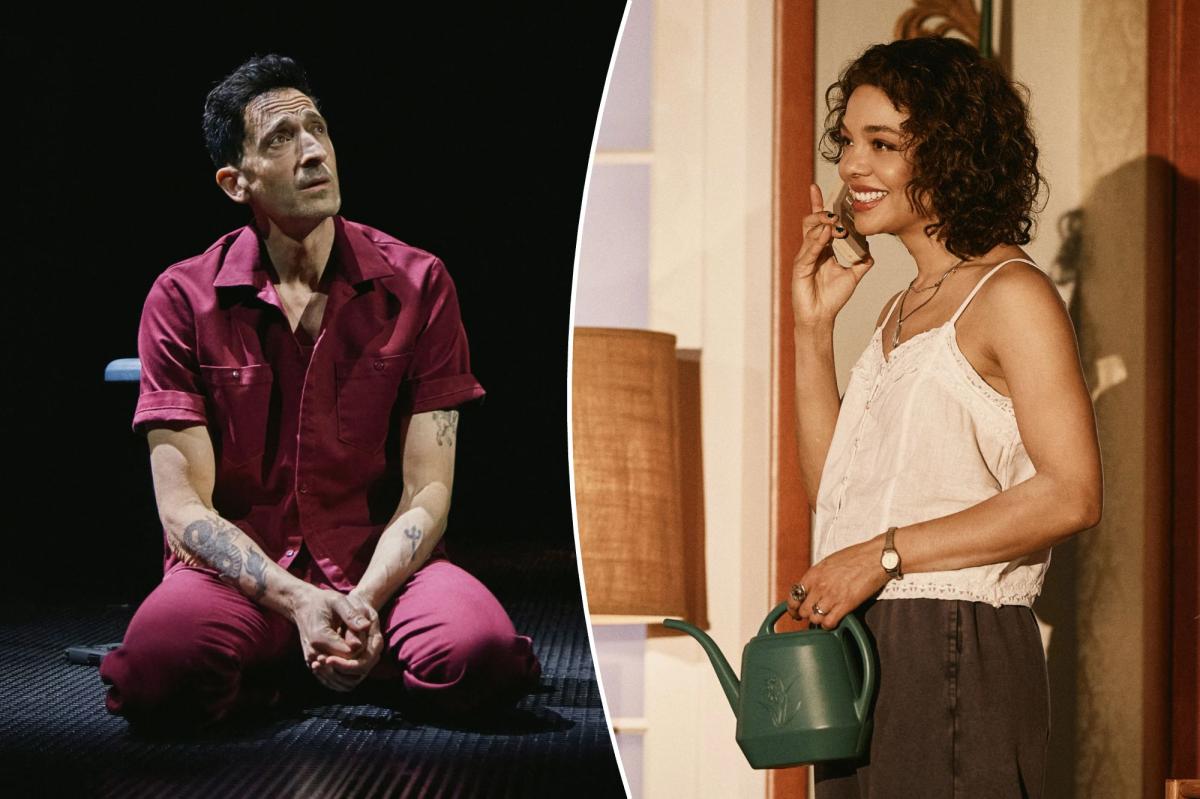
It speaks volumes about Adrien Brody’s choice of roles that next to his anguished, Oscar-winning turns in “The Pianist” and “The Brutalist,” his Broadway debut as a wronged man who spends 22 years on death row comes off as positively chipper.
Cracking jokes and animatedly telling stories in a sing-song street-corner voice, our Sufferer Laureate plays Pennsylvania inmate Nick Yarris in “The Fear of 13,” Lindsey Ferrentino’s curiously unmoving and talky, talky, talky play that opened Wednesday night at the James Earl Jones Theatre.
For an actor who apparently hadn’t been onstage since age 12 before taking on this part in London in 2024 — though his record-breaking Oscar speech surely qualifies as a one-man show — Brody comports himself well enough. He is poised and relaxed, and the delicate, damaged spirit he brings to his heartbreaking films transitions smoothly to the theater.
It’s just that “The Fear of 13,” as written, is a lifeless, stuffy and dutiful schlep through years of events, posing an insurmountable obstacle for any actor. What unfolds is little more than a polite novella of narration about a weighty topic: the criminal justice system.
Even by the standard of exposition-heavy shows, the proceedings in this production, straightforwardly directed by celeb babysitter du jour David Cromer, are oddly mild-mannered. Death row descends into Coffee Talk.
Granted, Yarris, a real former inmate whose harrowing experience behind bars was the subject of a 2015 British documentary with the same title, is clearly an outgoing, talk-with-your-hands kind of guy. But the pacified drama by Ferrentino, which runs nearly two hours without an intermission, lands like an extended director’s cut of the opening sequence of “Goodfellas.”
A tall stack of monotonous “and then”s, and there is a heck of a lot of telling that goes on under sleepy, dim light.
Here’s how Nick got into the clink as a young man from Philadelphia who made a bunch of unfortunate choices. Here are the mistreated men in there with him. Here’s the status of his snail-paced appeal. Here’s what really happened the night of the murder. All of it comes with the unspoken tone of: Can you believe this?
Our silent answer every time: Yes!
Ferrentino seems content with her play’s grander purpose outweighing its power. And, admittedly, the timeline holds the audience’s attention enough that you at least want to look into Yarris further when you get home. His tale is remarkable and sad.
Still, this show exists in large part to elicit gasps by exposing the brokenness of the criminal justice system — not to make us know, understand and get lost in the life of a fellow human being.
Only during weekly conversations with Jacki Miles, a prison volunteer played by Tessa Thompson with the protective shield of Clarice Starling, are there glimpses of connection. Jacki visits to talk to death row inmates about their days, yet, as a rule, she never pries into the crimes that got them locked up.
Those other prisoners, played by Ephraim Sykes, Eddie Cooper and Victor Cruz, among others, start out prominently and then abruptly disappear, never to be spoken of again. Only Sykes, of “Ain’t Too Proud” and “Hamilton,” stands out because he gets to sing a chillingly pretty song that cuts through the fatalism.
The more Jacki meets with Nick, to whom she’s especially drawn, her walls begin to break down and she becomes passionate about his cause. Soon, his plight is her own. The toll that devotion takes on her life, emotionally and logistically, is more stated than felt, as with so many other passed-over fireworks in “The Fear of 13.”
Although the death row denizens are forgotten, the ensemble ably segues into different roles, such as prison guards and government workers, most of whom are flatly characterized to paint them as lazy or bad.
For instance, the men in charge of Nick’s DNA evidence would rather chat about their sandwich orders than help him gain freedom. That’s a hammy old throwback to cops at the doughnut shop.
At least the play is a step up for Ferrentino after the wretched musical “The Queen of Versailles” that she wrote the book for earlier this season. That dud was also based on a documentary, and I question why she keeps coming back to those films as a source of inspiration.
The hallmarks of docs — confessional interviews with an invisible questioner, balanced perspectives rooted in hindsight and a rudimentary rundown of events — numb live drama, particularly if a writer leans into them as Ferrentino does.
This playwright should herself develop a healthy fear of 13. Channel 13. PBS.
Disclaimer : This story is auto aggregated by a computer programme and has not been created or edited by DOWNTHENEWS. Publisher: nypost.com



