Universities and colleges across the country have been dealing with a ticking time bomb since the Great Recession, and a growing number of them are saying that it’s about to go off, next semester.
A series of announcements over the past month by the highest offices of U.S. universities read like an obituary to a higher learning model that no longer works for either students or the institutions tasked with teaching. And that obituary has been authored in slow motion by the declining birth rate of the last two decades.
“Enrollment volatility is widespread, unpredictable and the ‘new normal’ for even strong, well-resourced universities,” J. Michael Haynie, Syracuse University’s chancellor, wrote in a note to faculty and staff last week, announcing the school had missed its undergraduate enrollment target for the next fiscal year.
“The fall 2026 enrollment shortfall carries real financial consequences—including a budget deficit, something the University has not experienced in quite some time,” he continued.
Many more schools are being forced into similar write-downs as enrollment plummets. In fall 2025, total post-secondary enrollment in the U.S. rose 1%, down from a 4% increase measured the year before, according to the National Student Clearinghouse Research Center. At private four-year institutions, enrollment last year dipped 1.6%.
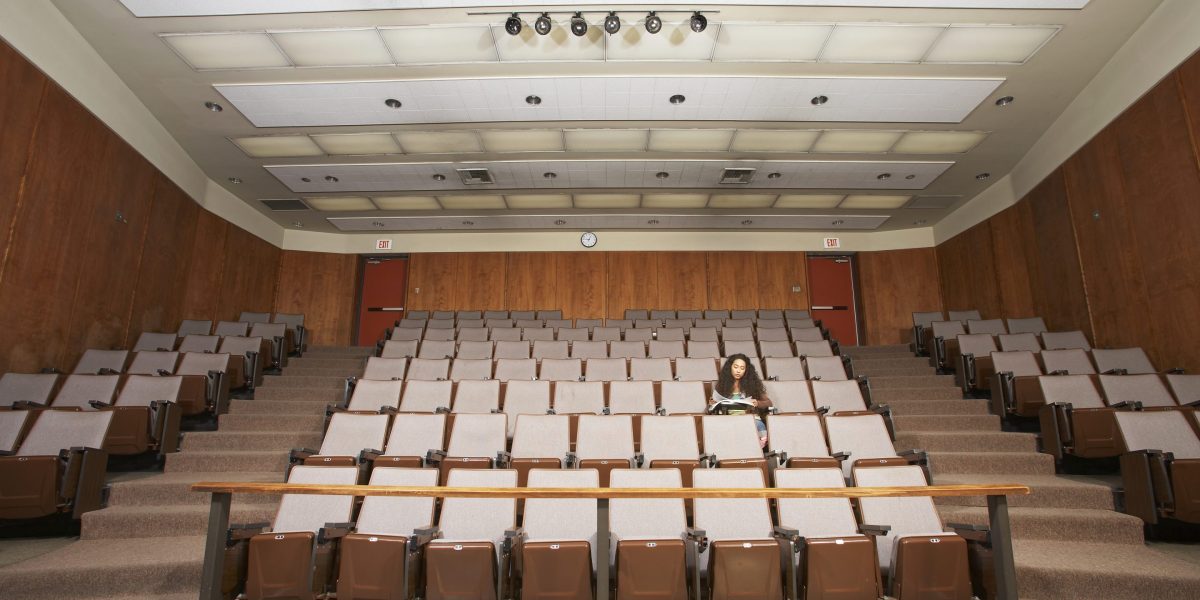
Aggregate enrollment data for next year won’t be available for months, but several schools have already missed their enrollment targets for next fall. A demographic clock determining college-aged student supply started ticking 18 years ago in the wake of the Great Recession, when insecure American households decided to put off having children. With the eldest of that cohort now of college age, schools are having to pay for those decisions taken almost two decades ago. As one university president put it recently, it has left higher education at a “crossroads.”
The decline of the liberal arts school
Almost every school is struggling, but the enrollment cliff is an existential challenge for the legions of small private schools spread across the country. While larger institutions are experimenting with different revenue streams or trying to attract new demographics of students, the classic four-year, liberal arts college is at serious risk of extinction due to financial constraints. In New England, the cradle of liberal arts schools, Hampshire College announced in April it would close after the fall semester, explicitly citing enrollment issues. The region has seen 32 four-year colleges close down or merge in the last decade, more than a third shutting down since 2020.
The U.S. currently has around 4,000 colleges, many of which you’ve probably never heard of, according to Sandy Baum, a senior fellow at the Urban Institute who researches higher education financing. The Federal Reserve has found around 60 colleges are closing every year, a rate that has ramped up significantly over the past decade and almost exclusively impacted private institutions with small student bodies. In a worst-case scenario where enrollment drops 15% between 2025 and 2029, the Fed projected annual closures would more than double.
“Forget the elite institutions. That’s not part of it,” Baum told Fortune. “If you’re enrolling 300 students, it’s going to be really tough to make it work, and so some of them will have to go out of business.”
Where have all the kids gone?
Universities—even flagship ones—are already pricing in steep budget cuts for next year in response to shrinking tuition revenue. The University of Vermont is planning a $12 million budget deficit next fiscal year, the school announced last month after reporting a 15% drop in freshman undergraduate enrollment. The University of Wyoming is similarly facing a $15 million shortfall next year, due to shrinking enrollment, inflation and falling investment.
At the University of Oregon, President Karl Scholz announced in a note to staff last month that the institution was enacting $30 million in budget cuts, primarily due to declining out-of-state-enrollment, and warned the school’s deficit could rise to some $65 million in the coming years if current trends hold steady.
“I believe we are now at a crossroads,” Scholz wrote. “These dynamics are not affecting just the University of Oregon: they represent a changing reality across higher education.”
Many schools have pointed to falling out-of-state and international enrollment as a significant financial constraint. Over the past few decades, public flagship universities have invested heavily in attracting more transplants who can be charged higher tuition fees, with the share of non-local students rising an average 55% between 2002 and 2022, according to research from the Brookings Institution.
But that model has started to show signs of weakening. Out-of-state domestic enrollment at large flagship universities has held steady, but international freshmen have become a rare breed. Undergraduate international enrollment grew 3.2% last fall, according to the National Student Clearinghouse data, but that was less than half recorded in 2024, while graduate international enrollment declined nearly 6%. Those trends persisted into last spring, when foreign student enrollment at U.S. universities fell 20% year-on-year, according to a report published last month by NAFSA, an education non-profit.
The Trump administration’s hardline approach to foreign-born students is partly to blame, as the threat of revoked visas has discouraged many potential learners from choosing U.S. colleges. High tuition fees and the overall cost of living has also pushed many U.S.-born young adults to reconsider their option, with a rising share opting for community colleges or trade schools.
But though many university provosts and presidents have pointed to geopolitical and policy factors Baum cautioned against interpreting the enrollment cliff as a cyclical struggle, particularly for smaller schools who are struggling to keep domestic enrollment numbers up anyway.
“There’s a decline in the number of high school graduates in this country,” she said. “This is not a surprise. We’ve seen this coming for a long time, but we’re now sort of getting to the point where it’s actually happening.”
Researchers have been predicting a demographic cliff for college-aged Americans ever since families started having fewer babies two decades ago, around the time of the Great Recession.
With the oldest in that cohort now turning 18, universities are starting to feel the sting of household choices made years ago. Undergraduate enrollment already dipped 15% between 2010 and 2021, according to the National Center for Education Statistics, and could spiral further still. A 17% decline in birth rates after 2007 translates to 576,000 fewer college-aged Americans between 2025 and 2029, according to research from RC Strategy, an advisory firm. That’s almost four times more than the entire student body enrolled last year at Arizona State University, the country’s largest education institution by headcount.
Trouble for the little guys
Highly prestigious schools, including the Ivies or public systems with large endowments like the University of California, might be insulated from the demographic crisis, Baum said. Demand for spots in these institutions is likely to stay high, and schools will keep having their picks of students.
The outlook isn’t as rosy elsewhere. Flagship state schools and large private institutions like Syracuse, highly regarded but a step below the elite level, are likely to face much greater competition for students in the years ahead. Last year, Syracuse was one of several schools to offer last-minute scholarships to students who had yet to commit in a bid to boost enrollment.
Some institutions, like the University of Arizona, are intentionally lowering class sizes to improve academic performance and graduation rates, while reducing scholarship expenses and national recruitment burdens. Others, in a bid to stay solvent, are advertising tweaked curricula to older adults, a growing market of prospective learners looking to acquire new skills or change careers. A survey published earlier this month by the Council for Adult and Experiential Learning found 41.7 million Americans between the ages of 25 and 64 intend to enroll in some type of higher education within the next two years
But while larger institutions or even smaller, specialized ones might creatively patch over their financial woes, a greater reckoning is likely coming for small private schools peppered across the country. Dealing with high competition for enrollment and unable to amass the same financial resources as larger universities to pivot towards different audiences, many of these schools will have no option but to shut down.
“Most institutions don’t have significant endowments, but there are thousands of institutions—most of them you may never have heard of—that are tuition-dependent,” Baum said. “When they don’t have enough students, they’re in financial trouble.”
Disclaimer : This story is auto aggregated by a computer programme and has not been created or edited by DOWNTHENEWS. Publisher: fortune.com