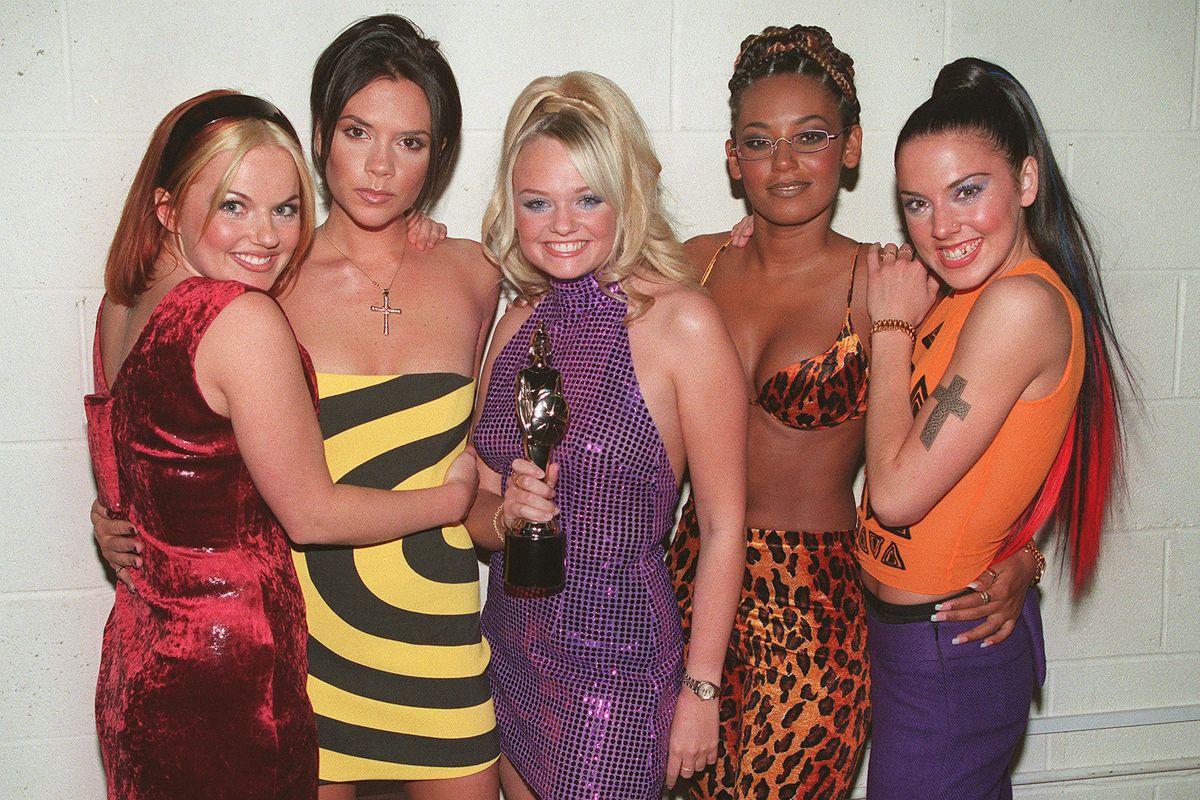
A fascinating new BBC Sounds series looks back at the origins of the Spice Girls – including how Emma Bunton was drafted into the band to replace Michelle Stephenson
Munching on toast in the front room of their vocal coach’s house, the newly-formed Spice Girls were still a long way from pop stardom. Broke and yet to land a record deal, they spent their days not only rehearsing together but also learning how to survive in the cut-throat music industry.
“They couldn’t afford to go out to get lunch,” says voice coach Pepi Lemer, before adding: “I do remember a conversation that I had with them to tell them to be aware of their power….I just wanted to kind of make them aware that they actually could get control.
“That they should be aware of contracts, that they should have proper consultation, with the people surrounding them and the people that they trusted.”
It proved invaluable advice. Thirty years after Wannabe turned them into a phenomenon, a new four-part BBC series called ERAs: Spice Girls reveals how Geri Halliwell helped lead a “mutiny” against the management team which had put them together.
They were father-and-son team Bob and Chris Herbert, who along with entrepreneur Chic Murphy, wanted to launch a boy band to rival Take That. By mid-1994, they had auditioned 600 applicants
Melanie Brown, then 18, Melanie Chisholm, 20, and 19-year-old Victoria Adams were among those selected, while Geri, at 21 the oldest of the eventual five, took a rather less conventional route into the group.
“I’d invited her along to a couple of auditions, but every time, at the 11th hour, she came up with an excuse why she couldn’t make it,” Chris Herbert recalls.
“Each time I said to her, ‘Look, I’ll, I’ll give you one more chance and, you know, you can come to the next audition.’
“She was almost working her way up the ladder without actually attending an audition. Now I later came to recognize that she purposely sort of engineered that.”
When Geri finally appeared at a workshop, Chris believed he had virtually settled on his line-up, only for her arrival to throw his plans into doubt. “I pretty much in my mind had it mapped out what the lineup of the band was gonna be,” he says, “and then in she came an absolute wildcard.”
The original fifth member was Michelle Stephenson, but during a week of rehearsals it became clear she was struggling to gel with the others. “She just felt like she was slightly … just, just not part of the gang, really,” Chris recalls. “When it came to lunch breaks, she’d be sitting by herself.”
He says Michelle’s mother was unwell at the time and that she had “more stuff on her mind”, with both sides eventually agreeing the timing was wrong. That sent Chris back in search of another singer, while Pepi immediately thought of an 18-year-old former pupil she had not seen for two years: Emma Bunton.
“I had a call to say that one of the girls had fallen out of the band, which must have been Michelle, and did I know of anybody, which brings me to the story of Emma,” Pepi says. Within 24 hours of Emma meeting the others, Chris remembers their verdict being emphatic: “She’s the one.”
For months the five rehearsed intensively as their management attempted to prepare them for the music industry. However behind the scenes frustration was growing over how slowly their career appeared to be moving
Chris says Geri in particular believed they should already be recording and releasing music rather than continuing their training.
“I think during that period, you know, Geri wanted to go faster,” he said. “She was of the opinion that we could get a song off the shelf from someone, and we could go and do a singles deal and start on that journey. She influenced the other girls that there was a better route forward, and that I was holding them back. And conversations started happening in the background…and that’s where the kind of mutiny started to happen.”
The decisive break came after Chris cancelled a recording session with Sheffield songwriter Eliot Kennedy, only for the girls to make the journey without him. “The whole thing was a complete ruse, and the girls had just literally jumped in the car, made their way up to Sheffield,” he says.
“And eventually got hold of Elliot Kennedy and said, ‘Look, We don’t have a manager. We’ve ditched our manager. We want to go ahead with this session.’ And that’s what happened.”
After leaving the Herberts, the group found new manager Simon Fuller and signed to Virgin Records, while the self-belief which had driven their rebellion was apparently undiminished.
Peter Loraine, then editor of Top of the Pops magazine, remembers meeting them for lunch in London’s Portobello Road when Wannabe had yet to be released and hearing Geri confidently map out what was going to happen next.
“Geri kind of leaned over and she said, ‘You know, we’re gonna be massive, and we’ve got three singles coming out in this order,’ and she kind of listed what the three singles were. And we’re gonna make a film in a few years’ time, and we’re gonna tour the world, and we’re gonna play at Wembley Stadium.’ In retrospect, it’s like, oh my God, like, like, you know, they manifested that.”
Wannabe was eventually released in July 1996 and spent seven weeks at Number One. Their rise was so rapid that by the following year they were filming Spice World while continuing to record and fulfil a punishing schedule of other commitments.
Costume designer Kate Carin says the production required around five trucks, including one devoted entirely to the group’s footwear. “It was probably the hardest I’ve worked on any job at any time,” she says. “We had about five trucks. We had a truck just alone for shoes and boots. It was crazy. And you know, not only we were shooting that movie, but at the weekends they were doing advertising campaigns. They just didn’t get a break.
“And I literally mean they would do a scene on set and then there would be a mobile recording studio. They would be trundled off to get into the studio to sing.”
Yet the determination to control their career had not disappeared with success. In November 1997, the Spice Girls sensationally sacked Fuller and began handling their own affairs.
Chris, who had already experienced being discarded by the group, says Fuller subsequently rang him from Portofino in Italy.
“I got this call and it was… ‘look, you know, I’ve just had the same treatment. I’m holed up in Portofino.’
“‘Do you fancy coming out for the weekend and let’s, let’s talk our, you know, go through our war stories together?’”
By the following May Geri, then 25, quit midway through their world tour. The announcement shocked fans, but veteran PR Alan Edwards, who was working with the group, says he got wind of her plans.
“I knew it was coming. And Geri called me up at one point and talked to me about it, so I knew that she was gonna jump,” he says. “She had her own career ambitions and plans, and she wanted to do that. It was a brave thing to do.”
The Spice Girls continued as four and scored another Number One with Goodbye at the end of 1998, before their recording career petered out after the release of third album Forever in 2000.
All five eventually reunited for a world tour in 2007, while Geri, Mel B, Mel C and Emma returned without Victoria for a stadium tour in 2019. And Edwards believes another reunion remains possible, even suggesting they could eventually appear at Glastonbury.
“It’s like the stars aligning, isn’t it?” he says. “They’ve all got to be in the mood, and I think different years some of them are keener than others. I’m sure they could do a Glastonbury or something like that. I think everybody would love it, wouldn’t they? Every year I hear whispers and people approach me and say, ‘Oh, could you have a quiet word with one of them?’ Or, ‘Do you wanna be in the mix?’”
ERAs: Spice Girls is on BBC Sounds now, and airs October 4 on BBC Radio 2 at midnight
Disclaimer : This story is auto aggregated by a computer programme and has not been created or edited by DOWNTHENEWS. Publisher: mirror.co.uk