
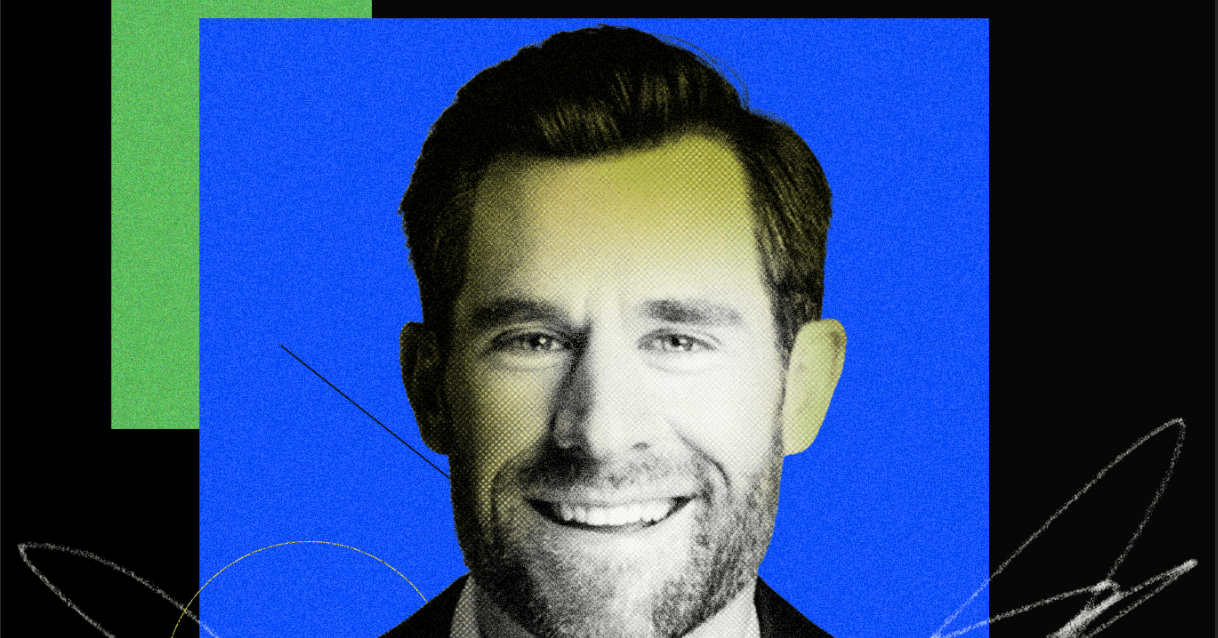
Devin Stone never intended to become one of the internet’s most recognizable legal analysts. Instead, he was supposed to follow a predictable path: graduate, grind it out in Big Law, make partner, and spend the next several decades enjoying a conventionally successful career as a lawyer.
But a bout of burnout early in Stone’s career led him to YouTube, where he started publishing explainer videos under the name Legal Eagle. Stone’s channel, which now boasts nearly 4 million followers, started out pretty fluffy, with videos dissecting legal representations on popular TV shows and movies becoming an early audience favorite. While those turned him into a prominent online influencer—yes, there’s at least one for pretty much everything these days—Stone has more recently become a figure both beloved and detested for his prolific video explainers of the Trump presidency’s various legal quagmires and the constitutional crises they’re creating.
What Stone now does, I would argue, is something closer to public service journalism in a YouTube-optimized wrapper: He and his team publish upward of three videos a week unpacking everything from FCC censorship to Trump’s invasion of Venezuela, and often reach more than half a million viewers with a single episode.
Stone, who remains a practicing lawyer and teaches at Georgetown University, sat down with me to talk about the unique career he’s built for himself—and the particularly precarious legal moment Americans find themselves in. In our conversation, he describes the explosion of legal crises wrought by the Trump administration, talks about building a business off the back of YouTube’s omnipotent algorithm, and explains why he worries that an entire generation may come to see unprecedented political behavior as table stakes.
KATIE DRUMMOND: Here with me now is the Legal Eagle himself, Devin Stone. Devin, welcome.
DEVIN STONE: Thanks for having me.
I wanted to start by letting our audience know that you are a real practicing lawyer. You’re also a law professor at Georgetown. You also have this enormously popular YouTube channel, so I am trying to triangulate how you get all of this done. But first, what made you deviate from a more conventional lawyer path to YouTube?
You spend a lot of years grinding away at a very large national law firm, where you get the best training in the world, and then when it comes to the time when you would be elevated to partner, you realize you are completely burned out and that it would be more fun to just make videos and post them to the internet.
You do a lot of very serious legal breakdowns on your channel. I want to talk about those, but first I want to talk about the fun stuff you do, like breaking down legal representations as they appear in film or on TV, like on Suits. I’m curious, who’s getting it right? Have you seen some really high-integrity examples?
Oh yeah, for sure. And I don’t want to give the impression that I don’t enjoy a ridiculous portrayal.
Of course, of course. For the record, I think Suits is probably one of my favorite TV shows.
OK, I’ll tread lightly. Suits is not gonna make it into my list.
Bummer.
I would say that the TV show that stands out the most is Better Call Saul.
They really did their homework in terms of making sure that what they were doing was very legally accurate. And honestly, I don’t think the show needed that. They could have taken a lot more liberties than they actually did. But honestly, as a lawyer watching Breaking Bad and watching the adventures of Saul Goodman, I had another layer of enjoyment. So much of the drudgery of litigation, you know, pushing papers all day long and doing a lot of legal research, they actually did a lot of that stuff. The issues that they were dealing with really rang true as someone who, you know, has spent 12- and 13-hour days in front of a computer looking up code.
Then I would say the movie that almost every lawyer, myself included, would say really gets it right, is My Cousin Vinny.
That is a throwback.
I mean, it obviously features a hapless Joe Pesci getting his way through the legal system and learning in real time as the audience does. The things they do in that movie are not only incredibly accurate, but are unbelievably entertaining as well.
People in trial advocacy classes will look at the many cross examinations that Joe Pesci does in that show and point to it as a good example of something that you can and should do as a trial lawyer.
Obviously I’m disappointed to hear that the profession of law is not just sexy people flirting and looking incredible. That’s too bad. But who are the egregious offenders out there? Are there shows just putting out nonsense legalese into the universe?
Oh yeah. More often than not that’s the case. Kim Kardashian’s new show [All’s Fair].
I have not seen that one, unfortunately.
I mean, it is entertaining. I will give it that for the costumes alone, and the ridiculous dramas that they find themselves in. But it is not legally accurate. And it’s funny because that show purports to take place in my old office in Century City in Los Angeles.
No way!
It’s physically impossible for the sets to exist in the buildings that they claim that they are in, which is just a weird coincidence that I happen to know that building really well. But apart from that, the legal stuff that they talk about in that show is pretty risible. Actually, a lot of it deals with divorce law, and I reached out to some divorce lawyer friends and, I mean, they were just falling out of their chairs. The things were so ridiculous.
It’s too bad, because isn’t she a lawyer?
No, not yet. Looking back and taking stock of the Legal Eagle channel, one of the first videos that I did in talking about legal news was talking about how Kim Kardashian was taking the time and going through this really unusual route of becoming a lawyer.
Which is very admirable. Just to be clear.
Yeah, I agree. You know, she comes from a family of lawyers, and she’s very passionate about criminal justice reform, and I laud her for that. But as long as she’s been trying to be a lawyer is about the same amount of time that Legal Eagle has been trying to explain the law.
Oh, Kim. It’s time to focus. You gotta pass that bar.
You have a lot of fun, but you are also operating in a really unprecedented context right now when we talk about the United States and the political environment, and there’s a lot of that [showing] up on the channel.
We have some really complex legal cases and legal situations with the Trump administration. How has all of that changed your channel? When you think about what you’re going to cover, how you’re going to cover it, what has Trump 2.0 meant for you at Legal Eagle?
The channel started as commentary on pop culture and explaining legal issues and sort of dipping our toe into legal news. It was sort of inane things like people who were going to invade Area 51 and Naruto-run through the gates because they wanted to find the aliens inside and whether someone had committed a crime on the International Space Station and whether Kim Kardashian could eventually pass the bar.
Eventually that morphed into wanting to really capture the interest I had in law school, where every day we would learn something new and it would be like, “Wow, that’s a really fascinating piece of legal trivia.”
We slowly started to expand our coverage of legal issues. Eventually the lodestar of the channel was, OK, we will release maybe one news piece a week, and we will just find the single most important legal issue of that week, and we’ll deconstruct it and explain it to people.
That has largely continued, but over the course of the first and now second Trump administration, the number of legal issues that reach that threshold of “This is so unbelievably important that we have to break it down and we have to explain it” has exploded. We are now putting up three to five videos per week, which we have never done before.
We have to explain this stuff because, with few exceptions, no one else is doing it. I’m not exaggerating when I say we have probably had in the second Trump administration 20 to 30 scandals and legal issues or problems that rise to the level of the severity of Watergate.
Wow.
There are now, essentially, multiple watergates per week. So we feel that it’s our responsibility to cover those things, and we don’t want to sugarcoat things and say, “Oh, you know, there is a legal solution to some of these things” when there isn’t.
We’re pretty upfront when we say, “Here is what the law covers and here’s what the law does not cover.” And some of these things are moral issues or norms that are being broken as opposed to a legal rule. We’re upfront about that, but at the same time it’s just been an absolute deluge.
I feel like lawyers are sort of the Cassandras here, because we know what the law is, and if you have any knowledge of presidential administrations going back several decades, you understand how unprecedented this stuff truly is.
My main worry is that there has been such a deluge and there is this thought that, “Ooh, if you’re criticizing the president, then it must be partisan politics.” It’s devolved into ideological differences, where it’s my team versus yours week-in and week-out. If we are, let’s say, critical of the unprecedented and often highly norm-breaking things that the Trump administration is doing, people will assume that you are a partisan hack.
Maybe worst of all, there are a lot of people who just turned 18, or are turning 18, and they will just assume that whatever this president is doing is just politics as normal. This is a quasi-legal, quasi-political standpoint, but one of my main concerns is that when this is all over, if there is not truth and reconciliation and a whole bunch of people in this administration don’t go to jail for the illegal conduct that they have committed, then we’re gonna really backslide. And once you lose it, you really don’t get it back.
You don’t.
There’s been so much flooding of the zone that I don’t blame people for tuning out or assuming that this is just the way politics always is.
But you’re right. We’re talking in April. Trump’s been in office for a second time for less than a year and a half, which is a shocking thing to say out loud. And I am in news, I cover news. I read the news many, many times a day, and I cannot keep up.
When you said 20 to 30 Watergate-level scandals, I believe you. I could not list those, let alone actually be able to break down what happened, how it happened, and why it’s significant. Is there one that stands out to you when you think about all the explainers that you’ve had to do in the last year and a half? One that has been particularly profound to you?
I don’t think any of these are particularly complicated. If we use Watergate as an exemplar and just think about one of the big turning points of Watergate was the Saturday Night Massacre where many people in the DOJ left or were fired because they refused to engage in political actions at President Nixon’s behest, there have been at least five of those that I can think of off the top of my head. Different tranches of DOJ attorneys resigning. Whether it was because of political prosecutions of the president’s enemies like James Comey or Letitia James or Lisa Cook. Also, the president and his family when it comes to individual holdings or donations of, you know, a 747 from Qatar or making billions of dollars from crypto assets while in office.
That was hard to listen to, but I asked the question, it’s my fault.
We will remember that one week, and we will forget it the next, because there’s just another thing, and now a lot of that’s been pushed aside because of the current war in Iran. But the big story before that was essentially militarizing ICE and CBP against Americans in Minneapolis.
Before that, it was deploying the National Guard to other largely Democratic cities and states like Washington, DC, where I live.
One thing that I think is lost on people is just the sheer number of what I would call economic crimes that are being perpetrated. What I mean by that is this administration has been singularly focused on refusing to pay funds that have been appropriated by Congress to largely blue states.
That sounds very administrative, sort of ticky-tacky. Oh, so he’s paying out people and agencies that shouldn’t be paid. But that really strikes at the heart of our democracy.
It’s Congress’ job to pass laws related to funding. That is their primary job, in fact. Already we live in a world where presidential power has been agglomerating for so many years that we’re at the zenith of presidential power. And I would say most people think that that’s probably a bad thing. But this president has taken so much more power from Congress and the judiciary himself.
Then just refusing to follow the law when it comes to not paying out funds that have been appropriated, that’s real authoritarian stuff, that’s real bad stuff, because we’ve seen that the judiciary is just not up to dealing with someone who just says, “Screw it. We’ll do it, and they can stop me later.”
You have a significant audience on YouTube. You are very much “of the internet.” You are doing the job that you feel you need to be doing right now for good reason. You are often criticized as taking a political point of view, right? How do you think about that, and how do you try to reach some of those people who might otherwise be unreachable?
I do worry about that. You know, you can only do so much. I guess we all put our faith in the YouTube algorithm that it will show the videos to the people that …
That’s a lot of faith in that algorithm.
I, for one, welcome our artificial intelligence overlords. But yeah, I see those comments on occasion as well. Largely, we’ll do what we call entertainment videos or news-related videos, and then occasionally we’ll do a full-on op-ed.
You know stuff’s about to get real when you see my face on a black background in the thumbnail. That’s when you know things are serious: I’m going to give you my unvarnished opinion, and the way that I think about it is, we believe in the rule of law.
We believe strongly that politicians of every stripe should support the rule of law, such that the law is applied equally and fairly regardless of who you are. That politicians and administrations should follow the law, and if they have a problem with that they can change the law or specifically they can ask Congress to change the law.
If a president of any administration is not going to do that, then we are going to take a stand and criticize that person, and I would agree that that is a somewhat political stance. Law is the end result of politics, after all. I think that is a nonpartisan position, maybe not recently, but it used to be a nonpartisan position. The fact that it is perhaps a partisan position says more about the political parties than it does about the position itself.
Right.
But we never take a partisan position. We are not like the Pod Save [America] boys who will opine on the policy because of the policy preferences.
Our standpoint is based on preserving the rule of law and analyzing the law as written. When we give our opinion as individuals, we will be very upfront about doing so. Our position is that, in that sense, we are going to be political, but we will also be nonpartisan.
We’re sort of agnostic about political parties, often agnostic about politicians themselves. And it has often been the case that we will cover democratic politicians and democratic issues and explain that, Hey, you know, Bob Menendez looks pretty guilty of corruption. It’s a good thing that he was convicted of those crimes.
It’s a super bad thing that this president has pardoned a bunch of politicians who were convicted of corruption and his friends and donors who have been pardoned.
You don’t think you’re a lefty hack for saying that?
Yeah.
To be clear, I do not think so. While you were talking, I realized it’s very much reminiscent of a lot of the criticism that WIRED has gotten in the last couple years. So I hear exactly what you’re saying. There will be people who are very upset about any accountability journalism that is done vis-à-vis the Trump administration. Any of that stuff is just anathema to them.
To paraphrase William Gibson, the crimes are not evenly distributed.
Yes, exactly.
The controversies are not equally distributed. When Joe Biden left office and pardoned his son and members of his family, I felt that that was a breach of norms, if not a breach of law. And we covered that in much the same way we have covered the Trump administration. But the thing is, Joe Biden, who many people have called sleepy Joe Biden, didn’t do all that much controversial stuff as president. It’s one of those examples of correlation not equaling causation.
The reason we didn’t cover very many things in the Biden administration is because there simply were not that many legally controversial things in comparison to the absolute deluge that we are facing in this particular Trump administration.
People are going to draw the conclusions that they draw. All we can do is put forth the facts as we understand them, much in the same way as we do in a legal briefing where we have a Facts section and then we get into the legal analysis. It’s sad that we’re not living in a world where we tend to share the same factual universe, but there’s only so much we can do.
You have built something of a YouTube empire, and I wanted to ask you a little bit about that. You spoke earlier about the famous YouTube algorithm, and we think a lot about that at WIRED. But how has YouTube changed in the last few years?
It has become more professionalized for sure. As much as we bemoan being under the thumb of algorithms on all of the different platforms, I happen to think the YouTube algorithm is the best.
If you are putting out good content, and by “good” I mean “content that people wanna see”—and I guess we can debate the merits of some of the content that’s being pushed out there—the algorithm will make sure that people see it.
Their overall guide is user enjoyment. It is not necessarily keeping people on the platform, although that is a huge part of it. But really I don’t think the algorithm has changed all that much. The people who remain on the algorithm have just had a decade or so of experience to know what works and what doesn’t.
You’re seeing a sort of professional middle class emerge, where more people have video editors now. More people have hired writers. I’m sure AI has made the scripts that people use much better than they used to be. Or, at least, you know more toward the mean, if not necessarily original.
We’ve been watching YouTube for a decade or, really, almost two decades at this point. If you’re on other platforms, what I hear is everybody tries to make it first on TikTok and then pivot to making more money on YouTube. But they just have the experience. They just, sort of in the same way that a director would go back and watch all the Oscar winners, have been watching successful YouTube videos for so long that they just get that sense of what a better video feels like.
So I would say it’s become more professionalized and at the same time it has become more fractured. That in the same way that as a society we are not really operating from the same universe of facts, the YouTube algorithm has balkanized everything so that if you are watching largely right-wing content, you will not be fed left-wing content. Because the YouTube algorithm has been refined over time to know that unless they’re trying to rage-bait you, you’re going to enjoy the experience of seeing stuff that you already agree with.
A lot of us are in our own echo chambers, and that certainly existed six and seven years ago, but it has become a bigger issue now.
How do you actually support the channel itself? How do you think about YouTube as a business?
I think I was lucky in that this was a second career for me. I was a big-firm lawyer for a decade before I really made this pivot. By virtue of being a lawyer, I can scrutinize contracts, and I can interact on a level, and I can look at a P&L and understand what is ROI-positive and what isn’t.
I really do think of this as a business. Generally, I think we’ve expanded slowly compared to others, but there aren’t a lot of YouTube channels who have survived these last seven or eight years. And I think there’s a reason for that.
Every YouTube channel has two to three main revenue sources. One is AdSense, which are the ads that are placed on a video from YouTube. These are ads that largely the creator doesn’t have any control over, except saying, for example, “Oh, I don’t want to see alcohol and tobacco ads on my channel.”
Then the other big source, at least for Legal Eagle, is sponsorships, where we work with brands directly. I or the other hosts will say, “Hey, this is a product that we know and like, and you should use our own specific link to go purchase that particular brand’s product.”
Other creators have branched out into merch. We never felt there was a good merch fit for us. So instead we branched out into our own services. So many people were reaching out to me through the channel and wanted help with legal representation. So I started a new law firm to deal with those people and help them. It’s called the Eagle Team.
So that has been going for several years now, and that’s sort of our version of doing things in-house, offering services to people. We think we can do a better job. It’s so hard to find a good lawyer. If you aren’t a lawyer yourself, and sometimes even if you are a lawyer, it’s hard to talk to people through word-of-mouth or go online and do a Google search. Or, you know, those insane billboards that have people wielding a sledgehammer …
Oh sure. Like 1-800-GOT-HURT or whatever.
Yeah, exactly. You know, there’s a fire and explosions in the background. That’s kind of the state of legal advertising in this country. And there’s no guarantee that that person is an actual good lawyer or a good fit for you. So that’s generally how we support the channel, whether it’s through programmatic ads on YouTube, whether it’s brands that we work with through sponsorships, and increasingly now it is through building our own companies and systems so that we can offer things directly to our audience.
So let me ask you: lawyer, law professor, creator—which one is more lucrative?
The stereotypical answer from a lawyer is: it depends. I will say very few people are law professors for the money. That is a passion project that I just enjoy. I enjoy teaching people through the medium of video, but I also really enjoy teaching one-on-one.
Whether it comes to content creation or being a lawyer, you know, there are lawyers in this country that make less than the median income, and there are certainly creators out there who make less than the median income. Then there are people like Jimmy Donaldson, MrBeast, who make hundreds of millions of dollars per year as content creators.
And there are people who make hundreds of millions of dollars a year as lawyers. So I feel very good about my lot in life. I certainly make less than I would as a big firm lawyer, but my quality of life is definitely better. It’s really intellectually fulfilling to continue my work as a lawyer but also have this outlet of what is now basically group therapy, talking about the legal issues in the news.
It really is like group therapy. That’s a good way of putting it.
We like to close each show with a little game we came up with that we think is very clever. It’s called Control, Alt, Delete. So I wanna know what piece of tech you would love to control. What piece would you alt, so alter or change, and what would you delete? What would you vanquish from the Earth if given the opportunity?
I think I’ll start with the easiest question, which is delete. I would probably delete the metaverse before it deletes itself.
Before Meta deletes it and then renames the company again?
Yeah, I mean, I think it’s done a really good job of destroying itself. So that’s the easiest.
There won’t be like a Legal Eagle office in the metaverse anytime soon?
Uh, no. I mean, I think the Legal Eagle office is already in the metaverse [by being] online. But, you know, we have legs. The one that I would alter is definitely AI. There’s no doubt that AI is making its mark. It will save a whole bunch of time for different people.
Despite the fact that the news talks about lawyers using AI and AI hallucinating cases, the problem I don’t feel is really the AI itself so much as lawyers not checking the AI’s work. Even before AI existed, we all had paralegals, we all had junior associates who were doing research. So, you know, certainly there is an opportunity for it to save a whole bunch of time and democratize the practice of law such that more people who need legal representation should be able to [get it], because AI should be able to save a lot of the drudgery of the legal world. But at the same time, I am sort of worried that people will use it as a crutch and will forget how to learn to read and write and think critically.
And in terms of control, oh boy, I would probably control solar panels.
That is so specific. You have to tell me why. I love it.
We’ve been doomscrolling for so long, and obviously the world is getting hotter, but I’m such a techno-optimist that we are so close to turning the corner, not because of necessarily regulation but just because the cheapest power source is solar.
If we can solve the issue that the sun only operates part of the day and then bank all of the extra solar, and maybe require all new construction and all new parking lots to have solar panels, we could solve power issues for the rest of time and it would be so clean and they would reduce CO2 emissions.
I think the world would be such a better place if power is not only clean but abundant. I’ve always felt that many of the problems of this world are simply power problems, whether it’s abundance of water or abundance of food. If power was free, I think a lot of that stuff could be solved basically overnight. So that is my techno-optimist view on solar panels, batteries, and EVs.
I’m surprised that you didn’t say control the YouTube algorithm, because you could be bigger than MrBeast tomorrow, you know?
I have absolutely no desire to do that whatsoever.
How to Listen
You can always listen to this week’s podcast through the audio player on this page, but if you want to subscribe for free to get every episode, here’s how:
If you’re on an iPhone or iPad, open the app called Podcasts, or just tap this link. You can also download an app like Overcast or Pocket Casts and search for “uncanny valley.” We’re on Spotify too.
Disclaimer : This story is auto aggregated by a computer programme and has not been created or edited by DOWNTHENEWS. Publisher: wired.com







