
The 2026 economy has created a new throng of one-day millionaires, businesses raking in seven-figure sums in 24 hours or less. That includes teams at AI frontier labs like Anthropic, who are seeing monthly revenue top $500 million from just a single client’s Claude spending, one consultancy reported. That’s nearly $17 million per day.
Outside of the AI boom, there’s a new stock of near-instant daily millionaires as a result of the Iran war: oil tankers willing to odyssey across the Strait of Hormuz.
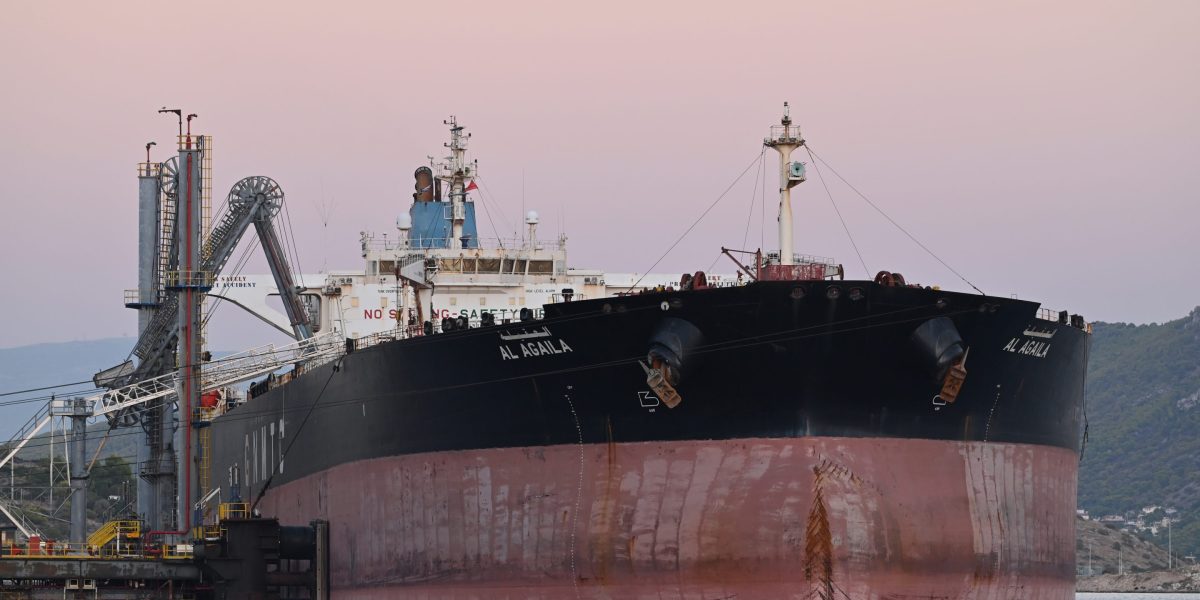
The cost for a vessel to haul oil from the Persian Gulf to China, which requires crossing the key chokepoint, reached $1.035 million per day, according to data from the Baltic Exchange this week, the first time the price tag has exceeded seven figures. By comparison, a similar large crude carrier transiting from the Persian Gulf cost about $208,000 per day, per the Platts VLCC index.
Commercial traffic through the Strait of Hormuz has continued to dwindle in the Iran war’s seventh month, but the need to export oil from the Gulf is still more urgent as constrained supply drives up costs above $100 per barrel once again.
Ioannis Papadimitriou, principal freight analyst at Vortexa, told Fortune the exorbitant shipping costs are a byproduct of both the dangers associated with crossing the chokepoint—and the increased necessity for the commodity those ships carry.
“It’s all about risk,” he said.
What’s driving up cargo shipping costs?
As attacks in the region escalate, commercial ships have remained the target of strikes, including two tankers that were hit by projectiles in the Strait of Hormuz on Friday, according to a UK navy agency.
“One of the drivers is the geopolitical risk and the risk of the assets—which is the ship in this case—which is increasing because of the tit-for-tat attacks that we saw from the U.S. and the territory attacks from Iran on ships,” Papadimitriou said.
Beyond fewer freighters being interested in crossing the channel’s east side where there are the most disruptions, the danger associated with the passage means insurance premiums for vessels have also increased, amounting to about 10% of the assets aboard, according to Papadimitriou, up from 0.5% to 1% prior to the war. Those premiums are then passed down for the charterers to pay.
This increased demand has also encouraged some market consolidation, limiting the number of players in the maritime shipping market and allowing the growing firms to hike up prices.
“These players, especially around the Middle East, they are building out their fleets. They’re buying more vessels,”Papadimitriou said, “Why? Because they want to ensure deliveries of their cargos. They want to expand into the supply chain.”
Who are the winners and losers?
These increased shipping costs will come at the expense of refineries in particular, which not only must contend with increased shipping costs—or the increased time to receive shipments if tankers are taking alternative routes to bypass the Strait of Hormuz—but also increased crude costs. As a result, shrinking margins drive up costs for consumers, as already seen in diesel prices topping $6 for the first time, 60% higher than before the Iran war.
But the increased freight costs are a boon to the shipping companies able to charge these premiums for their vessels and transportation services, making the industry the biggest winners of the Iran war so far.
Shipbrokers such as Clarksons have already hinted at how much money is in it for the maritime industry. The world’s largest shipbroker notched record earnings last quarter, including a 55% year-over-year operating profit, which CEO Andi Case attributed to increased demand from the Iran war. Shipbrokers act as third-party liaisons between shipowners and cargo-holders.
Similarly, the Breakwave Tanker Shipping ETF (BWET), an oil freight fund, is up more than 3,600% year to date, Morningstar data shows, an indication of just how confident investors are in the profitability of shipping companies at this time.
“Every time there’s more geopolitical instability that creates trading inefficiencies, it’s the shipping players that actually benefit,” Papadimitriou said. “And this time is no different.”
Disclaimer : This story is auto aggregated by a computer programme and has not been created or edited by DOWNTHENEWS. Publisher: fortune.com




