The particular joy of an S-1 is that it cracks open a business long held close.
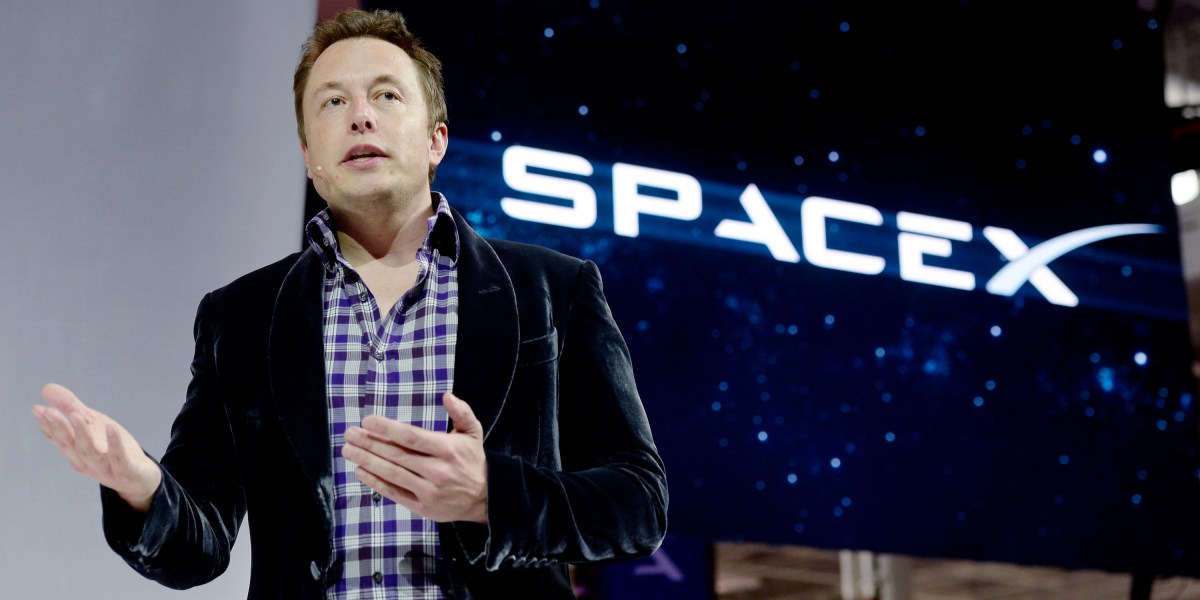
So, when SpaceX finally and officially filed to go public last week, it was momentous. At long last, there was visibility: We know the company’s 2025 revenue was $18.67 billion, that its losses are also up to nearly $5 billion, and that Elon Musk’s pay package is partially linked to establishing a minimum-one-million-citizen colony on Mars.
But, as a recent note from PitchBook’s Franco Granda pointed out, there’s also a lot we didn’t see, and that even in this wave of disclosures, crucial pieces of information didn’t come to light. Granda wrote that SpaceX’s S-1 isn’t nearly as granular as you might expect when it comes to, say, information around subscriptions, which appear in the business not only in the context of X (formerly Twitter) but Starlink.
This is especially material, as Starlink is clearly the economic engine of the business in so many ways and has stunning margins (an adjusted EBITDA margin of 63%).
“Most major subscription businesses that have gone public (T-Mobile, AT&T, Spotify, Duolingo, Peloton, Chewy) disclose retention or churn metrics, whereas SpaceX does not,” Granda writes. “With 10.3 million [Starlink] subscribers… and aggressive international expansion into lower-priced tiers, investors cannot decompose whether headline subscriber growth reflects durable cohort retention or is masking attrition behind elevated gross adds… This is among the most important metrics for modeling subscriber economics, and its absence is conspicuous.”
Granda also notes that there’s no delineation of the cost of each Falcon 9 launch and that, while clearly the reusability of SpaceX’s rockets has provided tailwinds, “the core unit economics of the most prolific launch vehicle in history remain hidden.”
And we didn’t learn as much about AI unit economics as we may have expected, given the intensity of SpaceX’s AI pitch. “AI segment revenue (excluding advertising) contributes just 6.7% of company revenue, with the balance flowing through legacy X social platform advertising,” Granda notes. “There is no way to isolate Grok subscription revenue, X subscription revenue, xAI API revenue, or growth trajectories for them.”
Similarly, though we know SpaceX has deployed $20 billion into AI infrastructure, the filing makes clear that number doesn’t reflect utilization. Hence, there’s no way to know if that $20 billion has led to enough capacity for the foreseeable future (not just for SpaceX, but for its multi-billion deal with Anthropic).
So, while we know a whole lot more than we did before, some things never change. Parts of SpaceX, as the company looks to raise as much as a mammoth $80 billion in its IPO, remain close to the chest.
See you tomorrow,
Allie Garfinkle
X: @agarfinks
Email: alexandra.garfinkle@fortune.com
Submit a deal for the Term Sheet newsletter here.
Joey Abrams curated the deals section of today’s newsletter. Subscribe here.
VENTURE CAPITAL
– Thea Energy, a Kearny, N.J.-based fusion power company, raised $100 million in Series B funding from Thomas Tull’s U.S. Innovative Technology Fund, General Innovation Capital Partners, Linse Capital, Calm Ventures, and others.
– ClearNote Health, a San Diego, Calif.-based cancer detection company, raised $52 million in Series D funding. Mattias Westman led the round and was joined by others.
– LightTable, a Denver, Colo.-based developer of AI-powered construction quality control software, raised $22 million in Series A funding. Innovation Endeavors led the round and was joined by Blackhorn Ventures, DivcoWest Ventures, 9Yards Capital, and existing investors.
– Solstice, a New York City-based AI-native marketing agency for pharma brands, raised $21 million in Series A funding. Transformation Capital led the round and was joined by Twelve Below, Virtue Ventures, and others.
– Lastwall, a Fredericton, New Brunswick-based cybersecurity company protecting against quantum computing threats, raised $11.5 million in funding. BDC Capital’s StrongNorth Fund led the round and was joined by the New Brunswick Innovation Foundation, Frostbite Capital, and existing investors.
– Olyzon, a New York City and Paris, France-based AI advertising technology company for streaming TV, raised $10 million in Series A funding. S4S Ventures led the round and was joined by Eurazeo and others.
– Protuoso Biosciences, a San Carlos, Calif.-based developer of AI-designed protein therapies, raised $9.5 million in seed funding. Taya Venture and Darwin Ventures led the round and were joined by NSG Ventures, SEEDS, and others.
– Caudal Energy, an Oxford, U.K.-based renewable energy company, raised £4.3 million ($5.8 million) in funding. Oxford Science Enterprises and Empirical Ventures led the round and were joined by Zero Carbon Capital and Creator Fund.
– Go Swag, a Glasgow, Scotland-based corporate gifts company, raised $5 million in funding. Mercia Ventures led the round and was joined by Techstart Ventures and angel investors.
PRIVATE EQUITY
– DigitalBridge Group agreed to acquire ArcLight Capital Partners, a Boston, Mass.-based infrastructure investment firm, for up to $1.05 billion.
– Align Capital Partners acquired Heritage Imaging, a Boise, Idaho-based medical imaging services company. Financial terms were not disclosed.
– Bregal Sagemount acquired a minority stake in LSPedia, a Farmington Hills, Mich.-based pharmacy supply chain software company. Financial terms were not disclosed.
– Coupa, a portfolio company of Thoma Bravo, acquired Tonkean, a Palo Alto, Calif.-based business process automation software company. Financial terms were not disclosed.
– No Dig Alliance, backed by Ambienta, acquired JS Drilling Solutions, a Sundsvall, Sweden-based underground pipe installation company. Financial terms were not disclosed.
Disclaimer : This story is auto aggregated by a computer programme and has not been created or edited by DOWNTHENEWS. Publisher: fortune.com