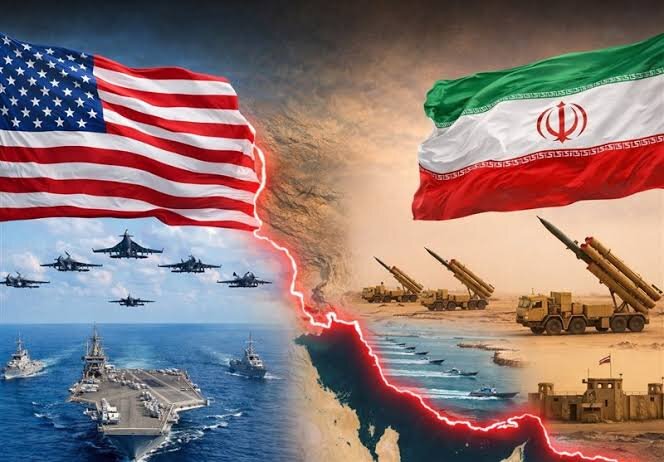
MADRID – In recent weeks, the narrative calling for “finishing the job” in Iran has resurfaced, more a propaganda slogan than a concrete strategy.
First, there is no consensus on what the objective actually is. Some talk of regime change. For others, it means destroying the ballistic missiles Iran still holds, ending its nuclear program and its support for the Axis of Resistance, seizing its enriched uranium or ending its exclusive control of the Strait of Hormuz. And for a third group, it means achieving all of these goals at once.
This narrative claims, without explaining how, that a new military operation can achieve what was not achieved in 40 days of war.
If anything has become clear since that war, it is that Iran is not going to collapse, despite the many attempts to bring it about. It has also shown that it has no intention of surrendering. And there is little reason to believe that air power alone can topple the Islamic Republic, even if the United States and Israel strike Iran’s energy infrastructure. Such attacks would almost certainly provoke a harsh Iranian retaliation against energy facilities across the region, with potentially devastating consequences for global energy markets.
Moreover, both Israel and the United States have reached the limits of their military power. Despite 40 days of intensive war, they have not achieved regime change, resolved the nuclear question or prevented Iran from rebuilding its conventional military strength, particularly its missile system.
No one denies that the attacks have had an impact on the economy and the population, but they have not eliminated or weakened Iran’s capacity for military response. The idea that a new campaign will achieve what the previous ones did not demands, at the very least, a convincing strategic explanation, and it does not seem that one is possible.
If regime change is practically ruled out, using ground troops to seize the enriched uranium also seems unviable. As several experts, including Richard Haass, have pointed out, this option would require sustaining military operations inside Iran for several weeks, with a high number of casualties that the US administration is not prepared to tolerate.
Finally, some of those who defend “finishing the job” talk of taking Kharg Island, Iran’s main oil and gas export terminal. Trump has championed it on numerous occasions, but has never dared to carry it out, because the risks are similar to those of the previous option. Joseph Votel, a former commander of US Central Command (CENTCOM), said in March that, although 800 to 1,000 troops would be needed to hold the island, logistical support would also be required, which in turn would need military protection.
The troops would be highly vulnerable, and the operation would provide no significant tactical advantage.
The main problem for those who talk of “finishing the job” is that they have not stopped to answer the fundamental questions: what strategic objectives could be achieved in a new military campaign? What would Iran’s response be? And how would the conflict end?
If those questions were answered in light of the strategic analysis set out here, the narrative would collapse under its own irrationality.
The “finishing the job” discourse is also part of that delusional and by now unmoored vision which assumes that Iran can be subdued through bombing. The short answer is: no, it cannot. Clinging to that idea is yet another sign of how far the United States is trapped in its own assumptions.
Disclaimer : This story is auto aggregated by a computer programme and has not been created or edited by DOWNTHENEWS. Publisher: tehrantimes.com