With his deep brown eyes, wide grin, and almost comically chiseled body, Jae Young Joon is the platonic ideal of a hunky male influencer. On Instagram, where he has more than 320,000 followers, he regularly posts himself trying on sheet masks at home, enjoying soju and karaoke with his friends, or posing in front of the Ferris wheel at Coachella. Occasionally, he’ll promote his music, including his recent LP Pressure Release, which features a BDSM-inspired album cover, his back muscles rippling underneath a harness and chains.
It’s an impressive online presence, and Jae’s fans eat it up: his comments are filled with fire and heart-eye emoji and people praising his music. It’s not until you go back to his profile and look at his bio, which says “Human mind. AI generated,” that you realize Jae isn’t real. His friends aren’t real. His music career isn’t real. Even his trip to Coachella isn’t real.
Jae is the brainchild of Luc Thierry, a soft-spoken Canadian man in his early thirties who has been growing Jae’s account for the past few months. Even though he discloses that Jae is AI-generated on his profile, he says most of his followers ignore it or choose to pretend otherwise.
“When I see people responding in a way that it is real, I’m hoping that they understand it’s not real and that they’re choosing to role-play or to accept that it’s a fantasy, the same way you’d form a parasocial relationship with a character from a video game or a TV show,” Thierry tells me. “And I understand this is not exactly the same, but I feel like my job as the creator behind it is to indulge in that and allow them to feel like they’re part of it.”
Thierry is part of a cadre of creators making content primarily for a gay male audience—though Thierry says he has been surprised to find that the majority of Jae’s audience is female. The creators are on a group chat together. They regularly like and comment on each other’s posts, frequently collaborating with each other to grow their audiences.
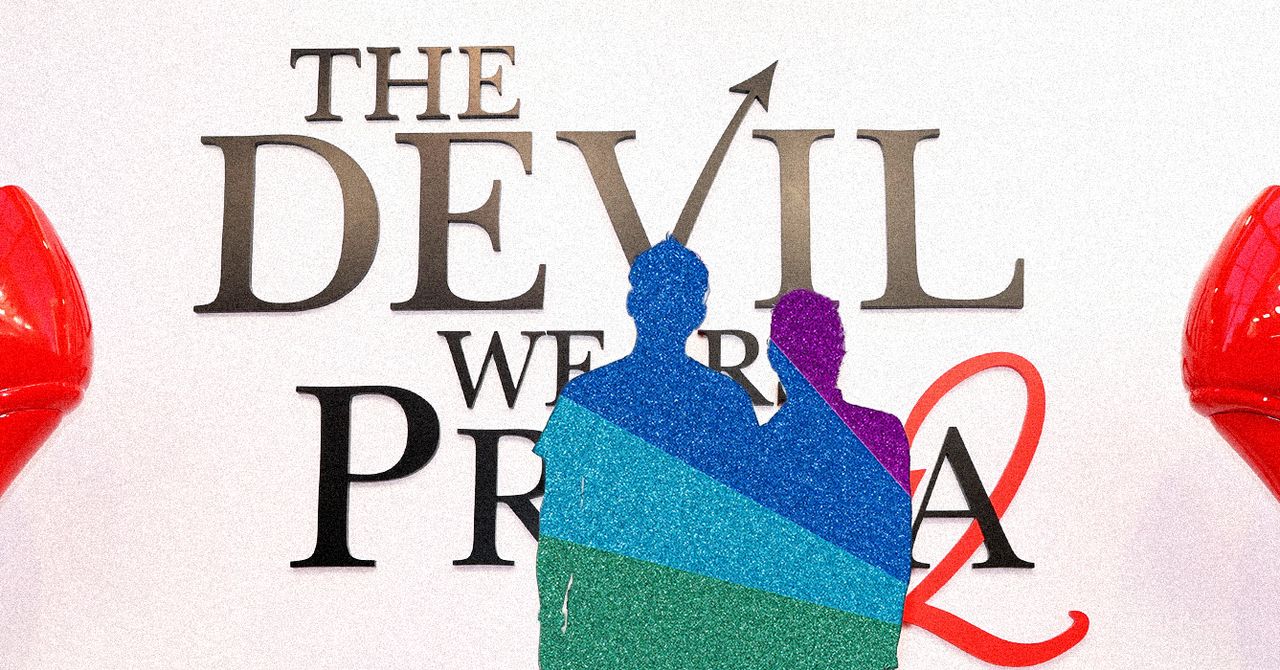
Earlier this week, two of the characters, “Santos Walker” and “Caleb Ellis,” went viral after “appearing” on the red carpet for the premiere of The Devil Wears Prada 2. “I’m gagging. Scrolling through Instagram and I came across a whole group of AI models/accounts,” the writer and editor Mikelle Street wrote.
Santos and Caleb’s red carpet appearance sparked backlash online, with some assuming that the post was sponcon for 20th Century Studios, the film’s distributor. This wasn’t actually the case; WIRED has confirmed that the creator of the “Santos” account made the image without the studio’s involvement, intending the post to serve as the online equivalent of crashing the red carpet. The creator even crafted an elaborate narrative for the post, imagining a rich movie producer had ushered Santos and Caleb to Hollywood on a private jet. (20th Century Studios did not respond to a request for comment.)
Even though the post was not sponcon, it triggered a discussion online about whether AI-generated influencers like Santos and his ilk were deceiving their audiences or setting a dangerous precedent for the future of branded content.
“We currently have human influencers,” one person wrote on X. “So, the next step is CREATING fake, 100% controllable influencers FROM SCRATCH for the sole purpose of marketing films, shows, products etc.?” Others mocked Santos’ and Caleb’s followers and those ogling their comically bulky frames, sparking discourse about how AI models propagate unrealistic body standards in the gay community.
But to hear Thierry and his fellow creators tell it, most people misunderstand the work they’re doing. They insist they’re not scamming anyone, as they’re not actually making much, if any, money, as brands are still extremely wary of working with AI-generated influencers. (One “campaign,” in which “Santos” tagged the provocative swimwear brand Charlie by MZ, drew so much backlash that the brand removed the post from its page.) And even though their burly, flawlessly proportioned avatars undoubtedly promote outrageous ideas about the ideal gay male body, they’re also not particularly shy about the fact that they are AI. Santos’ bio, like Jae’s, discloses the use of generative AI, even if their followers don’t necessarily notice or care.
Luc Thierry, who started out as a YouTuber creating K-pop fan content, says he began creating AI-generated profiles in the summer of 2024, largely because he felt “burnt out” creating content under his own name. “I just felt it was more satisfying and a little easier to be able to create content without having to put your face on it,” he says. “Jae” was just one of many AI-generated avatars he invented, a drop-dead gorgeous influencer who combined the sticky sweetness of K-pop fandom with the edginess of a gay male thirst-trap creator. “Until then, I’d primarily focused on female influencers,” Thierry says. “But I wanted to feel maybe a little bit more authentic in what I was creating.”
“Jae” had only 700 followers when his account blew up last February, thanks to a Reel of him dancing shirtless to a Portuguese pop song which got almost 20 million views. “It kind of forced me to put all my energy into him to ride that momentum,” Thierry says.
He is now a member of a number of group chats with other male model creators, who are both straight and gay, collaborating with them on posts (one of his most popular posts features him and “Santos” in tight briefs, gazing at a waterfall) and tagging them in his Stories.
The primary group chat was started by the creator behind “Romeo DeSouza,” a Dutch-Brazilian male model with 56,000 followers (who is also identified as an AI creation in his bio). He started the group chat so his fellow creators would have the support of real humans, despite the artificial nature of their creations. The men in the chat almost exclusively call each other by their AI avatars’ names.
“It’s kind of a safe space for us to deal with the backlash, because there aren’t a ton of people doing this yet,” Thierry says. “It’s not like I can just call up my mom and say, ‘Hey, someone’s bullying my AI influencer.’”
From the start, Thierry says, he was extremely “transparent” about the fact that Jae was AI-generated. Still, he knows the lines blur easily for many of his followers. He frequently receives heartfelt messages from lovelorn fans who clearly haven’t clocked that Jae is not real. “That’s where I have the biggest moral dilemma,” he says. He concedes he finds it difficult to balance between transparency and not disturbing the immersive world he has created for his audience. “It’s like I’m creating this TV show for people to tune into on social media,” he says. “No one breaks the fourth wall and says ‘this is a TV show.’ That ruins the whole point of a TV show.”
And it’s a TV show that people are undoubtedly watching. Though many will steer away from Santos’, Caleb’s, and Jae’s obviously digitized content, others are clearly deeply invested in it. Santos and Caleb may have gotten backlash from their viral red carpet moment, but they were also undoubtedly a harbinger for what’s to come: anyone who has been following the AI space isn’t naive enough to think that computer-generated influencers promoting brands isn’t just around the corner. (In fact, it’s already happening: The AI-generated influencer Lil Miquela, who has more than 2 million followers, has landed brand deals for Prada and Samsung.)
Thierry, for his part, is going all in on Jae. He’s launching an AI modeling “agency,” Born2BeAI, and he’s also developed a community specifically for gay AI male models, called Virtuomo. He hasn’t made much money off of his account—just a few thousand dollars, mostly from Spotify and revenue from the subscription-based AI creator website Fanvue. But he anticipates the market could soon become friendlier to influencers like Jae, provided attitudes toward AI start changing.
“I think that there’s a lot of backlash from influencers worried we’re going to take their jobs and that AI promotes unrealistic beauty standards, which I understand,” Thierry says. “But my personal view is that a lot of what we see on social media is not a realistic representation of who we are as humans to start with. It’s often a polished version of who we are. If you’re a real person that’s presenting an unrealistic version of your life, in some ways that’s a little more irresponsible to me than being upfront about me being an AI character and saying, ‘This is not real, this is for your entertainment.’”
They’ve also developed something of a sense of humor about it. On April 23, Santos’ creator posted a GRWM montage of Santos and Caleb prepping for their red carpet appearance. The footage shows the two dancing in front of a mirror and goofing off in their hotel room, their fictional elderly Hollywood producer benefactor grinning in the background. “Breaking the internet,” the video was captioned. “Why you mad?”
Disclaimer : This story is auto aggregated by a computer programme and has not been created or edited by DOWNTHENEWS. Publisher: wired.com