Whenever there’s a small grey area in Formula 1’s regulations, it is guaranteed that at least one engineer will attempt to exploit that loophole.
This year’s Monaco Grand Prix demonstrated this perfectly: when it became apparent that straightline mode would not be used and the actuators could be removed for the rear wing, it opened up a small window for the teams to fill with downforce-generating devices. It was somewhat amusing that a handful of teams all embarked upon the same solution.
Mercedes, McLaren, Red Bull, and Williams all produced bespoke new winglets for this area of the car, with a series of cascade winglets all tasked with, a, generating more load, and, b, encouraging the traditional rear wing elements to also work harder.
Meanwhile, the likes of Haas, Alpine, and Racing Bulls all tinkered with their existing geometries and slotted in winglets where they could, while Audi and Cadillac added smaller tabs to the uppermost element of the rear wing to implement a solution that Ferrari had introduced previously.
Red Bull went one step further, adding triangular extensions to the rear wing Gurney flap to increase the rear load generated.
These devices were introduced to balance the car. Drivers want to add more front-end load to help the car turn into the lower-speed corners, but need to have the load at the rear to ensure the back of the car doesn’t step out.
Although it hasn’t been as prevalent in recent years, F1 teams are no strangers to exploiting loopholes to add more quick-and-dirty downforce to the cars for Monaco.
Here’s a look at some of the innovations that were rarely seen beyond the walls of Monte-Carlo.
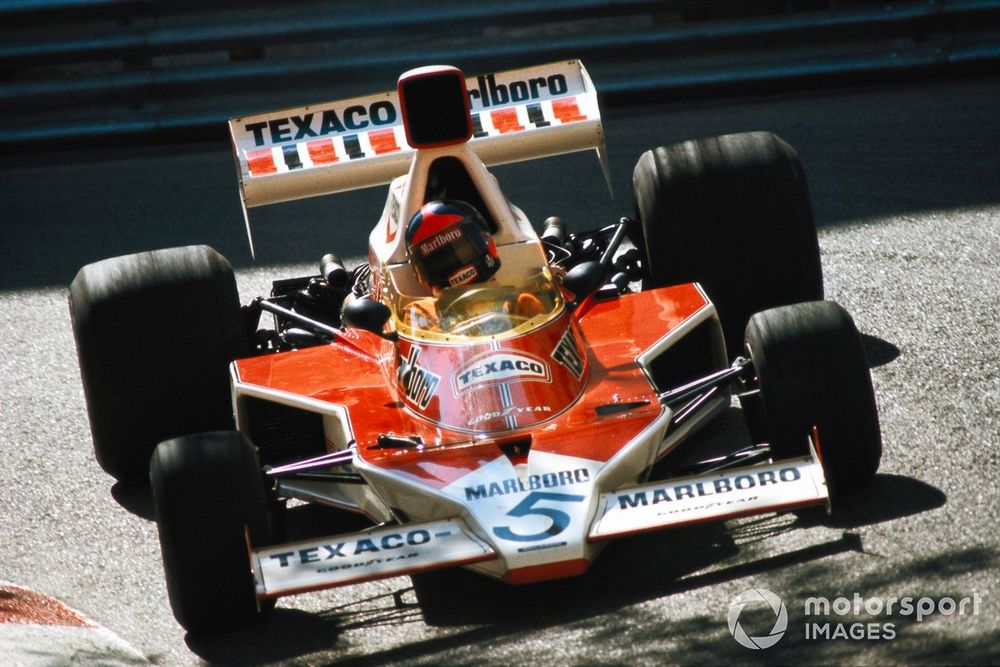
McLaren 1974
Emerson Fittipaldi, McLaren M23 Ford
Photo by: Rainer W. Schlegelmilch / Motorsport Images
At the 1974 Monaco GP, McLaren opted to run a narrower nose on its car, which had its first outing at the earlier Spanish GP. Emerson Fittipaldi’s M23 was fitted with a narrowed ‘winklepicker’ section, which allowed for wider wings.
There were also two narrow upstands that could be seen stood proud of the endplates. These were not for performance reasons but were instead put there to help act as a visual cue – so the drivers could tell easier where the edges of the front wing were.
Ferrari 1979

Gilles Villeneuve, Ferrari 312T4
Photo by: Ercole Colombo
Ferrari arrived at the 1979 Monaco GP with a specially commissioned pair of front and rear wings, both designed to improve the car’s agility around the streets of the Principality.
The wings were mounted closer to the main bodywork for two reasons. First of all, this allowed a greater depth to the rear wing so it could still comply with the maximum dimensions of the rules – but also less bodywork overhang meant there was a smaller change of collisions with barriers in the event of the drivers getting it wrong.
Jordan 1996
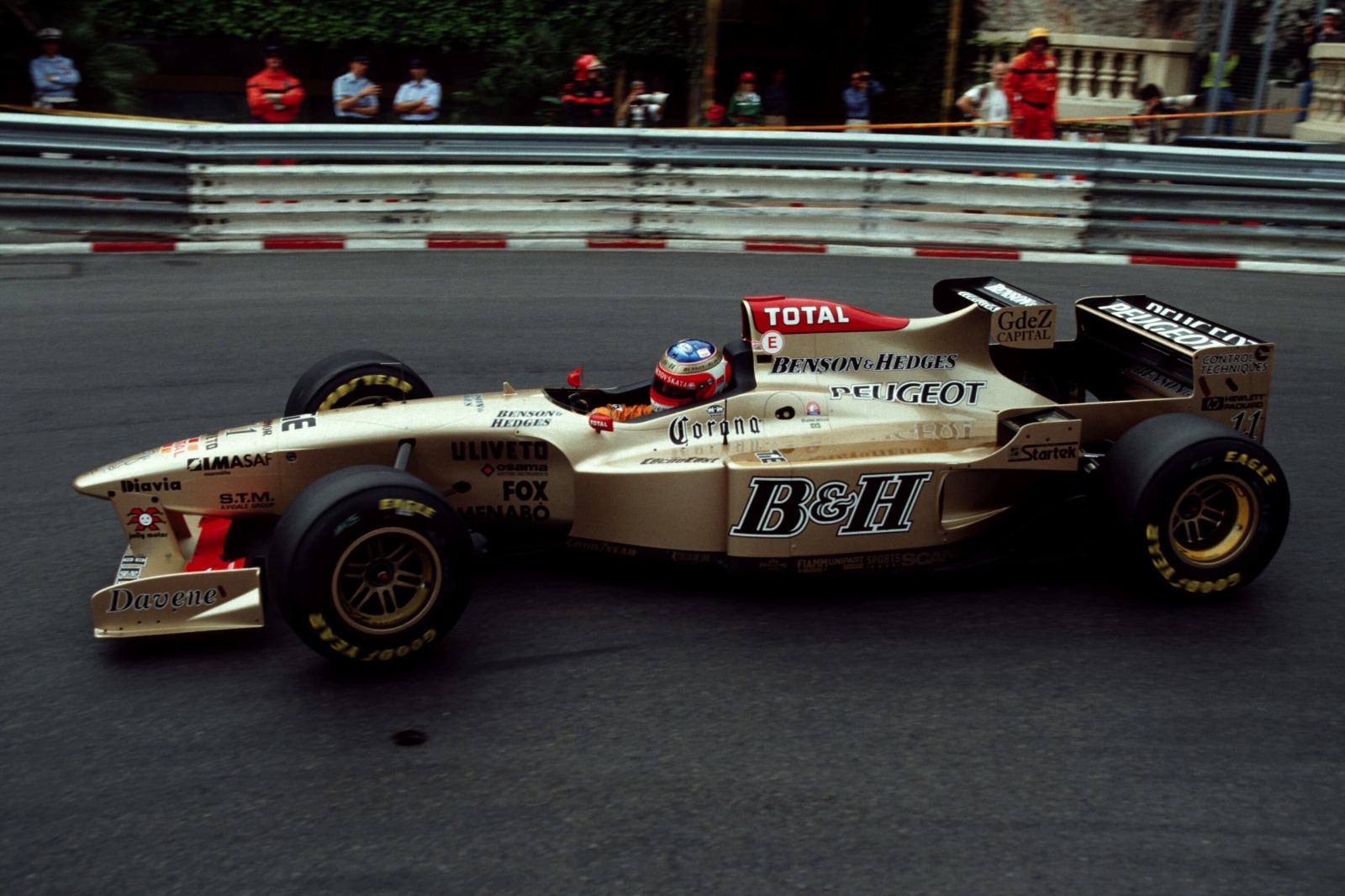
Rubens Barrichello, Jordan, 1996 Monaco
Photo by: Ercole Colombo / Studio Colombo/Getty Images
In 1996 Jordan followed in McLaren’s footsteps when it introduced its version of the ‘mid-wing’ for Monaco.
Mounted astride the engine cover, this imposing winglet took advantage of the wording in the regulations to produce a reasonable amount of downforce in its own right.
Tyrrell 1997

Jos Verstappen, Tyrrell 025 Ford
Photo by: Motorsport Images
When you think of crazy winglets that have appeared at Monaco, Tyrrell’s ‘X-Wings’ have to be towards the top of that list.
The oft cash-strapped outfit had found numerous innovative ways of increasing downforce down the years, but the X-Wings took things to an all new level. Mounted high up away from the sidepods, they helped to produce downforce in their own right.
The X-Wings appeared at several races other than Monaco and even started to appear on many of the other cars up and down the grid, before being banned by the FIA on safety grounds.
Meanwhile, the ‘025’ featured other novel features, including their single central front wing pillar, nose winglets and sidepod shovels and winglets.
Ferrari 1999

Michael Schumacher, Ferrari
Photo by: Ercole Colombo
Ferrari’s F399, designed by Rory Byrne, helped the team take a 1-2 at the Monaco GP as it deployed a high downforce rear wing.
The wing featured many more flaps than ordinarily would be the case, all of which were angled aggressively too, sacrificing straight line speed for downforce because efficiency is not so important in Monaco.
Williams 2000
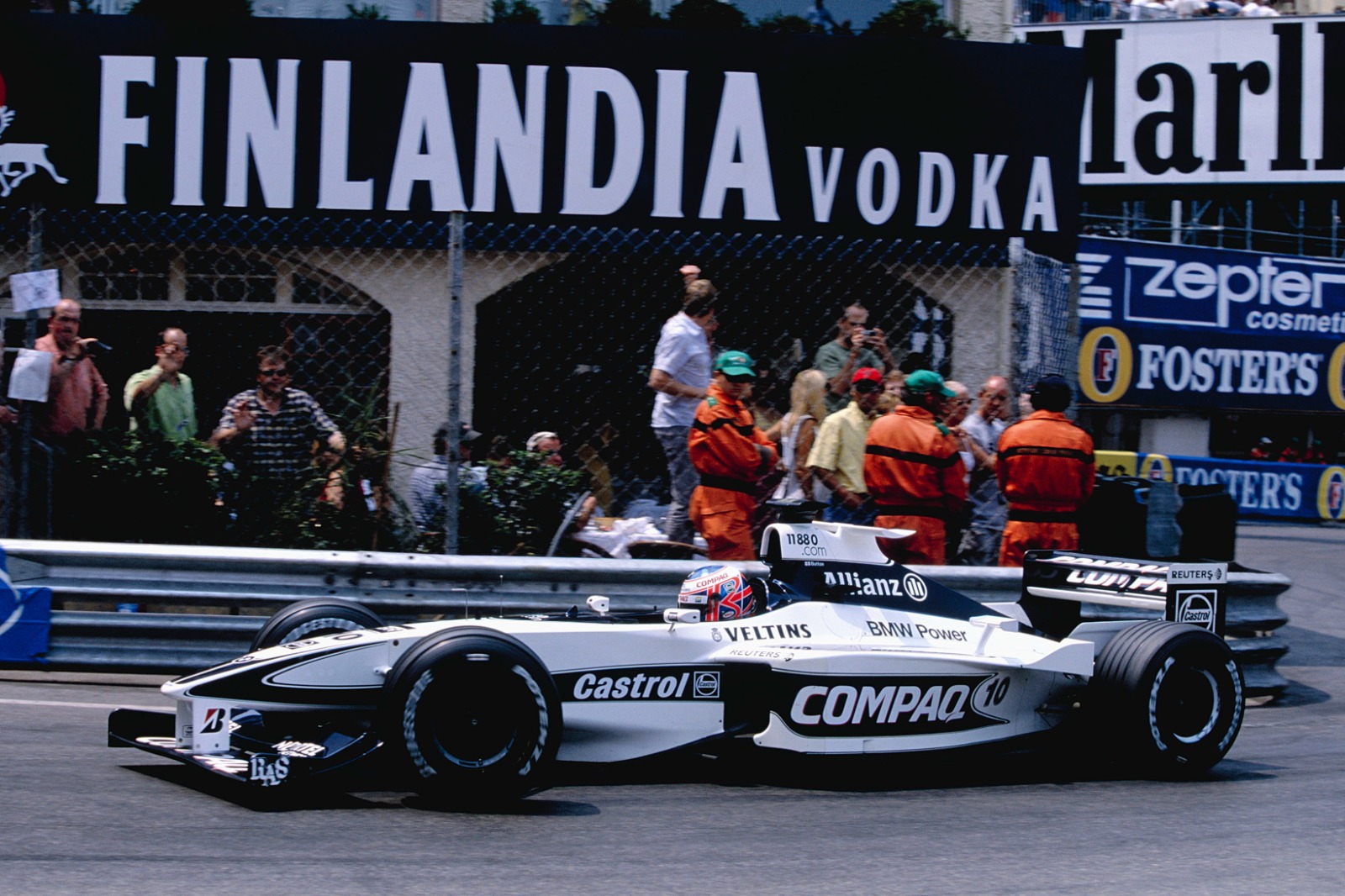
Jenson Button, Williams
Photo by: Lorenzo Bellanca/LAT Images via Getty
Williams employed an airbox winglet at the Monaco GP in 2000 as it sought to improve the performance of its rear wing.
The rather wide winglet, similar in design to the one used by Jordan in 1999, undoubtedly created some downforce in its own right but more importantly cleared the path for airflow heading for the rear wing.
Looking for additional balance, the team also installed a winglet atop the sidepod for the weekend.
Arrows and Jordan 2001
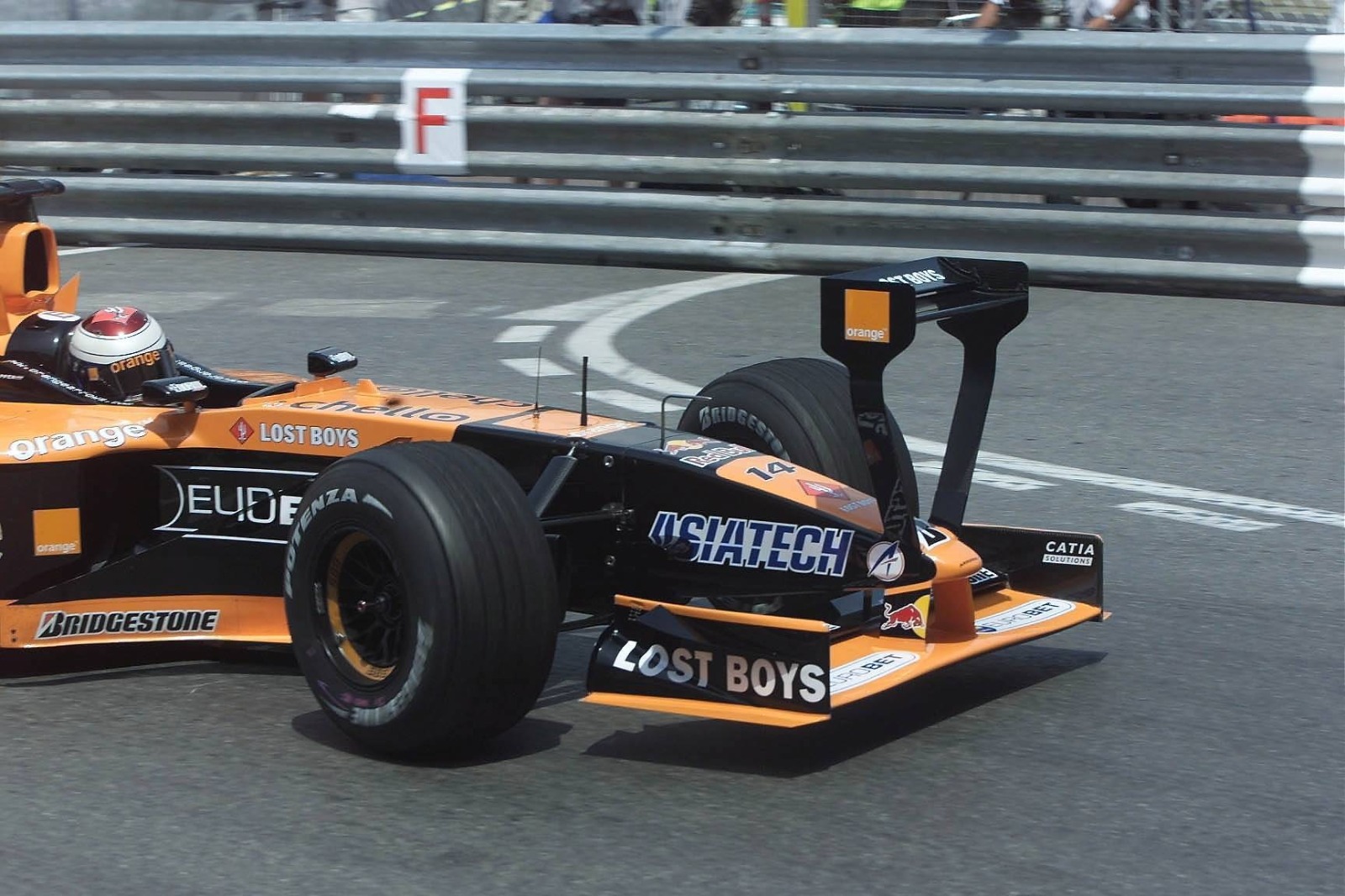
Jos Verstappen, Arrows
Photo by: Sutton Images via Getty
Arrows and Jordan both rocked up to F1’s ‘crown jewel’ with some rather ungainly winglets in 2001.
Both teams used grey areas within the regulations to mount the appendages from the nose and chassis respectively.
The unorthodox winglets, which bring to mind the crazy high wings used in the 1960s, were immediately put under scrutiny by the FIA and banned before the teams could even qualify with them.
We want your opinion!
What would you like to see on Motorsport.com?
– The Motorsport.com Team
Disclaimer : This story is auto aggregated by a computer programme and has not been created or edited by DOWNTHENEWS. Publisher: motorsport.com