The new, bipartisan legislation to expedite the construction of energy projects—and power the AI boom—is creating strange bedfellows and opponents. In a rare instance, the fossil fuel industry is united with renewable energy, while some environmental groups are pitted against the green power sector.
There’s arguably more momentum than ever for the seemingly boring topic of infrastructure permitting reform, but it could be the most important decision Congress makes from now until January for the future of the tech boom, the environment, and energy affordability.
Power demand is rising at a nearly unprecedented scale—largely, but not entirely, driven by the data center construction spree—and electricity and utility prices are spiking for a myriad of reasons, including rising demand and antiquated infrastructure.
In short, the legislation accelerates permitting timelines for everything from solar farms and power lines to oil and gas pipelines, makes it harder for presidential administrations to yank permits, narrows environmental reviews, and limits litigation outside of federal courts.
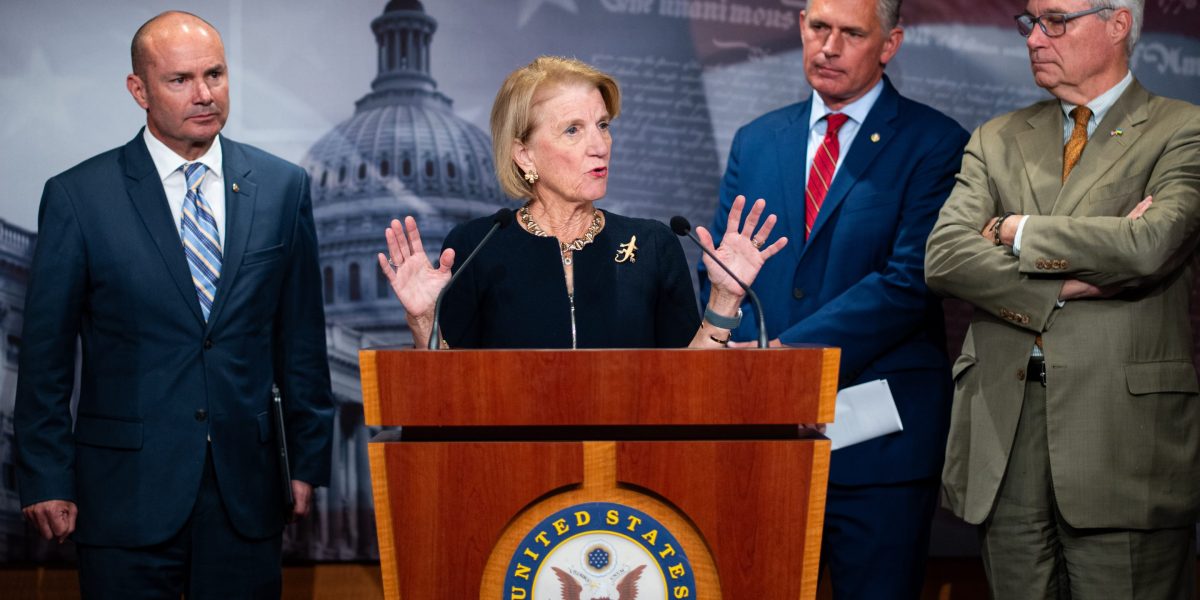
The new Bipartisan American Affordability and Jobs Act (BAAJA—cue the Mountain Dew Baja Blast jokes) is coauthored by typical enemies Sens. Mike Lee, R-Utah, and Sheldon Whitehouse, D-R.I., as well as Sens. Martin Heinrich, D-N.M., and Shelley Moore Capito, R-W.V., dubbing themselves the “Four Corners.” Or, to put it another way, it has the unusual support of both Whitehouse and the Trump White House.
For Democrats, it’s a win for clean energy, including all the wind and solar projects held hostage by President Donald Trump’s administration, while they remain nervous that the legislation is also too friendly to oil and gas and potential environmental risks. For Republicans, well, there’s not much downside at all, except for those that truly despise green power or, perhaps wisely, fear increasing federal authority over local permitting matters.
Democrats must decide whether to take the deal in front of them or, possibly with a congressional majority next year, craft a version more to their liking that may be met with staunch GOP opposition and, thus, gridlock purgatory yet again. Waiting until next year would still require 60 Senate votes and a too-liberal version could be vetoed by Trump.
Of course, there’s limited time to get all of this done, and votes are unlikely to begin until after the Nov. 3 midterm elections. Despite the optimism and current momentum from supporters, plenty of things could still go sideways.
The legislation takes a balanced and unprecedented approach to bundling a bevy of streamlining proposals into a single bill, said Ben Norris, senior vice president of regulatory affairs for the Solar Energy Industries Association.
“The amount of new clean energy, new transmission capacity that’s going to be unlocked under this bipartisan-negotiated language is well worth the tradeoffs that are made in other places,” he told Fortune. “We’re always willing to talk to any stakeholder, whether it’s the environmentalists, whether it’s the oil and gas industry.
“This is one of the best products, if not the best product, that we’re going to see, and we want to be part of the coalition that gets it across the finish line,” Norris added. “The bill goes a long way to getting lots of different sources of new electricity online, which is going to put downward pressure on prices.”
Pros and cons
One of the biggest beneficiaries of the bill would be the growth of massive electric transmission systems—essentially, power lines—that are exceedingly hard to get built through the lands of property owners.
Such projects provide the biggest benefits to renewables. For instance, building transmission networks from windy but rural areas such as Kansas to bigger population centers in other states would expand the reach of wind energy.
Likewise, renewable energy in Texas didn’t take off until after the Legislature helped authorize the construction of transmission lines hundreds of miles from the windy western parts of the state to major cities such as Houston and Dallas. It’s a little-known fact that Texas now leads the country in both utility-scale wind and solar power, recently taking the solar crown from California.
Many environmental groups are torn on the topic but still lean toward opposing the legislation.
Earthjustice Action President Abigail Dillen said the bill’s tradeoffs are too large. While it does represent a “genuine policy breakthrough on transmission and modernization of our electric grid,” it also “eviscerates bedrock protections for water, wetlands, endangered species, and the most basic expectations for transparency and responsible environmental analysis.”
“A deal that fast-tracks more gas, closes courthouse doors, and dismantles our laws to further embolden a lawless administration is not a compromise we can afford now,” she added, arguing the bill would lead to more fossil fuel pipelines, gas-fired power plants, massive data center complexes, and greater overall pollution and sickness.
The argument also is that many Democrats are only supporting this bill because Trump has held clean energy hostage by illegally yanking permits for offshore wind, and intentionally stalling permitting for onshore wind and solar. Trump and Congress also canceled federal tax credits for most renewable energy projects.
The Sierra Club noted that context and argued the legislation weakens environmental protections too much in the National Environmental Policy Act, Endangered Species Act, and the Clean Water Act, including the ability of states to use state courts to protect their own waterways.
On the other hand, the fossil fuel industry contends the legislation would prevent states and environmental groups from weaponizing courts to stop projects for reasons beyond what is written in federal statutes.
Arguably the biggest industry evangelist of natural gas is Toby Rice, the CEO of leading gas producer and Pennsylvania-based EQT.
The legislation will help bring utility and inflationary prices down while creating more certainty for companies building infrastructure, he said.
“If you think it’s hard to get a pipeline built, try building a transmission line,” Rice told Fortune. “This will give us a start, and this will at least get us back to having the confidence to get things built in this country.”
Rice would know about the pipeline part. EQT’s 303-mile, Mountain Valley Pipeline took a decade and a literal act of Congress to get built after many stops and starts in courtrooms. But he also envisions building simpler projects that expand existing pipelines or follow the same routes—projects he said shouldn’t be challenging but, in reality, can take several years to complete.
“This is going to benefit all forms of energy, and I think one of the key principles that we’ve been advocating for has been a tech-neutral approach,” Rice said. “Let’s just enable all forms of energy to get built and let the market force determine what’s the best.”
The country needs more renewables and natural gas, he said. Enabling next-generation geothermal and nuclear projects is great too. If those projects compete with natural gas, he said, no problem. The gas can always be liquefied and exported around the world to an energy-needy globe.
The legislation would protect more renewable energy and transmission projects under the Trump administration, but it also likely would have prevented the permitting pause on liquefied natural gas (LNG) export projects the Biden administration implemented in 2024.
“Where we’ve been in the past is political forces overwhelmed market forces,” Rice sad. “That comes in the form of shutting down energy projects, whether that’s pipelines, wind facilities, solar farms, mines, transmission lines.
“At the end of the day, the government should govern, and part of that is letting market forces work.”
Disclaimer : This story is auto aggregated by a computer programme and has not been created or edited by DOWNTHENEWS. Publisher: fortune.com