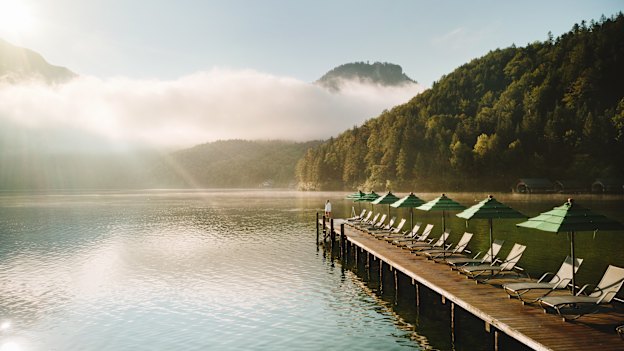
Looking for more than a beach break? Dive into the new wave of purposeful travel, from high-tech brain spas and psychedelic retreats to hands-on wildlife conservation and unplugged, no-itinerary adventures. These are the transformative trips set to shape how Australians holiday in 2027.
Go beyond the spa
COGNITIVE HEALTH
We’re living longer, but how can you improve those bonus years? Cognitive health focuses on “health span” rather than lifespan and there are programs on offer at various health resorts.
Kamalaya Wellness Sanctuary’s Brain Enhancement program in Thailand blends craniosacral therapy with neurotech. Queensland’s Gwinganna Retreat & Spa hosts a four-night Cognitive Health + Longevity retreat from January 24.
But nothing compares to European medical spas. Italy boasts two standouts: Villa Eden Longevity Medical Centre in South Tyrol and Palazzo Fiuggi Wellness Medical Spa near Rome with a female-focused longevity program.
The global favourites are the 10-day, Dr Harry Konig led ReLIFE Longevity Protocol launching at Germany’s Brenners Park-Hotel & Spa involving experimental regenerative stem cell therapy. And the OG, the Clinique La Prairie Longevity Clinic near Geneva with cognitive performance training, brain health diagnostics and on-site specialists. Costing €44,600 ($71,600) and CHF50,250 ($87,200) respectively, a week at Austrian longevity specialist Mayrlife Medical Health Resort in Altaussee at €5200 ($8350) seems a no-brainer bargain.
– Flip Byrnes
Sign up for the Traveller Deals newsletter
Get exclusive travel deals delivered straight to your inbox. Sign up now.
PSYCHEDELIC RETREATS
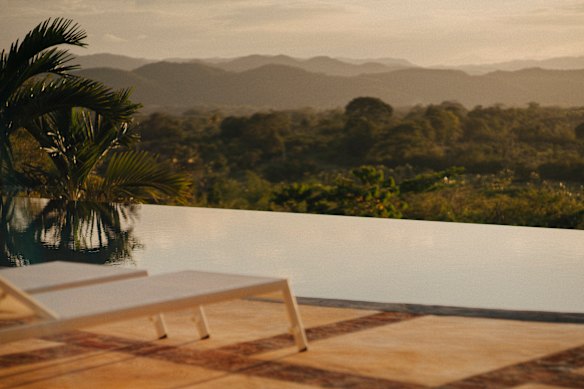
Scientists have suspected for decades that psilocybin, the active compound in magic mushrooms, could be used to treat depression, anxiety and addiction. Less explored is its emergence as a tool for what best-selling author Michael Pollan calls the “betterment of well people”.
You can now find centres offering legal guided psilocybin retreats in Europe, Jamaica, Central America and several US states. Some people sign up hoping to fix a problem; others are looking for spiritual connection or a renewed sense of purpose.
Beckley Retreats is widely considered the gold standard for this kind of program. Co-founded by former US Army Special Operations captain Neil Markey and the late Amanda Feilding of the Beckley Foundation, an organisation that researches psychedelic science, it has hosted more than 1000 participants in its retreat centres in Jamaica and the Netherlands.
More than 70 per cent are high-performing business leaders, entrepreneurs and creatives who arrive seeking greater purpose, connection and creativity. According to the organisation, 88 per cent describe the experience as one of the most meaningful of their lives.
Research indicates that “set” and “setting” – the mindset with which you approach the program and the environment in which it takes place – are crucial to its effectiveness. Beckley’s retreats operate within an 11-week “container”, beginning with four weeks of preparation (self-inquiry, meditation and intention setting) followed by a five- or six-day group retreat with experienced facilitators in a peaceful setting. Finally, there’s a six-week integration period, where participants learn to incorporate insights from the retreat into everyday life.
If you’re looking for a quick-fix life hack, this isn’t the best option. But if you’re ready to dig a little deeper, it’s a chance to tap into a natural source of ancient wisdom that could offer life-changing insights. See beckleyretreats.com
– Rob McFarland
MEET THE MODERN GURU
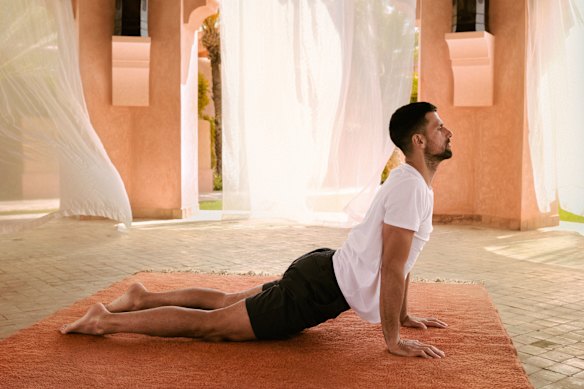
Relaxation is out, resetting your life is in and as part of the pivot, retreats are increasingly calling in the gurus. No, not holy men in loincloths with long beards. These modern gurus, also described as mentors, come from diverse backgrounds – anything from neuroscience to ballet. Even champion tennis players are getting in on the action, with Novak Djokovic leading a Stillness and Strength retreat at Morocco’s Amanjena.
Most mentors are more low-key, in-house staff who offer high-level insights during one-on-one sessions. Their wisdom often draws on unexpected backgrounds. Sign up for a Conscious Leadership retreat at Euphoria in Greece, for instance, and your mentors include Mary Vandorou, who was a ballet dancer before she became a spiritual mentor, and ex-investment banker (and Euphoria founder) Marina Efraimoglou.
At Hawaii’s Sensei Lanai, which is owned by Oracle co-founder Larry Ellison and is predictably popular with high-flying tech types, you might sit down for a session with former pro footballer Edward Williams or Jim Cahill, who has a background in neuroscience and biotech.
If you want old-fashioned spiritual insight, book an appointment with one of the mentors at Kamalaya Koh Samui, all of whom are former Buddhist monks – although their practical, contemporary approach to problem-solving may take you by surprise.
– Ute Junker
DENTAL TOURISM
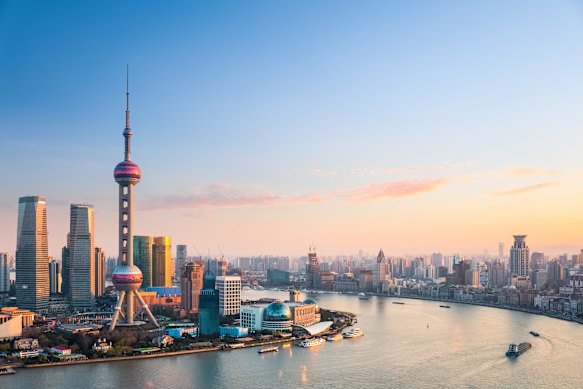
Facelifts in Bangkok, skincare in South Korea, hair transplants in Turkey and now China is the new go-to for major dental work, at well below Australian prices. Add cheap, direct flights, low crime rates and 30-day visa-free stays and international demand for dental treatment is slowly, quietly growing.
China specialist travel agent Michelle Yin says that unlike Australia’s small, private dental clinics, it’s the big public hospitals in Beijing, Shanghai and Shenzhen that specialise in high-tech dental work, at much lower prices and with shorter wait times than Australia.
A lack of English is China’s biggest barrier to pipping Thailand and Turkey, Yin says, but with government-backed pilot programs for international patients and English-speaking international departments in the biggest cities, China is keen to join the medi-tourism trend.
Yin adds that it can be harder to negotiate appointments at the big public hospitals, and recommends an intermediary agent to make arrangements.
“Get an Australian check-up first, ensure you’ve got the right insurance and do your due diligence on the hospital,” she advises. “Make sure you have your medical itinerary, translators, local or digital follow-ups and after-care sorted before you travel.” See yinfinite.com.au; travelchina.org.cn; smartraveller.gov.au
– Belinda Jackson
Be part of the travelling sisterhood … brotherhood
THE WOMEN’S TRIP
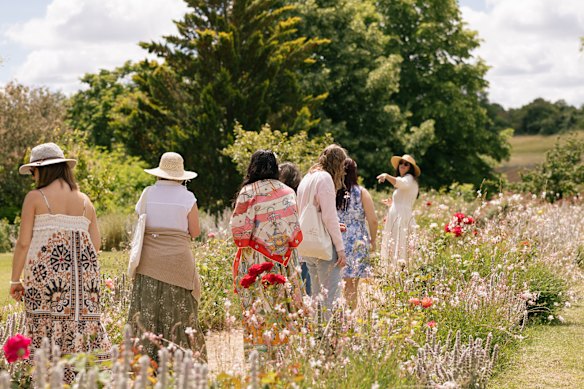
More than 64 per cent of travellers are women and Google searches for “solo female travel” have increased by 1000 per cent in the last decade. The industry is responding with a wave of accommodation, experiences and amenities. Think “summer camps” such as Camp Chateau, where grown women converge in French castles and spend their days painting, beading and horse-riding, and female-only river cruises. Then there’s Scout Escapes, which hosts trips across Greece, the Dolomites, Chile and Peru for women who travel solo but don’t want to be alone, and Atlas Adventures, whose itineraries go to Lapland, Mexico City and South Africa to name a few.
– Kathryn Madden
A MID-LIFE RESET
When is a break more than just a holiday? The middle-aged gap year (or “mum gap year”) is a chance to catch up on the things you missed as life got in the way. But if you’re not part of the long-service leave or sabbatical set, a short “life reset” retreat is another way to combine a rest with a rethink. Kids left the nest? Hormonal shifts making you see life differently? Going through a divorce? Wondering where life will take you next? More than just offering wellness and woo-woo, these experiences offer a pathway to a new you, or at least the space to contemplate it. Whether it’s a Bali business retreat to get an idea up and running, a Wise Women Retreat where the focus is on food, fitness and practical advice, or a women-only slow travel experience in Italy with Time For Me Adventures to tackle the “what’s next?” phase of life, there’s a women-focused life enhancing retreat for every phase.
– Justine Costigan
MEN-ONLY RETREATS ARE ON THE RISE, TOO
Women-only tours have grown in popularity and now it’s time for the fellas. Where women-only itineraries are designed to encourage female travellers to explore independently, sometimes going behind the scenes in places where men cannot, men’s retreats are emerging as more introspective experiences. These aren’t boozy trips with the lads, but trips focused on creating space for men to connect without fear or judgment. See it as an antidote to feelings of isolation and the negative aspects of the “manosphere”.
Research from Booking.com across 33 countries found 65 per cent of Gen Z men were planning wellness-centred travel, and nearly half of all respondents said they would actively encourage the man in their life to book a men-only wellness trip. These retreats range from breathwork and biometric tracking at luxury Bali sanctuaries to foraging with Maori guides on New Zealand’s Coromandel Peninsula and sitting with Indigenous elders in the Australian outback.
– Justin Meneguzzi
Get your hands dirty
INTO THE WILD
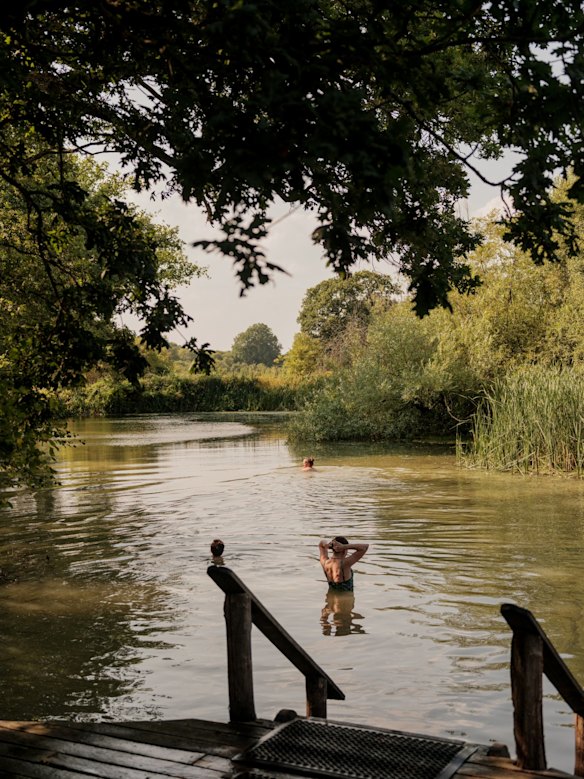
A wildlife safari 30 minutes from London’s Gatwick Airport? Strange but true, Knepp Estate, a trailblazing rewilding project that has transformed a 1400-hectare arable and dairy farm in West Sussex into a dynamic scrubland of wild meadows, woods and wetlands. Now filled with roaming herds of cattle, ponies, pigs and deer, the estate has welcomed back some of Britain’s rarest creatures, including nightingales, turtle-doves and purple emperor butterflies.
During a three-hour LandCruiser safari, guests learn the principles of re-wilding, visiting former arable fields that have become thriving ecosystems. They also meet the “agents of rewilding” – the Exmoor ponies, English longhorn cattle and Tamworth pigs that act as natural land managers.
Safaris are just one element of an innovative strategy that has enabled Knepp to transition from a failing farm to an award-winning tourism enterprise. Other offerings include tours centred on specific species, a wide range of accommodation (including treehouses, yurts and shepherd’s huts) and a busy calendar of events, talks and workshops. There’s even a Michelin-listed restaurant housed in an atmospheric 18th-century barn.
The project was detailed in the best-selling book Wilding, which in turn spawned an eponymous film that was the UK’s highest-grossing documentary of 2024. Knepp has inspired numerous other re-wilding projects around the country. A line on its website sums up the approach: “Being patient, and giving nature the benefit of the doubt, can reap huge rewards.” See knepp.co.uk
– Rob McFarland
HANDS-ON WILDLIFE TOURISM
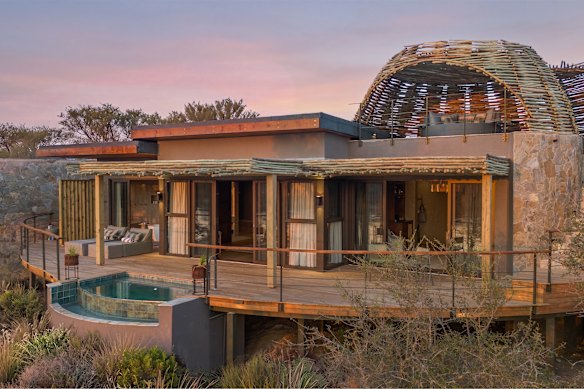
It’s not all about passive observation. New behind-the-scenes, hands-on encounters encourage travellers to participate, first-hand, in wildlife conservation. At Tambarare Camp, an A&K Sanctuary on Kenya’s Laikipia Plateau, the dogs are on duty. Safari guests can join a unit of bloodhounds and springer spaniels as they track poachers within the 36,422-hectare Ol Pejeta Conservancy. In South Africa, wildlife vets take guests out to collar spotted hyenas and wild dogs, sedate and microchip or dehorn endangered rhinos.
Regenerative wildlife tourism is having a moment, too. Sabi Sabi Collection’s luxury new Sandringham Private Game Reserve within South Africa’s Greater Kruger National Park is the result of a six-year project to rehabilitate a former hunting reserve into a 5000-hectare protected wilderness area. Meanwhile, in central India, the Panna Tiger Reserve, which was declared a UNESCO Biosphere in 2020, is now home to more than 80 Royal Bengal tigers after illegal poaching wiped out the native tiger population in 2009. And in the Indian territory of Ladakh in the Himalayas, a handful of operators offer multiday snow leopard tracking holidays during winter when the heavy snow forces the cats and their dinner into lower valleys. &Beyond offers an 11-day Snow Leopard Expedition in Ladakh which includes six nights at Rumbak Wildlife Lodge. From $10,729 a person. See andbeyond.com
– Jenny Hewett
THE EVOLUTION OF FARM STAYS
Agritourism’s next evolution will have us doing more than admiring the view. As concerns grow around climate change, food security and increasing disconnection from the natural world, travellers are being invited to roll up their sleeves, get their hands dirty and help care for the land they visit. Think harvesting vegetables, saving seeds, making compost, learning to read the health of soil, or helping restore degraded farmland. The appeal isn’t just learning to grow things, but discovering how to help damaged landscapes flourish again.
On Portugal’s Azores, VIVA Quinta is transforming a storm-damaged passionfruit monoculture into a biodiverse agroforestry system, inviting guests to help design, plant and nurture its next chapter. In the foothills of South Africa’s Franschhoek wine region, Sterrekopje Healing Farm offers four-day gardening retreats on its 50-hectare farm, introducing guests to regenerative farming and the Western Cape’s remarkable native plants, alongside wellness treatments in the farm’s bath house and apothecary.
Over in Costa Rica, Finca Sol y Valle runs two-week permaculture courses among edible forests, vegetable gardens and bamboo groves. There’s something deeply satisfying about spending a holiday doing something useful with our hands, particularly when it means learning from people who know their patch of earth inside out. And if we come home knowing a little more about growing food, restoring soil or caring for the land, all the better. Certainly more useful than another fridge magnet. See vivaquinta.com; sterrekopje.com; solyvalle.com
– Nina Karnikowski
DE-OPTIMISE YOUR TIME
As artificial intelligence streamlines our work, organises our lives and plans our holidays, travel could be the one area we choose to do the “slow” way. The future of travel, it seems, looks like its past – when travellers had little choice but to leave room for the unexpected. You know, when we followed paper maps, relied on strangers for recommendations, stumbled upon places we hadn’t read about, and sometimes spent entire afternoons doing nothing.
Analogue travel is making a comeback, with film cameras, handwritten journals and old-fashioned wandering finding new fans. In 2027, we might take things further, with multiday walks and pilgrimages, phone-free adventures and holidays with no itinerary. We’ve reached, it seems, the curious point where we’re prepared to pay for the inconvenience of being unreachable.
In a survey, Wotif found that half of Australian travellers were planning to ditch over-scheduled holidays for slower escapes in smaller towns. Reading retreats and digital detoxes are gaining ground, too.
But perhaps the real appeal is just letting go. Not treating every destination as a checklist of experiences to be ticked off, but giving ourselves permission to properly be somewhere – to get lost, strike up conversations, change our minds, spend time musing. In a world obsessed with efficiency, a holiday you can’t hack, maximise or optimise might be the ultimate luxury.
– Nina Karnikowski
This article is general in nature and is not intended to influence readers’ decisions about health-related treatments. They should always seek their own professional advice that takes into account their own personal circumstances before making any treatment decisions.
Disclaimer : This story is auto aggregated by a computer programme and has not been created or edited by DOWNTHENEWS. Publisher: www.smh.com.au