The evidence is piling up that interest rate hikes are biting. Westpac’s measure of consumer sentiment is so gloomy it’s at levels seen in past recessions, house prices are tumbling, and a swag of retailers have recently posted weak results.
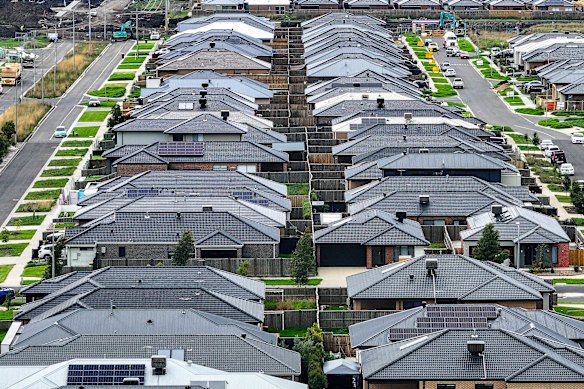
It’s long been feared that under this sort of pressure, Australia’s highly indebted households could break, and drag down the economy with them. So how serious are the cracks that are starting to appear in the household sector, which is seen as the economy’s engine room?
Over the past fortnight, we’ve been given a good indication of how millions of households and businesses are coping, as the biggest banks have lifted their bonnets to the market.
The numbers revealed a mixed picture. The vast majority of people are managing their repayments – indeed, some economists say households as a whole have been surprisingly resilient. But against this, a small but growing minority is struggling, and that’s happening when we still haven’t felt the full economic effects of this year’s rate hikes.
In reported results this month, National Australia Bank, Westpac, ANZ and Commonwealth Bank have all recorded a recent increase in the proportion of Australian borrowers who had fallen more than 90 days behind on their mortgage payments (known as being “in arrears”) by September 30. The number of borrowers who are behind is still fairly low overall, but experts expect mortgage arrears rates to increase.
There are a few reasons for this. One is the time it takes for rate rises to inflict pain on household budgets.
Since September 30, when the banks ruled off their books, we’ve had two more interest rate rises announced by the Reserve Bank, and it generally takes a month or two for banks to raise the actual repayments that customers make.
Beyond this, there is a sizeable group of people who will not have seen much of an increase in their monthly repayments from the rate rises from earlier this year, but who are likely to see a bigger increase in their repayments this time around.
Why? Because when the RBA was cutting rates last year, three of our five biggest banks did not automatically lower their customers’ repayments.
As a result, most of these banks’ customers simply kept their payments unchanged. This meant these people were paying off their loans ahead of schedule, giving them a “buffer” that meant their monthly mortgage payments didn’t need to rise earlier this year when the RBA raised rates. After the latest increases, that’s likely to change.
“The first three hikes that we had basically reversed what was cut last year, so many people were still paying the same amount,” Opal Capital chief investment officer Omkar Joshi said. “After the latest two hikes, people are actually going to have to pay more.”
That’s the mechanical reason why these latest hikes could hit harder – but there’s also a wider economic reason why it takes a long time for interest rate hikes to really bite.
Moving interest rates takes a long time to affect the economy because it leads to gradual changes in behaviour by millions of households and businesses.
Once mortgage payments rise, households will still take a while to decide where to cut their spending if needed, while businesses will try many other things to cut costs or improve their performance before resorting to cutting jobs.
On this note, updates from two of the banks – ANZ and National Australia Bank – suggested small business borrowers in particular were struggling with their repayments on home loans.
NAB, the country’s biggest business lender, said the group of mortgage customers were struggling to manage their debts was “heavily skewed” to loans where the borrower relied on income from a business, instead of a loan.
Barrenjoey analyst Jonathan Mott said all banks would face a tougher “credit environment”, which means he believes more people will struggle to repay their loans. He also pointed to the risk of future job cuts by those businesses who are struggling with debt.
“Both ANZ and NAB stated the rise in delinquencies was weighted to business owners’ mortgages, and if a business owner must decide between losing their own house or laying off staff, we all know what they have to do,” Mott said.
Meanwhile, Jarden analyst Matthew Wilson argued NAB would be “front and centre” in a credit cycle, pointing to the bank’s higher proportion of business and corporate customers. “NAB’s canary appears to be deeper into the proverbial coal mine and it may have stopped singing,” Wilson said.
Importantly, mortgage arrears rates overall are still fairly low, and there are plenty of households who don’t feel much pain at all when interest rates rise. Some even benefit.
Most obviously, people who have no debt and money in the bank receive higher interest payments when interest rates rise. Deutsche Bank macro strategist Lachlan Dynan recently suggested rate rises might have lost some of their “potency” because of the strong growth in household assets such as bank deposits and funds held in superannuation accounts.
Perversely, however, if interest rates are indeed losing some of their potency, this could just encourage the Reserve Bank to hike even more aggressively than it would have in the past, to get the desired slowdown in spending. The RBA’s hope is that a slowdown in spending eventually leads to lower inflation because it makes businesses less inclined to raise prices.
Reserve Bank governor Michele Bullock has justified the latest rate hike by saying the alternative – unchecked inflation – would ultimately be even worse because that would mean more people would lose their jobs.
“Some pain now will prevent even worse pain down the track,” Bullock said this month.
That’s the unpleasant truth about using interest rates to target inflation, as more households are likely to find out in months ahead.
The Business Briefing newsletter delivers major stories, exclusive coverage and expert opinion. Sign up to get it every weekday morning.
 Clancy Yeates is deputy business editor. He has covered banking and financial services, and was previously national business correspondent in the Canberra bureau.Connect via X or email.
From our partners
Disclaimer : This story is auto aggregated by a computer programme and has not been created or edited by DOWNTHENEWS. Publisher: www.smh.com.au